
Pavones holds a special place in the surf lore of the Americas and rightly so. The legendary Costa Rican left-hand point has been a point of interest ever since it bust on the scene in the 1970s. The history of the wave and town is very unique, having been discovered by a Californian pot smuggler, Danny Fowlie, who saw the long left from his plane and then set out to buy the land and create a utopian surf camp.
Fowlie, who earned the name, the ‘King of Pavones’ for his work in developing critical infrastructure like roads and schools, supported the small community until his arrest in the early 90s. His absence led to land disputes and controversies that all came to a head last year when early one morning, before dawn, riot police escorted bulldozers and wrecking crews to demolish key buildings in the small town.
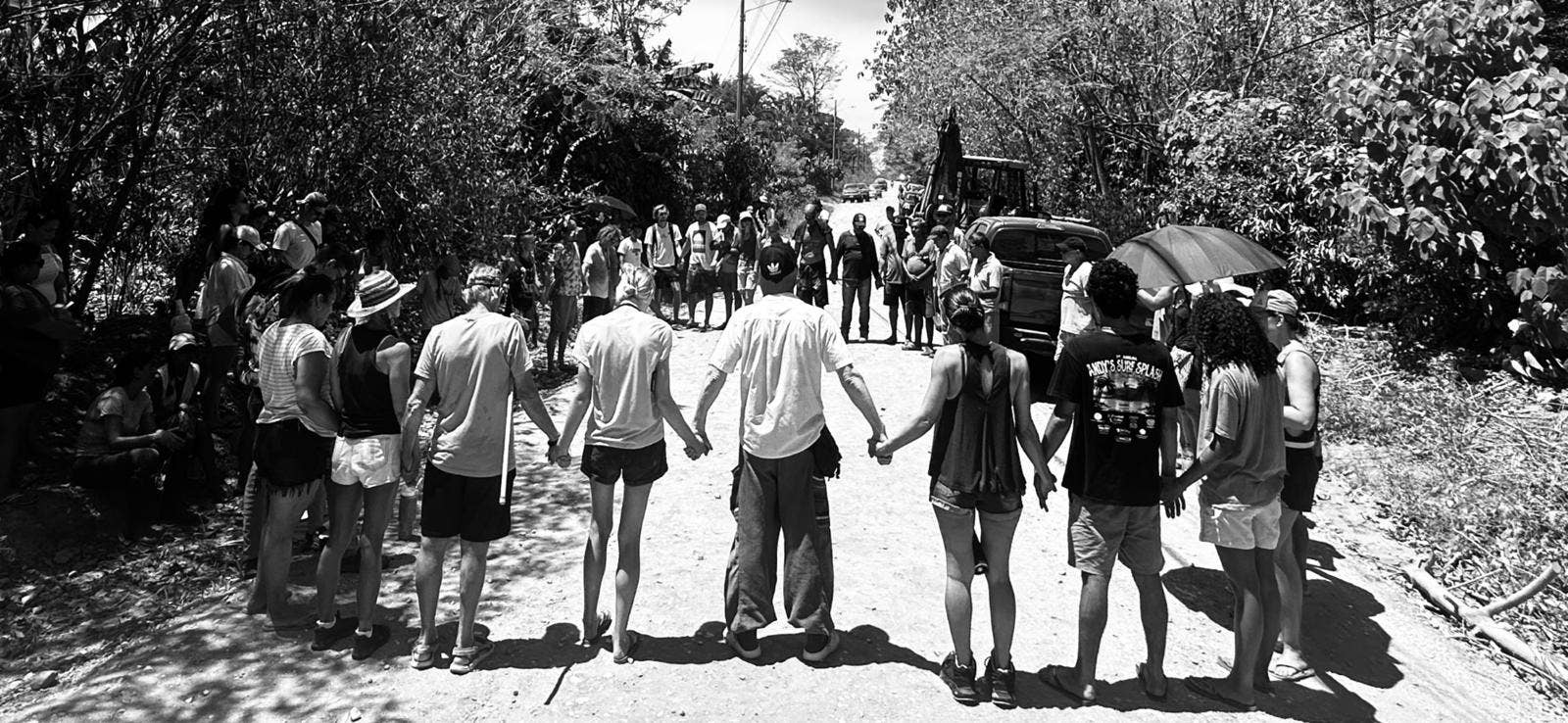
The community’s ongoing fight against a wave of development that risks reshaping the town and cutting off public beach access has escalated since then and property owners have been left in legal limbo as a lawsuit plays out in Costa Rican courts.
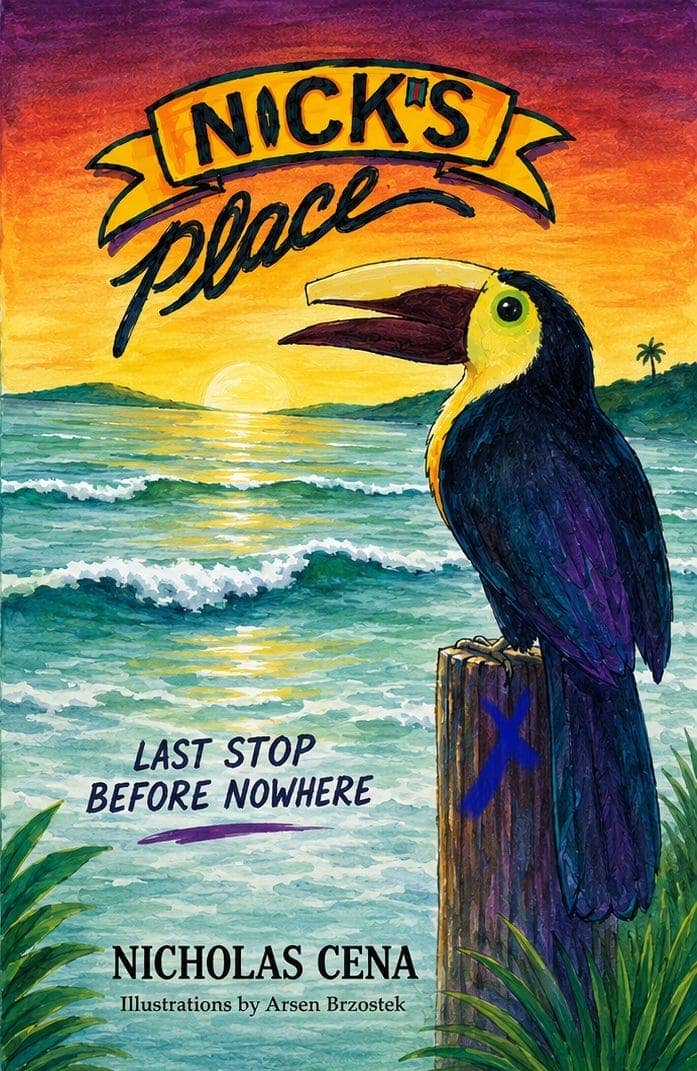
Nick Cena, whose restaurant Nick’s Place was demolished last year, has taken his experience and turned it into a book, Nick’s Place: Last Stop Before Nowhere. He’s also rebuilding his restaurant that was one of the few in town. The fear for the locals is that more demolitions will occur in the name of development that they don’t want.
“When I looked online, I saw that people were telling the story of what happened, but not the way it actually happened,” he says of the decision to write. “I remember reading one article that claimed the demolitions were not contested by the town, which was completely false. The community was doing everything they could to stop it from happening.”
Nick came to Pavones to visit his older sister. While there he met a Tica named Karolina, they got married, and he never left. Nick’s Place, the restaurant he built and lost, is currently being rebuilt just 30 seconds down the road from its original location. He says it’s about two months away from reopening.
The book he wrote is technically fiction, a semi-autobiographical account with names changed to protect the people involved. “One of the hardest parts was having to label it as fiction when so much of it is rooted in real events,” he says. “In reality, I was trying to protect myself from any further problems, including the possibility of deportation or legal issues.”
Nick Cena
The Fight
The bigger story (the one Nick’s book gets at with some modification) is the fight the community is still waging. Domenique Romano, secretary of the ADI Río Claro Pavones (Asociación de Desarrollo Integral), offers some explanation of the legal situatuon that is at hand.
“The community of Pavones, along with the ADI Río Claro Pavones, continues to fight to protect the people who live in the maritime zone — in spite of the local municipality’s efforts to keep everyone in the maritime zone in legal uncertainty. At the same time, we are advocating that the new regulatory plan in process is made according to the actual needs of the community, since the previous regulatory plans have served private interests and seriously stunted the natural development of the locals for decades.”
“The current regulatory plans are still valid by law, and if they continued to be enforced in the same way, they would run roads through much of the remaining infrastructure of the town, which sits within the Maritime Zone. Insufficient access roads and hardly any parking areas could privatize the beaches in practice. Beaches are public by law, but if there’s no way to get to them, they’d be private in practice.”
“There is also another serious concern. The Río Claro river has been classified as a ria by MINAE (Ministry of Environment and Energy) since 2015, which would make all titled properties within 200 meters of it part of the Maritime Zone. They have also been declared natural state patrimony — without the knowledge of the affected people or proper studies and evidence to justify this declaration. Because of this, many property owners have lost the titles to their property and are currently in a state of limbo. This declaration has been taken to court, and it is in process as well.”
What’s at Stake
It’s easy to understand why developers have a blood lust for Pavones, it’s truly a magical part of Costa Rica. One of the longest waves in the world surrounded by lush rainforest, incredible wildlife, all along the Golfo Dulce, one of the few tropical fjords in the world — what’s not to love?
Other parts of the country have seen absurd growth by catering to foreigners (surfers most definitely included) who can afford to pay millions for a slice of paradise. In northern beach towns like Nosara and Santa Teresa, the influx of foreign capital has completely changed the fabric of the communities.

Chris Dodds
Sure, hip coffee shops and fancy hotels and restaurants can be a nice touch to draw in tourism, but at what cost? If locals can’t afford to live there, what kind of foundation are you building? This sort of thing has happened all around the US, in both surf and mountain towns, where the core community gets priced out and has to live in another place entirely to make room for overpriced real estate and vacation rentals. No buenomae.
In Costa Rica, the current regulatory plans, if enforced as written, could level much of what makes Pavones what it is. A wave that has drawn generations of surfers to this quiet corner of the country is now attached to a community fighting to remain viable. If beach access gets cut off to make room for new luxury digs, Pavones becomes a much different place and, against the wishes of almost everyone, starts to resemble Santa Teresa.
Brayden Hope
The fight is ongoing and Nick’s book is one form of resistance. Domenique’s court case is another. Nick’s Place, when it reopens in the next couple of months, will be a third.
Related: “Surfistas Locales”: Costa Rican Surfers Confront Gentrification