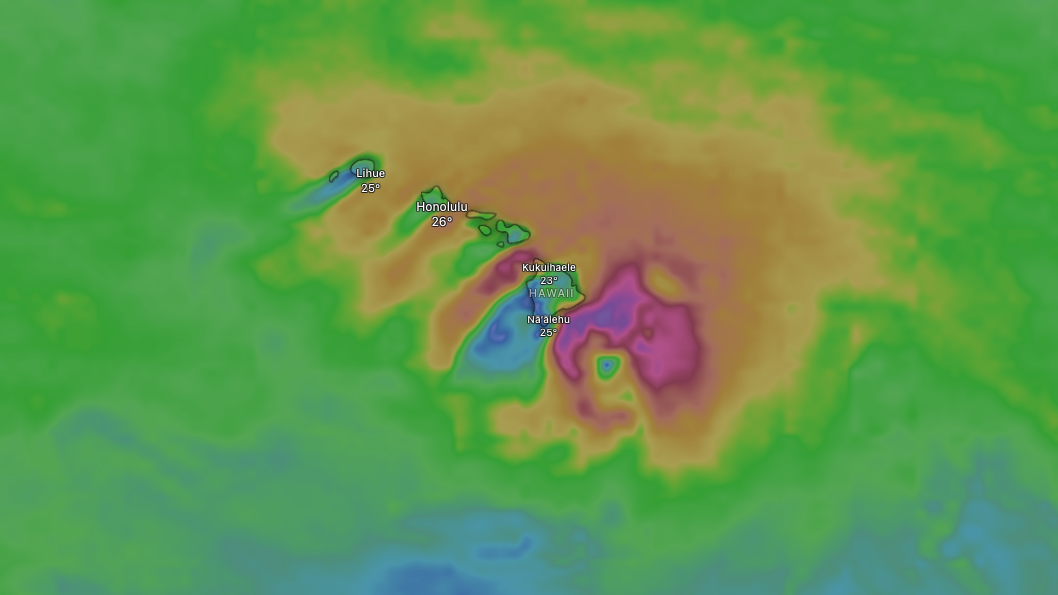
A hurricane warning has been issued for Hawaii as Tropical Storm Lala is set to strengthen today.
Given its current trajectory, Lala is on a direct path with the Big Island – with a warning in place across the region and a Tropical Storm watch in place for Maui County. Should Lala make landfall here, it will be the first hurricane to do so in 34 years.
Right now, a combo of swells are currently hitting the Big Island, with the forerunners from Hurricane Lala in the mix as well. The bulk of the swell and wind is set to arrive on the south east side of the island, but there will be widespread rainfall throughout.
According to NOAA: “Large and dangerous waves, especially on the Big Island are expected this weekend, with the greatest impacts along exposed windward and southern shores. This prolonged period of heavy surf may cause localized coastal flooding and significant beach erosion.”
The warning continued: “Heavy rainfall associated with Tropical Storm Lala will begin to impact the Big Island Friday, spreading westward across the remainder of the island chain during the weekend. This rainfall may produce life-threatening flooding and mudslides, especially in areas of steep terrain.”
Hawaii Governor, Josh Greene, declared a statewide emergency today, which allows officials to activate the National Guard and access emergency funds as the state prepares for Lala.
At the moment, Lala’s sustained wind speeds have increased to 60mph as the storm moved WNW, around 500 miles off the coast of Hilo. The forecast has Lala potentially making landfall by Saturday. But keep in mind; hurricanes are notoriously difficult to track, even this late in the day. If the track shifts be a metre, that’s a butterfly effect for the rest of the forecast, wildly swinging the storm’s path and trajectory.
Tropical Storm Lala formed under El Niño conditions in the South Pacific. But it’s important to remember that the storm wasn’t caused by the climate event, it’s more that El Niño helped the storm to form. This is due to the warmer Pacific waters providing more energy for tropical cyclones to shape up, with reduced winds meaning storms can stay organized.
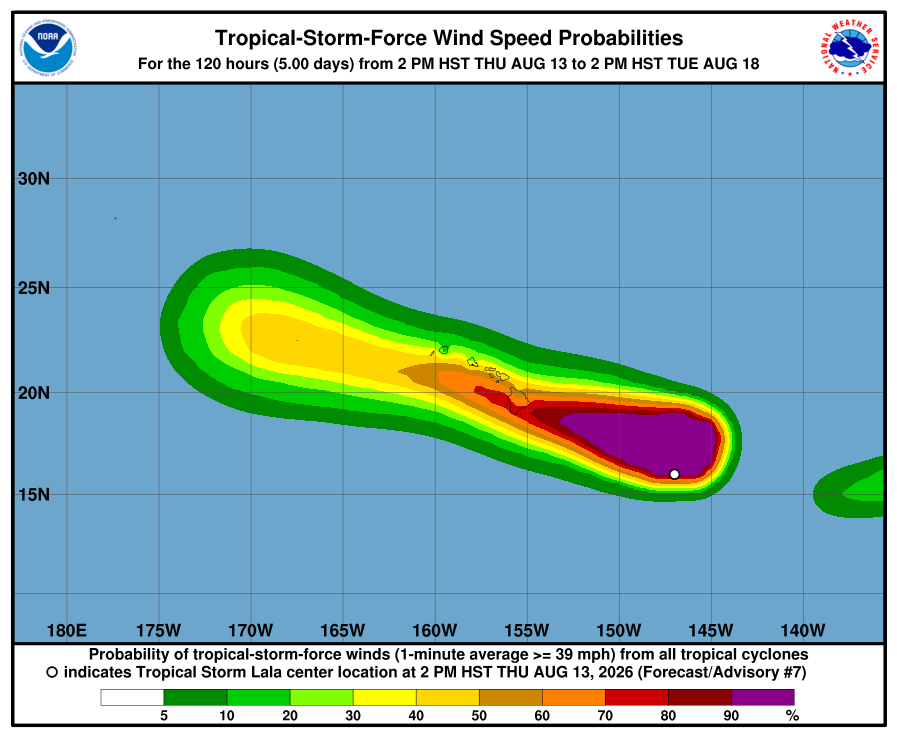
Hawaii is particularly vulnerable to storms formed under El Niño conditions, given its location on the storm track. During strong El Niño years, the Central Pacific becomes way more favorable for storms approaching the islands. Which means; we could be in for a wild season. We’ll update this article as Lala plays out.