The ocean inspires science in much the same way it inspires art—like Hokusai’s “The Great Wave off Kanagawa” or “Moby Dick” or “Surfin’ USA”—which is to say in no small or uncertain way.
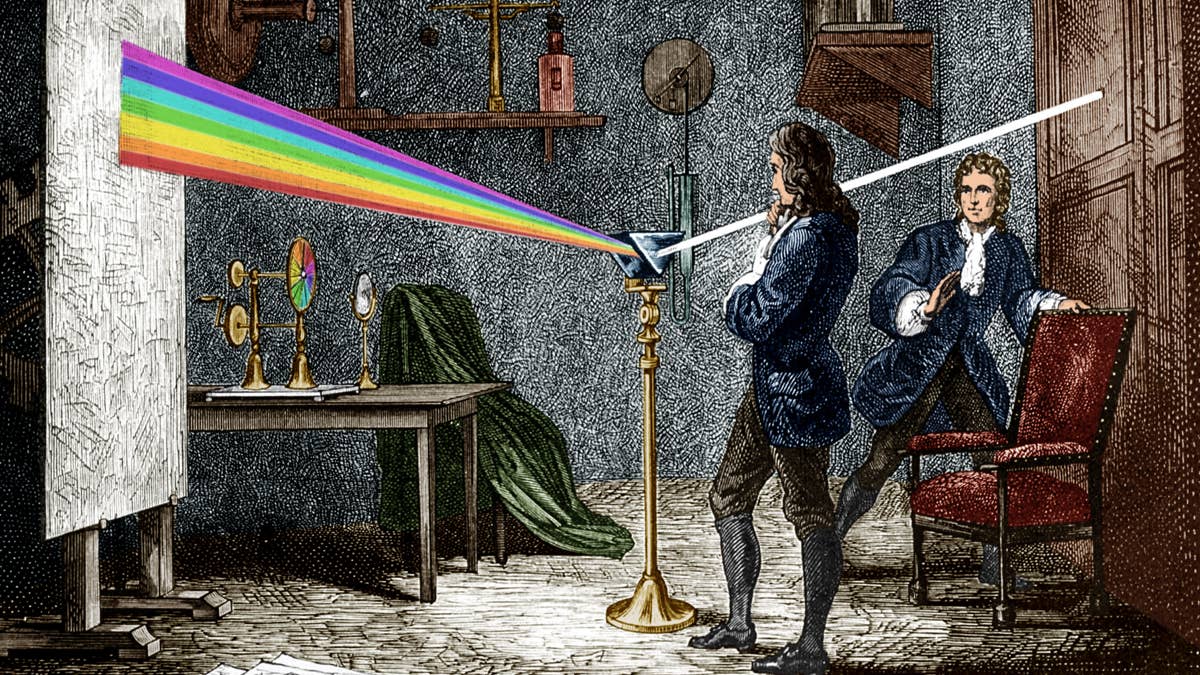
That’s how UPenn School of Arts & Sciences Assistant Professor and researcher of fluid mechanics, Arnold Mathijssen sees it, in any case. “For example,” he says in a Penn Today press release, “when Isaac Newton published the Principia in 1687, he used the rise and fall of the ocean as evidence that a single force governed both falling objects on Earth and bodies in space. The tides, Newton showed, are the moon and the sun pulling on the water by gravity.”
Indeed, most of us accept all that by now, but that a luminary such as Newton would be inspired to figure all that out simply by staring and musing at the sea offers a certain romance to science, and the sea, does it not?
“What’s great about the beach is that it is often viewed as a place for simple relaxation, but it’s also actually a massive, open-air laboratory of everyday physics. From planetary-scale energy to the microscopic mechanics of glowing cells, the shore reveals the hidden machinery of our world” says Mathijssen, perhaps somewhat lacking in the poetics and romanticism departments, but incontrovertibly inspired nonetheless.
Professor Mathijssen and his contemporaries in the wide world of physics have come to agree that there are “four major kinds of waves at any beach,” and they scale.
First are wind waves, driven by air currents, ranging from ripples to storm chop (short-period swell). Above them are “swell waves,” which travel from thousands of miles (groundswell). Swells are defined as being predictable, with buoys, satellites, and apps alerting mariners, meteorologists, and yes, the surf-going public like you and me.
As an aside, Mathijssen describes “rogue waves”—converging swells that build far larger waves than either swell could on its own—like the one Hokusai spent so long perfecting, and which ran in an 1884 publication of the monthly Paris Illustré.
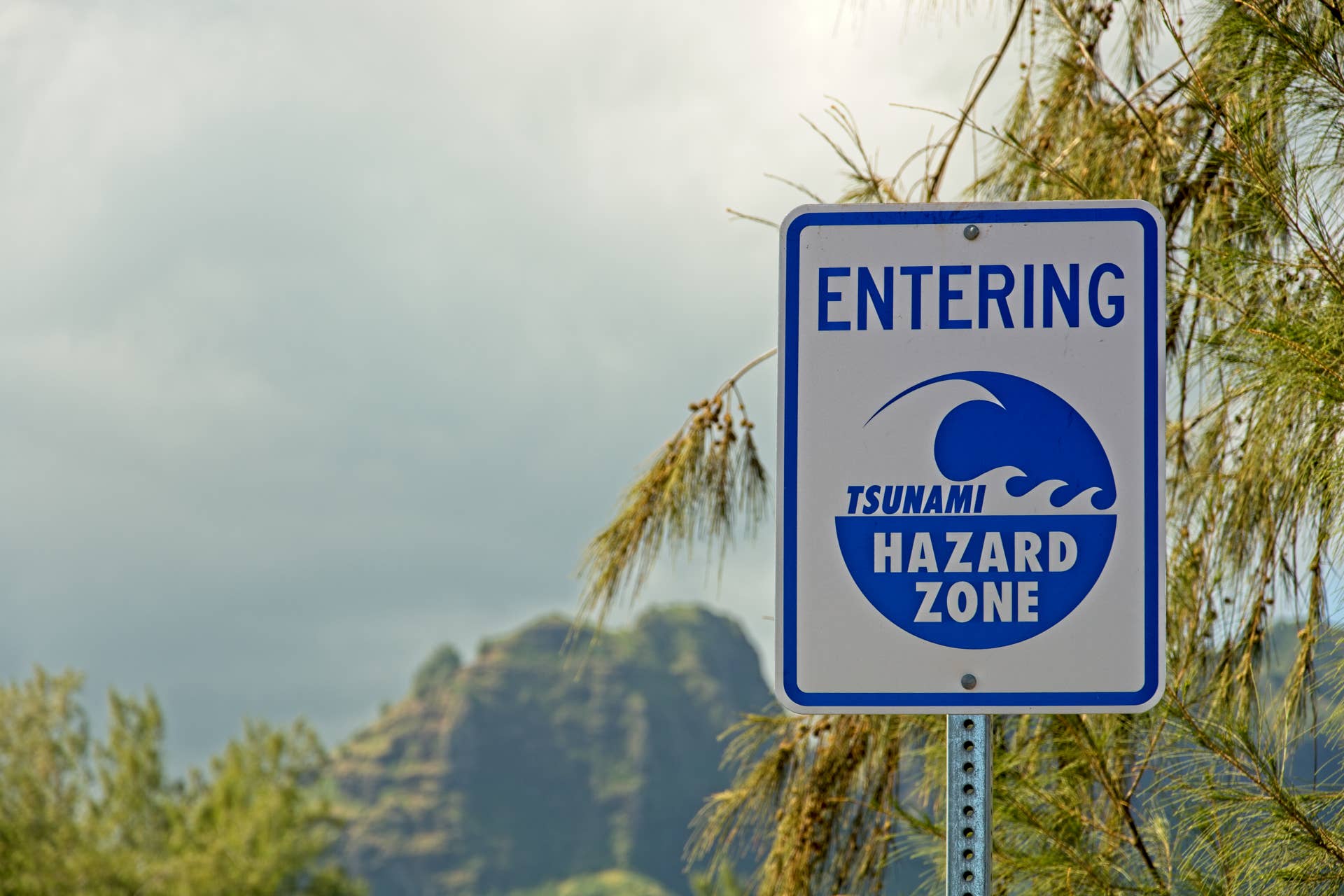
The third type of wave recognized by Mathijssen and co. is generated by a tsunami, a pulse of energy packed into a single wave whose length can run for miles, which, Penn Today’s Nathi Magubane adds, is why they tend to go unnoticed in deep water.
Lastly, there are the tides: “basically waves that are the size of our planet,” says Mathijssen. The moon does the brunt of the pulling work, with the sun helping out, “raising two crests that sweep around the globe as Earth rotates underneath”—that could pass for poetry, no? Credit where it’s due. The other defining feature of the tides are that they form a wavelength “roughly the diameter of the planet.”
While there seems to be an infinitude about waves, there is another curious certainty that is as sure as the sun will shine: “You can deflect them you can divert them, you can reduce impact,” Mathijssen says, “but you can’t really break a wave”—much as they’ll break for (and on, and into…) us.
So what, to that end, do breakwaters do? They force waves to break early, “transferring energy into friction and eddies before a wave reaches shore,” per Penn Today. Those eddies can still cause damage in turn. Deflected energy goes somewhere (see: every action has an equal and opposite reaction). Seawalls might save the land directly behind them, but they often cause or intensify erosion further up or down the coast.
“The best wave-breakers are the ones nature made: reefs and coastal vegetation,” Mathijssen expounds: ”They are actually incredibly effective at breaking this energy, which makes coral bleaching a coastal engineering problem as much as an ecological one.” Members of the ocean-surfing public know this deeply, of course.
Studying drift led long-stupefied marine scientists to finally understand that “the wave is not the water,” or that, in other words, waves are travelling energy; the water, more or less, stays in place or, more accurately, goes in circles. Those circles, though, are almost mystic in their ever-open loops, with each orbit finishing a small distance from where it started. Floating things move shoreward at a near-glacial pace that is about 1% of a given wave’s speed (known scientifically as Stokes drift).
“It’s also why plastic pollution sorts itself by size,” says Mathijssen: “A big gallon jug of milk will come towards the beach, and you can clean it up, because the Stokes drift effect increases with the size of the floating object. Break it down a bunch, and the drift weakens. Microplastics stay out at sea, dispersed and far harder to collect.”
And then there are the living things that arouse emotions and conjure wonderment amongst our world’s most staid professionals: Bioluminescence. The simplistic little organisms responsible for glowing surf are dinoflagellates, often Noctiluca scintillans—”Scintillans, as in scintillating,” Mathijssen calls out. “It’s a very nice name,” contemplating with literary appreciation for a little nod to the supernatural, again, from a field that makes no two ways about fact and fiction. “It’s really magical,” he says.
Scientist or surfer, the ocean stirs the soul in one and all.
Related: Your Local Surf Break Is Part of Something Much Bigger