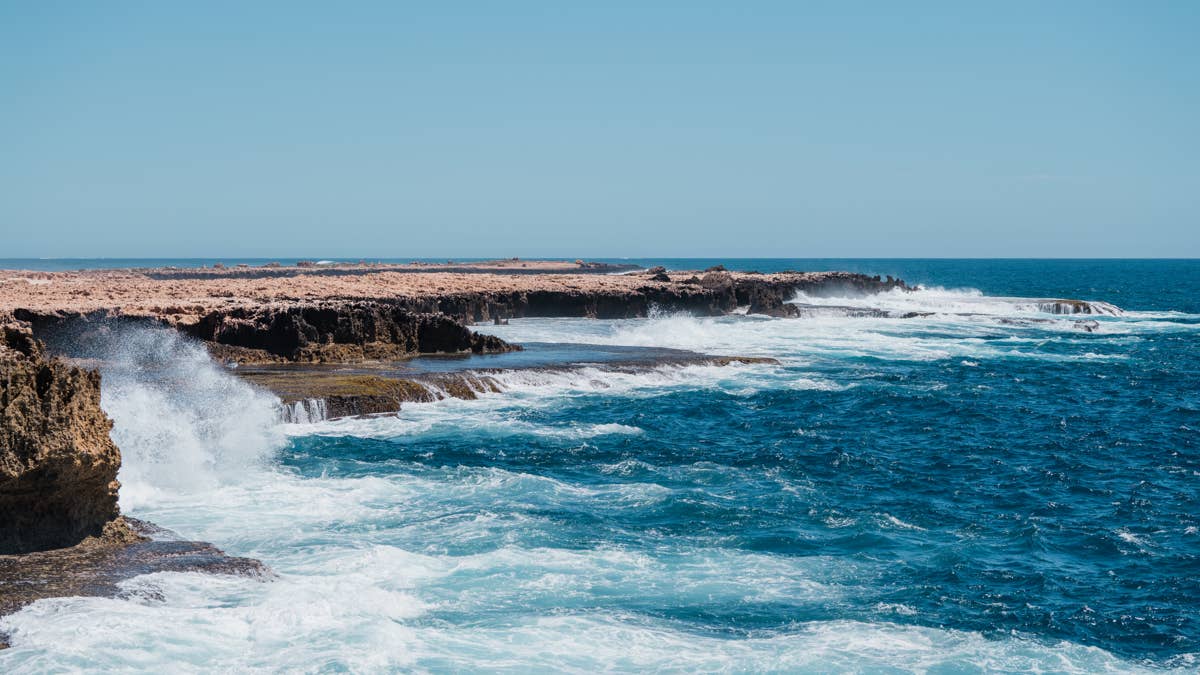
A Kelvin wave is making its way across the Pacific, prompting headlines about rising sea levels along the California coast. But what exactly is a Kelvin wave, how does it form, and what does it mean for California?
Kelvin waves have been making headlines as an abnormally strong El Niño warms the Pacific and creates the conditions for these pulses of warm water to form. Now, Kelvin waves don’t break and can’t be surfed. But they can have significant effects on sea levels, coastal conditions and ocean temperatures.
What is a Kelvin Wave?
Kelvin waves are not tsunamis. They are a massive slow-moving pulse of warm water that moves deep under the ocean’s surface along the equator or a coastline. Unlike normal waves, you cannot see or surf a Kelvin waves. According to NOAA: “Unlike the waves you see at the beach, Kelvin waves do not curl over and then crash. They are more like the waves in your bathtub, which slowly slosh around. They don’t break, but they still have broad peaks and valleys that change the depth of the water. The Kelvin waves that are relevant to ENSO only move eastward and along the equator. Like all planetary waves, the geographic extent of an equatorial Kelvin wave is huge, often stretching over much of the Pacific Ocean.”
How Are Kelvin Waves Formed?
When the warm water associated with a Kelvin wave reaches the eastern Pacific, part of the energy can travel north along the coast of Mexico and eventually reach Southern California. This Kelvin wave can impact sea levels and ocean temperatures far from where the original wave formed near the equator. The earth’s rotation (called the Coriolis force) traps the wave against the equator or pushes it directly against coastal boundaries, keeping it from scattering across the entire ocean.
How Does a Kelvin Wave Reach California?
Let’s take that area of warm water across the equator, as it hits South America, it splits apart – with a flank of it shifting northwards. This will then skirt the Central America coastline, head past Mexico and eventually make its way to California next month.
Related: 10 Surfing Myths Busted by Science
What Will Kelvin Waves do to California Sea Levels?
Kelvin waves, or at least the one making a bee-line for California in October 2026, could raise the water level by about a foot. While that may not seem like a lot, this could mean more beach erosion and a higher risk of coastal flooding. We could also see much higher tides as the Kelvin wave makes its way up the coastline, this could also make for a higher risk of flooding. If you couple this with a storm, where the sea is already in an agitated state, it could mean an even greater damage threat.
Is a Kelvin Wave a Tsunami?
As mentioned above, a Kelvin wave is not a tsunami. A tsunami is generated by a sudden displacement of water, usually caused by an earthquake, landslide or volcanic activity. A Kelvin wave is a slow-moving oceanic disturbance associated with large-scale changes in the Pacific Ocean. Thanks,El Niño.
Can You Surf a Kelvin Wave?
No, you cannot surf a Kelvin wave – that’s not a thing, these waves do not generate surf. However, the presence of a Kelvin wave could mean warmer water temperatures and changes to marine animal patterns. A Kelvin wave generally means that the Pacific Ocean is undergoing a major El Niño transformation – and that, not the Kelvin wave itself, has much wider implications for California’s surf. El Nino plays a part in altering storm tracks and can add fuel to the swell season. How this strong El Niño plays out is already being felt – but will be interesting to see what happens as fall rolls out into winter. El Nino is also set to continue well into 2027 with the potential for more dramatic surf over the next few months.
Related: When to Surf Every Continent on Earth for the Best Waves