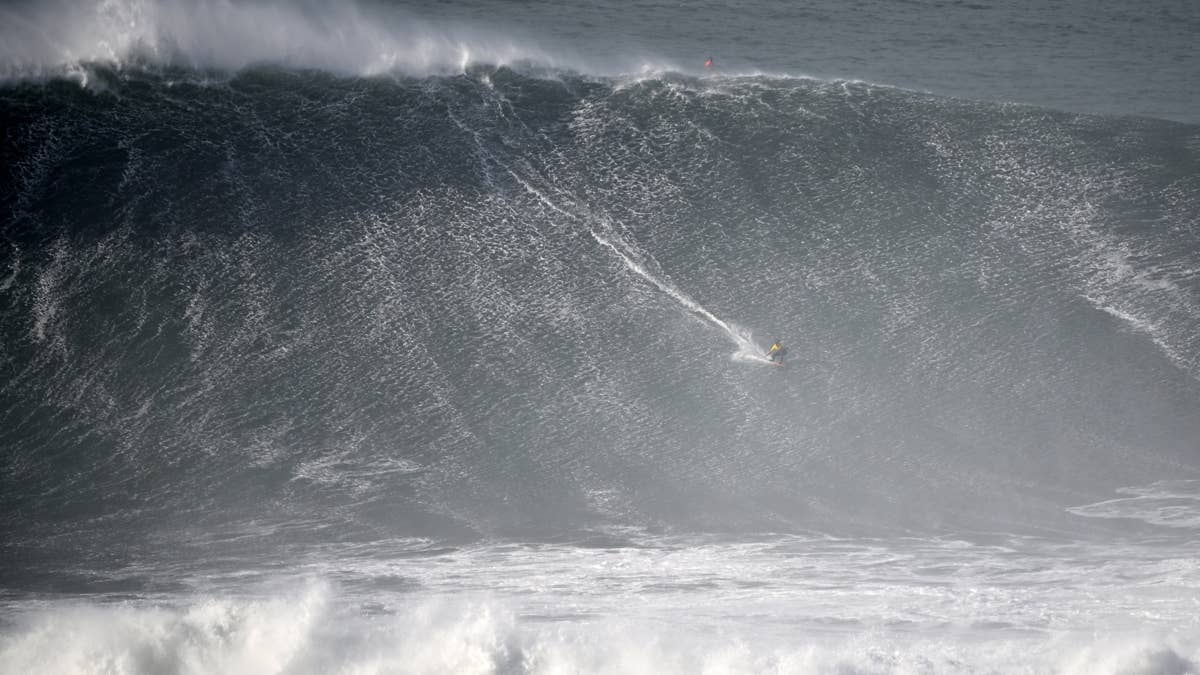
Big wave surfing is not for everyone. But for those looking to progress to it, there’s a few ways to go about breaking into the big wave realm. Some just throw themselves at it and hope for the best. Others take a more calculated approach, and a lot of training in the off season.
In reality, if you’ve already decided to pursue moving into chunkier surf, you already know what you need to do. For anyone considering it, here are a few tips to help you along the way.
Start Smaller
If you’re just getting started in big wave surfing, your first session isn’t going to be at XXL Jaws, triple-black diamond Maverick’s or tee-peeing Nazare. Start smaller – maybe your local, a beach that you know well, when the surf goes into overdrive. This will be a good place to start and to test your mindset around big waves. An overhead day on a step-up can feel like victory at sea, especially if your local is a series of beachbreaks. Even the paddle will give you something to think about and dial in.
Get the Right Equipment
A few years ago, UK big wave charger Tom Butler told me not to overthink getting a big wave gun. “Just get anything over 9’0” and test it in all conditions. Even if it’s small out there, just to get used to the paddle power, actually standing on it. A shoulder high day with a big wave gun may look odd but you’ll thank yourself for it when the massive days roll around.” He’s not wrong. Testing and having equipment dialed is an essential part of surfing big waves – you want to be as ready as possible and having a board you know can do the job is a huge confidence booster. Then, there’s an impact vest and having a few buddies at least to watch out for you, if you’re surfing alone. If you’re not, tap into your local big wave crew and try to build a support network – especially in the early days.
Breathwork Training
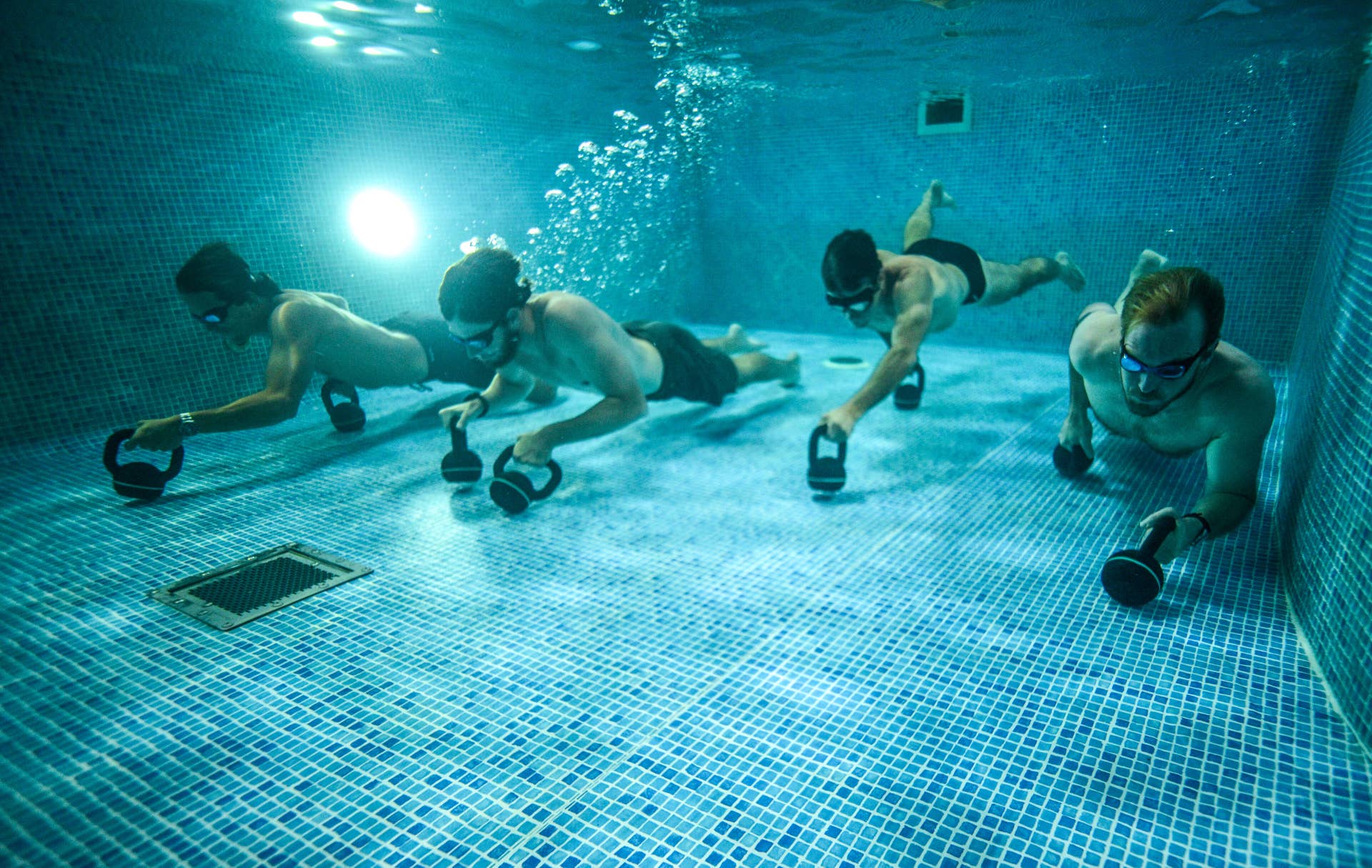
Knowing how to hold your breath properly and being comfortable in that zone is essential land-based work you can do to make the inevitable wipeouts seem a little less crazy. In fact, we’ve written about breathwork training before so visit the link below for the full guide. Spend a few moments each day working on your breathing and then implement this in smaller days out there.
Related: The Surfer’s Guide To Breathwork
Know What To Do When It Goes South
Big wave surfing comes with a high risk factor. Wiping out can be akin to a car crash and the rag-dolling that follows will feel brutal. It’s knowing what to do in these moments that can make a stressful scenario feel less so and almost… pleasant… in some circumstances. Wiping out and getting obliterated are part of the programme, so you might as well figure out what to do in those moments. If you get crushed under a giant lip, focus on your breathwork. Do not try to fight your way to the top. Let yourself go limp and get thrown around by the turbulence. This will conserve and save your energy. Once the wave has passed over, you can swim to the surface. If you’ve been pushed so far down it’s dark under water, use your leash to orient yourself towards where the surface is. Wearing an impact vest is a great idea, with canisters you can deploy that will raise you to the surface. These are for emergencies only.
Turn Fear Into An Ally
Fear is a real thing. It can cripple your big wave journey and freeze you from making good decisions. Fear is also a healthy response. A fair few years ago now, big wave surfer Greg Long said: “It’s not that you need to eliminate fear, it’s how you harness it and change it into action. There’s a big difference and acting on fear to get the result you want is better than letting it hold you back.” Greg’s a calculated big wave surfer, often waiting for hours at places like Puerto Escondido to catch one wave and call it a day. That wave will likely end up on a cover somewhere. If you find yourself afraid in those situations, it’s important to check in with yourself in the water. What’s causing that fear? Is it the fear of wiping out? If so, you’ve already done the training and know what to do. Is it the fear of failure? We all fall – come to terms with the fact this may not go the way you want and that’s a learning experience in itself.
Which Board To Surf?
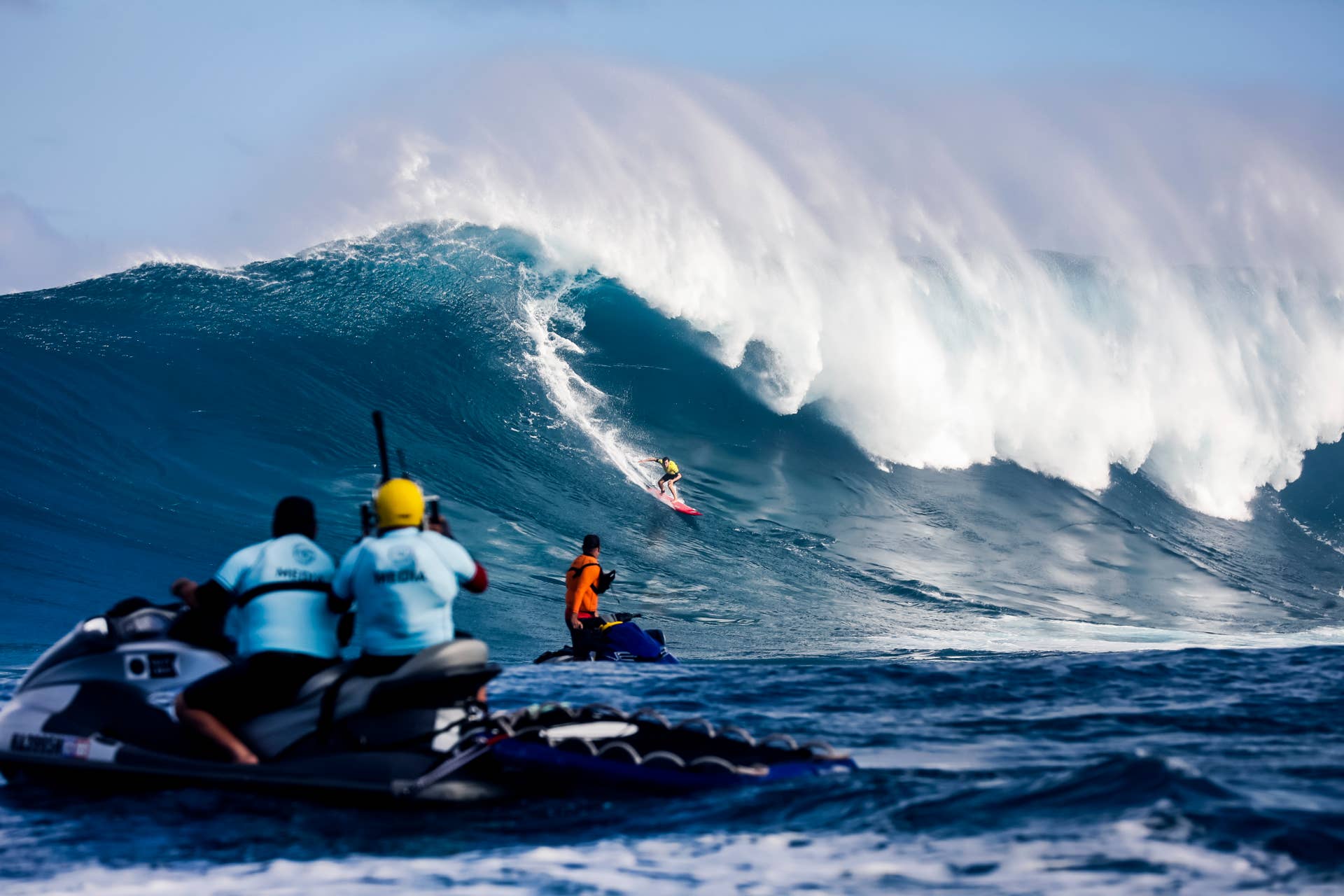
Big wave guns are for the biggest paddle waves on the planet. Either speak with your local shaper and be honest about your surfing ability, or borrow a pal’s to see how it all feels on the water. What you don’t want to do is commit your hard-earned coin to a board that isn’t quite right. Experiment first, commit later. Below that is the humble step-up, which will probably be the right pick for most people. Step-ups are great for when the waves go into the double overhead range. Aim for about a foot longer than your standard shortboard. Step-ups are blades designed to get you in (and out of) some heavier conditions. The longer rail line will take a while to get used to but once it’s dialed in you can almost surf it like a normal shortboard. A gun however, is more about point and go. You’ll feel the speed on take-off but will lose manoeuvrability. That’s the trade off for surfing bigger waves, performance may go down but at least you caught something. Then there’s tow boards – but the nuance of them are worth a whole other piece entirely.
Watch The Spot
May sound simple but go and watch the spot your planning to surf. There could be some details, a rocky outcrop, a different entrance or exit, some nuance may pop up that you hadn’t noticed before. Have a few sessions of just looking, taking it all in. Watch YouTube videos too to see what to expect once out there.
Quad Vs Thruster?
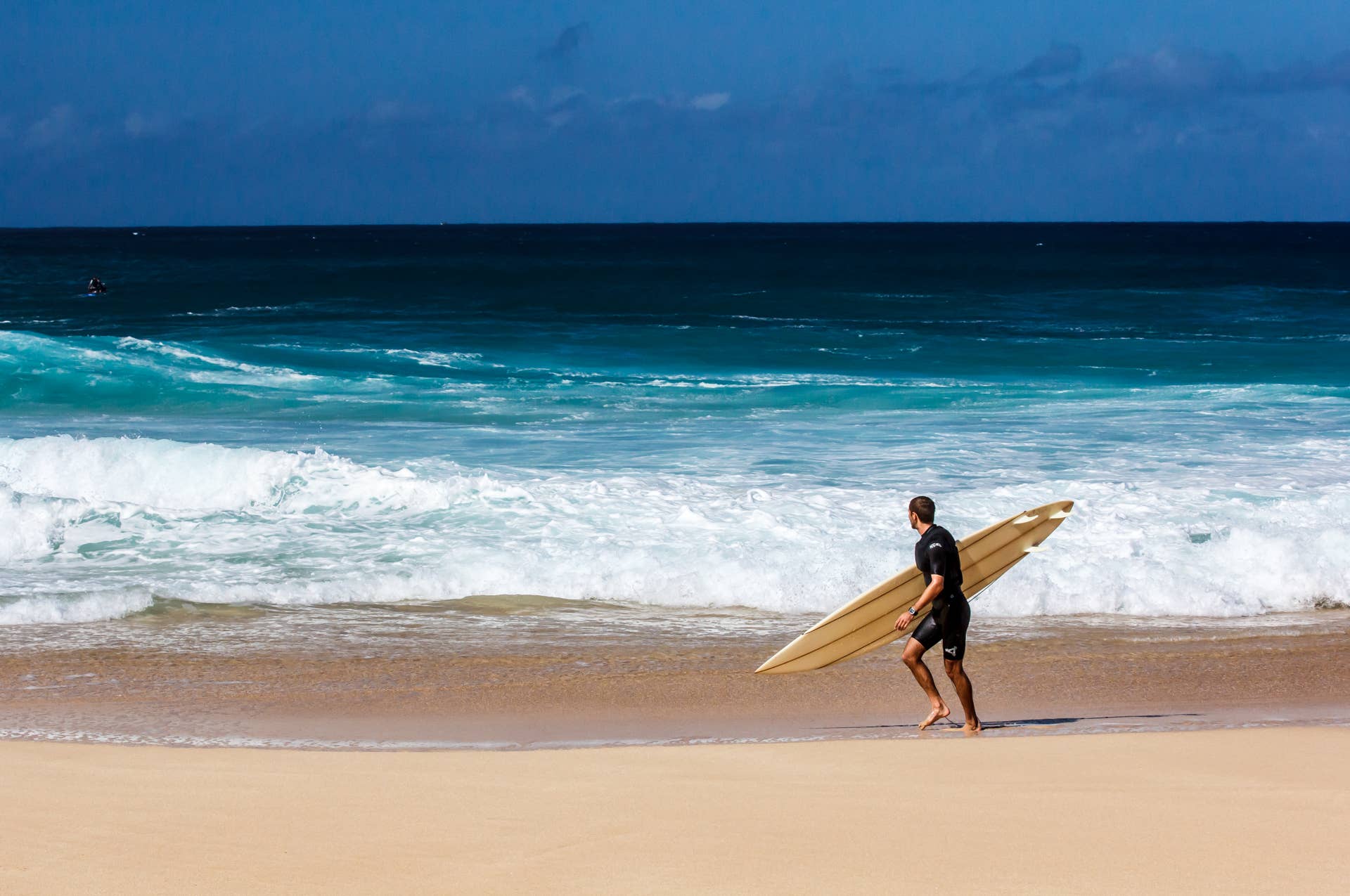
This is another question to think about when choosing your first big wave board. Big wave surfers love the quad set up for ultimate down the line speed. While guns aren’t as performance-focussed as other boards, you can pivot them – and a thruster will allow you to do this better than a quad. So the question is, do you want more turn power or more speed? The shape of the wave your surfing may dictate this. You can also talk to the spot’s local crew and figure out what works for them. Sometimes it’s personal preference, sometimes you need a bit more pivot to set up a section.
Know Your Limits
Harnessing and transforming fear into action is great in the moment, but that shouldn’t be confused for going beyond your reasonable limit. If you’re year zero into a big wave career – Jaws shouldn’t really be your first stop. Even the local at size would need some thought going into it. It’s ok to say ‘not today’, and not put you, and others, in danger. The main thing is – big wave surfing can feel overwhelming at times it’s important to hold onto your reason why you’re doing it. If it’s ego, you’re going to get humbled very fast and not make it too far. If it’s fun and to challenge yourself, those are more important and will take you further than you thought possible. Especially if it’s your first winter in bigger surf – you’re going to get more than a few beat downs. And that’s ok!