
In 1974, a California Central Coast surfer, Tony Corley, wrote a letter to Surfer Magazine. He’d been surfing for a decade, almost always as the only Black person in the water, and he wanted to know: Was anyone else out there? Some of the replies he got to his letter were warm, and some ugly. But those responses became the seed of the Black Surfing Association. Fifty-two years later, the answer to Corley’s question is a loud yes, and it keeps getting louder.
Giving Tuesday falls on December 1 this year. Created as a counterweight to Black Friday and Cyber Monday consumerism, Giving Tuesday has become a global phenomenon and a good day to remember that one of the biggest barriers to surfing is access. Access to beaches and boards. Access to mentors who teach kids to swim and surf. And access to a lineup where newcomers feel they belong.
The six organizations below take those barriers apart. A free first lesson is only the beginning. What keeps people coming back is everything after: learning to swim, steady instruction from people they trust, a community that shows up every season, and a path to becoming instructors and leaders themselves. Several of these groups are run largely by volunteers, and gifts of any size pay for the infrastructure that makes that possible: transportation, wetsuits and boards, qualified instructors and year-round mentorship.
Here’s who they are, what they do, and exactly how to give. I’ve seen some of this work firsthand, volunteering with Laru Beya in New York and the Black Surfers Collective in Los Angeles.
Black Surfing Association
Where: California, with an East Coast chapter in Rockaway, Queens
Since: 1975
The Black Surfing Association helped lay the groundwork for organized Black surfing advocacy in the U.S. Founded by Tony Corley in 1975, initially operating out of his home in Oxnard, California, the BSA is the first organized body dedicated to the promotion of and advocacy for Black surf culture and history. Corley’s intention was to find all other Black surfers all over the globe and surf with them.
The BSA’s reach today runs coast to coast. In 2016, surfer Lou Harris launched an East Coast chapter in Rockaway, where volunteers teach free surf and skate lessons, starting on the sand with how to read a rip current before anyone paddles out. Off-season, the chapter stays together for beach cleanups and Thanksgiving meal distributions. Harris has said, “The hope is that we are empowering kids at Black Surfing Rockaway to become leaders in their community.” On the other side of the country, the BSA supports swim lessons for kids and junior lifeguard programs for pre-teens and teens to combat a very serious problem facing our country: that Black children drown at rates significantly higher than their white counterparts.
How To Give:
- Donate: Donate to the Black Surfing Association Rockaway chapter (via PayPal). Its lessons, boards and wetsuits stay free through sponsorships and donations.
- Time: Volunteer on Rockaway lesson days; the chapter posts updates on Instagram at @black_surfing_rockaway.
Black Surfers Collective
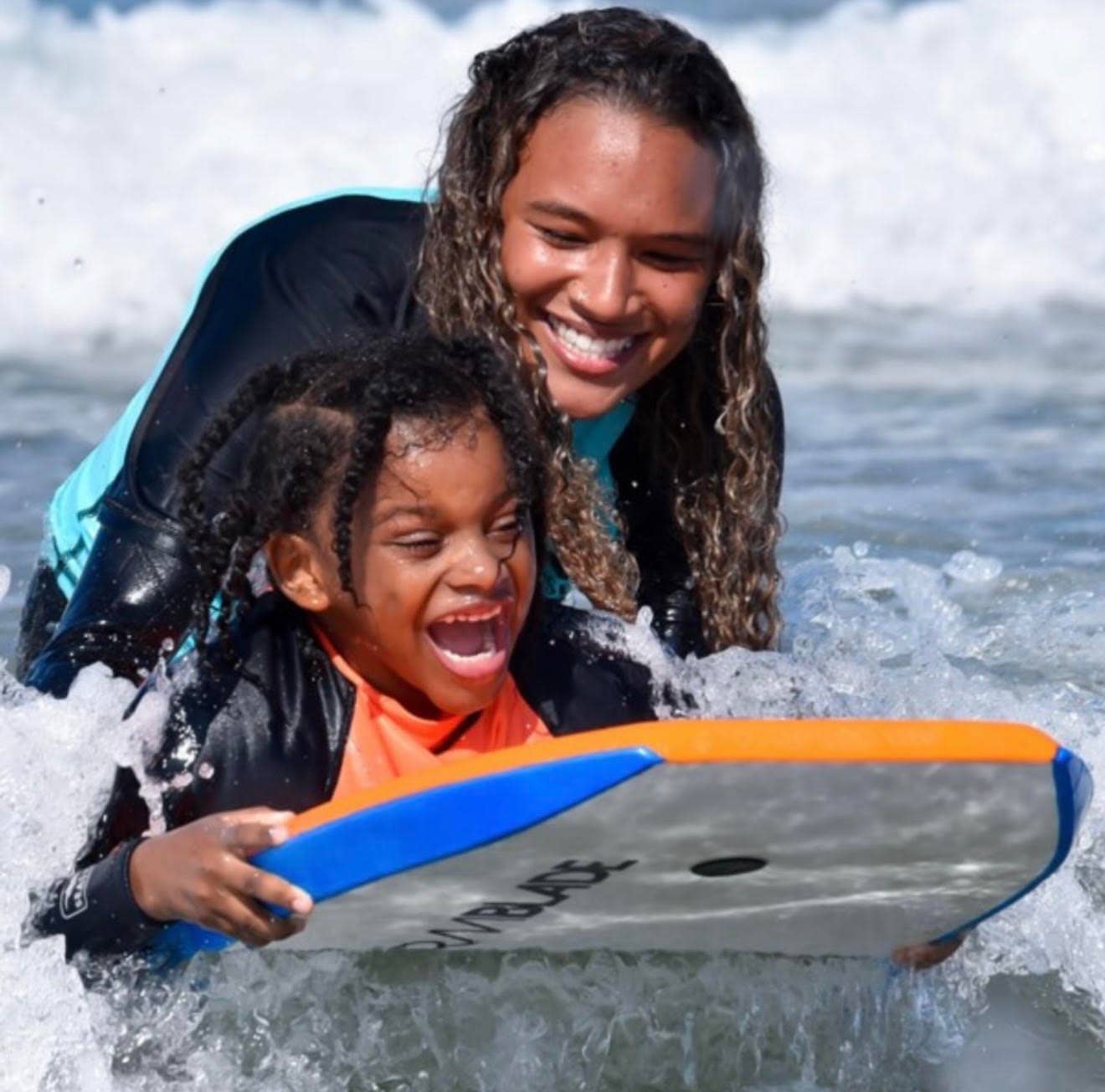
Black Surfers Collective
Where: Los Angeles
Since: 2012
Founded in 2012 by Greg Rachal and Jeff Williams, the Black Surfers Collective carries forward the work of pioneers like Nick Gabaldón and Tony Corley in its own way. Rachal still leads the organization today as its president.
Its motto is “Diversity in the Lineup,” and its signature event, Pan African Beach Day, brings free surf lessons to Dockweiler State Beach. A September 2025 beach day drew 125 people, 55 of whom took lessons. Rachal has explained that many early participants had never visited a beach, and some couldn’t swim. The Collective expanded its focus to include water safety, partnering with YMCAs and local recreation programs to provide free swimming lessons.
The Collective also carries a specific piece of Los Angeles history. A few miles up the coast in Santa Monica, during the Jim Crow era, Black beachgoers were largely confined to a two-block strip known as the Inkwell. That’s where Nick Gabaldón, a Black and Latino kid, taught himself to surf in the 1940s; he is considered the first documented Black surfer in America. Each year the Collective honors him with Nick Gabaldón Day in Santa Monica, alongside partners like Heal the Bay and Surf Bus. “The ocean doesn’t care what color you are,” Williams told Cronkite News at one of those gatherings. The Collective also brings kids from Boys & Girls Clubs in Watts and East L.A. to the water every year.
How To Give:
- Donate: Donate to Black Surfers Collective. One-time and monthly gifts are both accepted. To sponsor a Pan African Beach Day or the High Tide Gala, email give.blacksurferscollective@gmail.com.
- Time: Volunteer as a water helper or on the beach at Pan African Beach Days. Programs and free lesson sign-ups are at blacksurferscollective.org.
Black Surf Santa Cruz
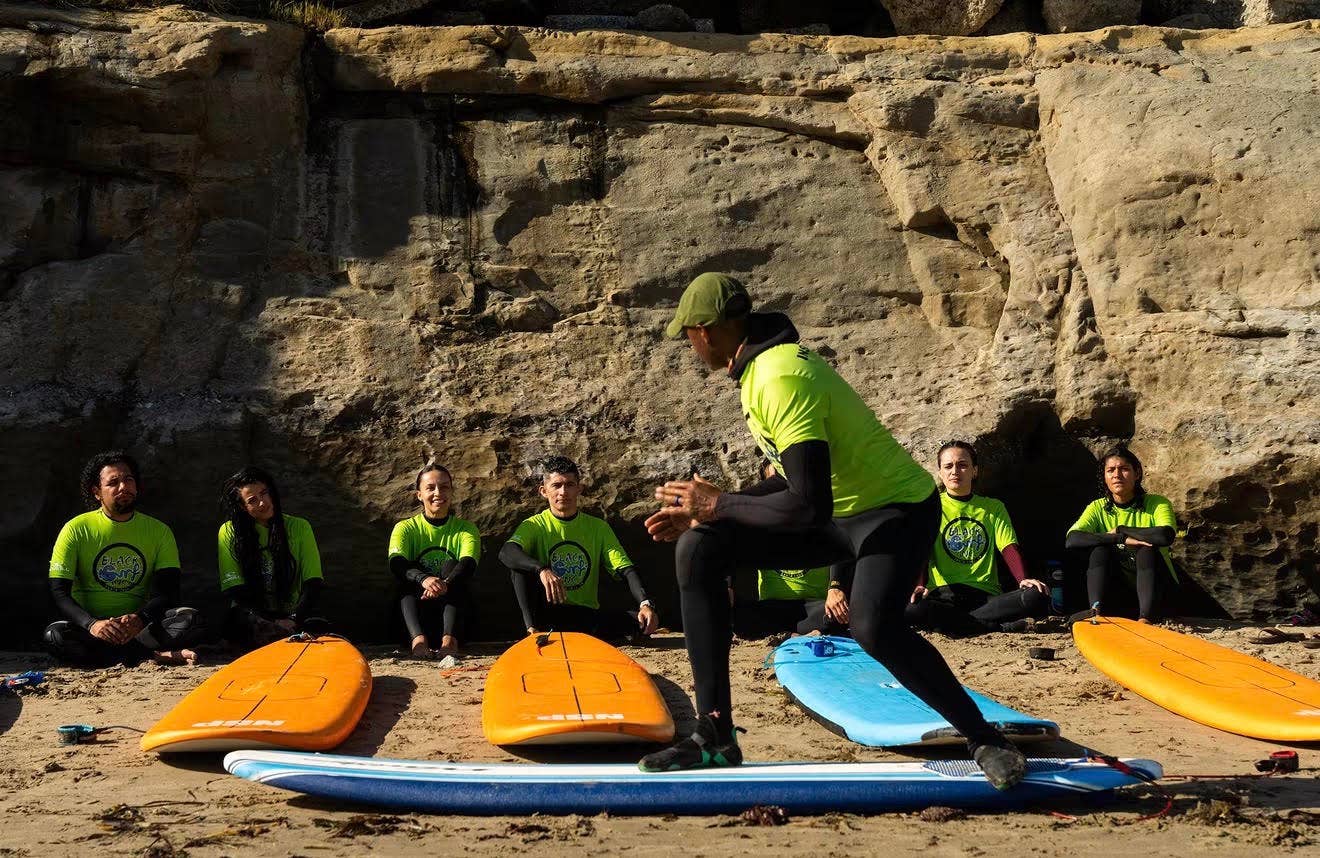
Black Surf Santa Cruz
Where: Santa Cruz, California
Since: 2020
Esabella “Bella” Bonner grew up in the world-famous surf destination of Santa Cruz, California and wasn’t introduced to the ocean until she was an adult attending a community paddle-out in 2020. That September, she ran the first lesson for what became Black Surf Santa Cruz. The mission centers healing: physical, spiritual and communal wellness through surfing, with programs built around joy, belonging and psychological safety for Black and BIPOC community members.
The organization’s Juneteenth Liberation Paddle-Out at Cowell’s has become a Santa Cruz institution. The sixth edition, in June 2026, put 100 people on free boards with free wetsuits and free lessons. Local shops and surf schools donate gear, so equipment is never the reason someone stays on the sand. “Surfing has indigenous roots, not only to Hawaii but West Africa,” Bonner reminded KTVU that day.
The paddle-out is the open door; the year-round work is what keeps people in the water. Members return for regular Pop-Up Programs, beginner-friendly sessions that run well into the fall. Black Surf Santa Cruz also trains youth leaders and volunteers, mentors UC Santa Cruz interns, and advocates for nonprofit surf permits and coastal access, building the people and policies that will carry the work forward.
How To Give:
- Donate: Donate to Black Surf Santa Cruz (501(c)(3), EIN 87-4556850).
- Gear: The same page explains how to make a physical donation of wetsuits and boards.
- Time: Sign up to volunteer at blacksurfsantacruz.org/join-us.
Native Like Water
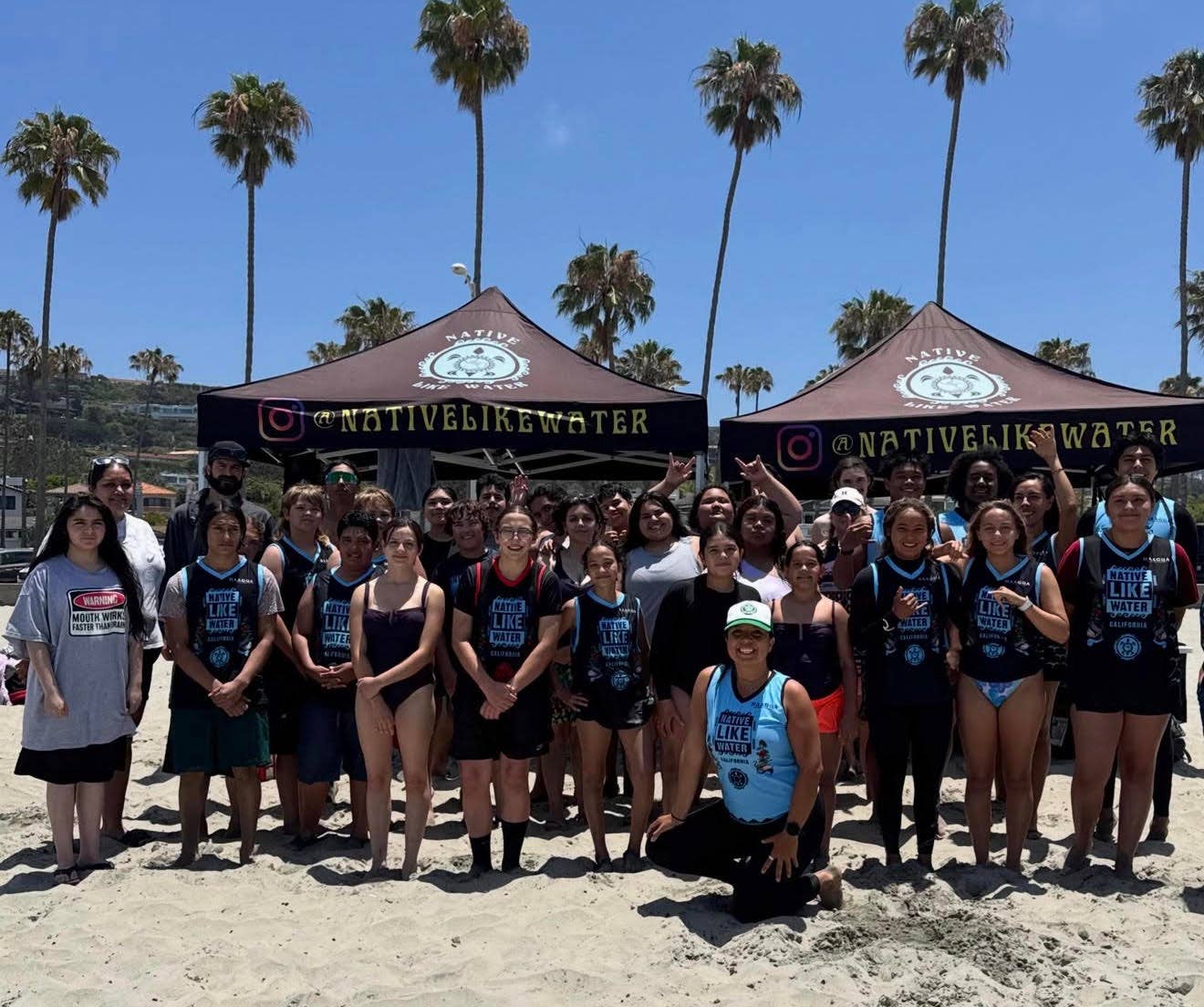
Native Like Water
Where: Imperial Beach and San Diego, California, with programs in Baja and mainland Mexico.
Since: More than 20 years and going strong.
Native Like Water does not come from a traditional surf club. For thousands of years Native peoples including Kumeyaay, Acjachemen, Tongva and Chumash fished in the kelp forests, paddled tule boats up and down the coast and called this place home. NLW’s work stems from a Native relationship with water. While the Native Like Water story is separate from the Black surfing heritage on this coast, it does share the same coastline and similar struggles for access to the water.
Founder Marc Chavez calls the work “reintroducing the native species”: using surfing to reconnect Indigenous youth, including Kumeyaay, Native Hawaiian and Alaska Native teens, with the coastlines their ancestors fished, paddled and lived on. Its flagship InterTribal Youth summer camp at UC San Diego pairs teens with college-age mentors and combines surfing and surf therapy with climate science, native foods and talking circles led by elders.
Chavez first started the nonprofit to get more Native kids into college, then widened the mission once he saw what time in the ocean did for them. Today an ongoing surf fellowship builds leadership and ocean-safety skills, and NLW’s Indigenous surf film, Haagua, is touring community screenings. “Our aim is to show what thriving looks like for Native people,” Chavez told the WSL.
How To Give:
- Donate: Donate to Native Like Water. NLW is a program of One World BRIDGE, a 501(c)(3), and gifts help fund its work in Mexico, which most grants don’t cover. Sponsors can also fund matching youth scholarships by contacting NLW.
- Other ways: Book a Haagua screening for your club or school or buy NLW team gear at nativelikewater.org/shop.
Paddle for Peace
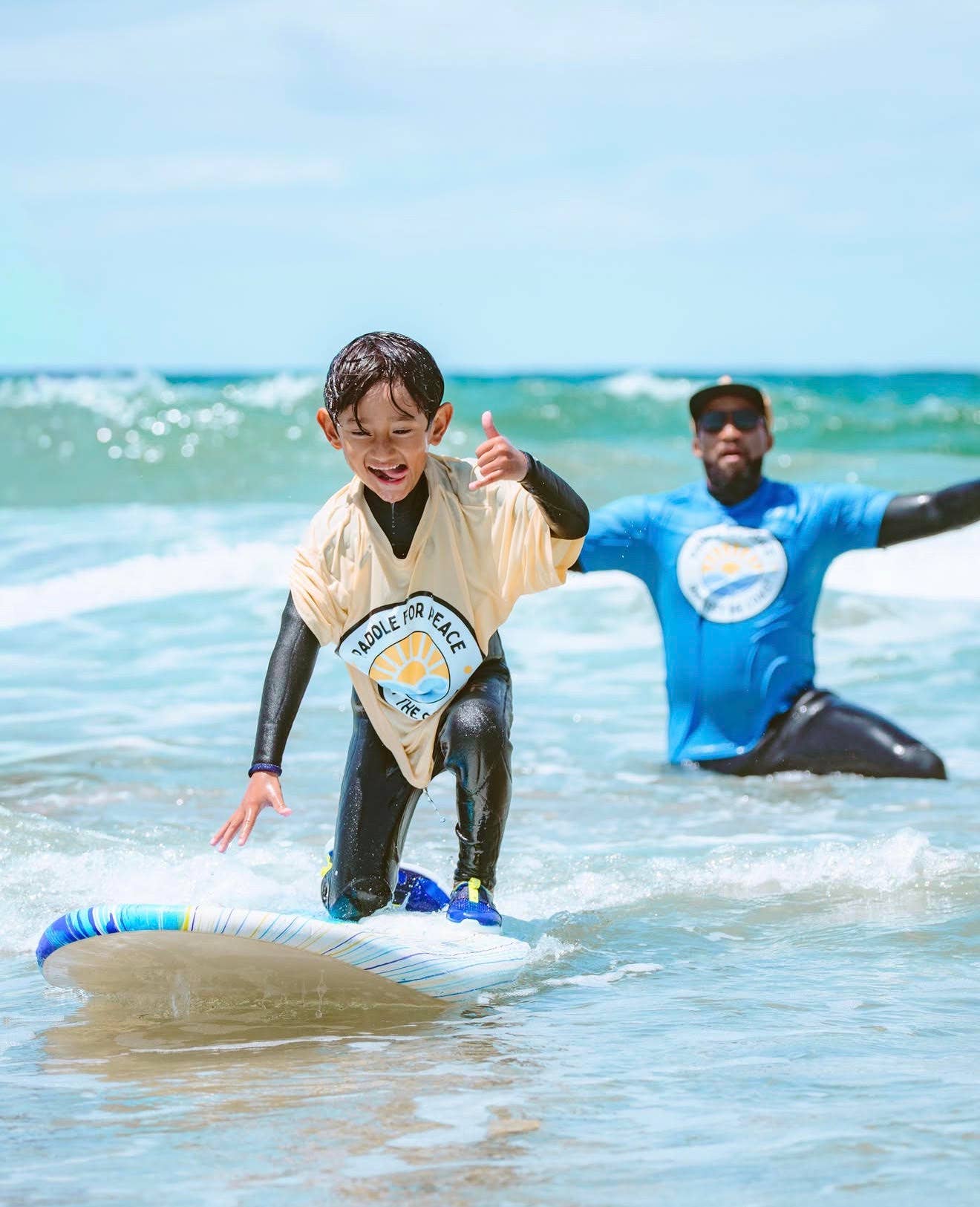
Paddle For Peace
Where: San Diego
Since: 2020
On June 6, 2020, in the days after the deaths of George Floyd and Breonna Taylor, surfer Risa Bell organized a memorial paddle-out at Tourmaline. Thousands showed up. Bell, a biracial surfer raised in the water on Guam, turned that moment into Paddle for Peace, a 501(c)(3) with a three-word mission: diversify the coast.
For years, the group has served low-income, minority, and underserved youth through their Surf and Science Outdoor Program, the Coastal Ninja Academy classroom series, and the Rising Tides Youth Leadership program. The core costs of all of these activities – the youth’s transportation to and from the beach, their surf and science gear, and the skilled instructors who lead them – are all covered by donations. The group also hosts Juneteenth BBQs, toy drives, community paddles and more. 2024’s No Wetsuit November effort brought in over a quarter more than their $5,000 goal as supporters took on the chilly November waters of San Diego to raise money for the group’s activities.
How To Give:
- Donate: Donate to Paddle for Peace (501(c)(3), EIN 86-3154307). Gifts cover transportation, gear and instructors for youth programs.
- Time: Volunteer at Paddle for Peace lessons and community events.
Laru Beya Collective
Laru Beya Collective
Where: Far Rockaway, Queens, New York
Since: 2018
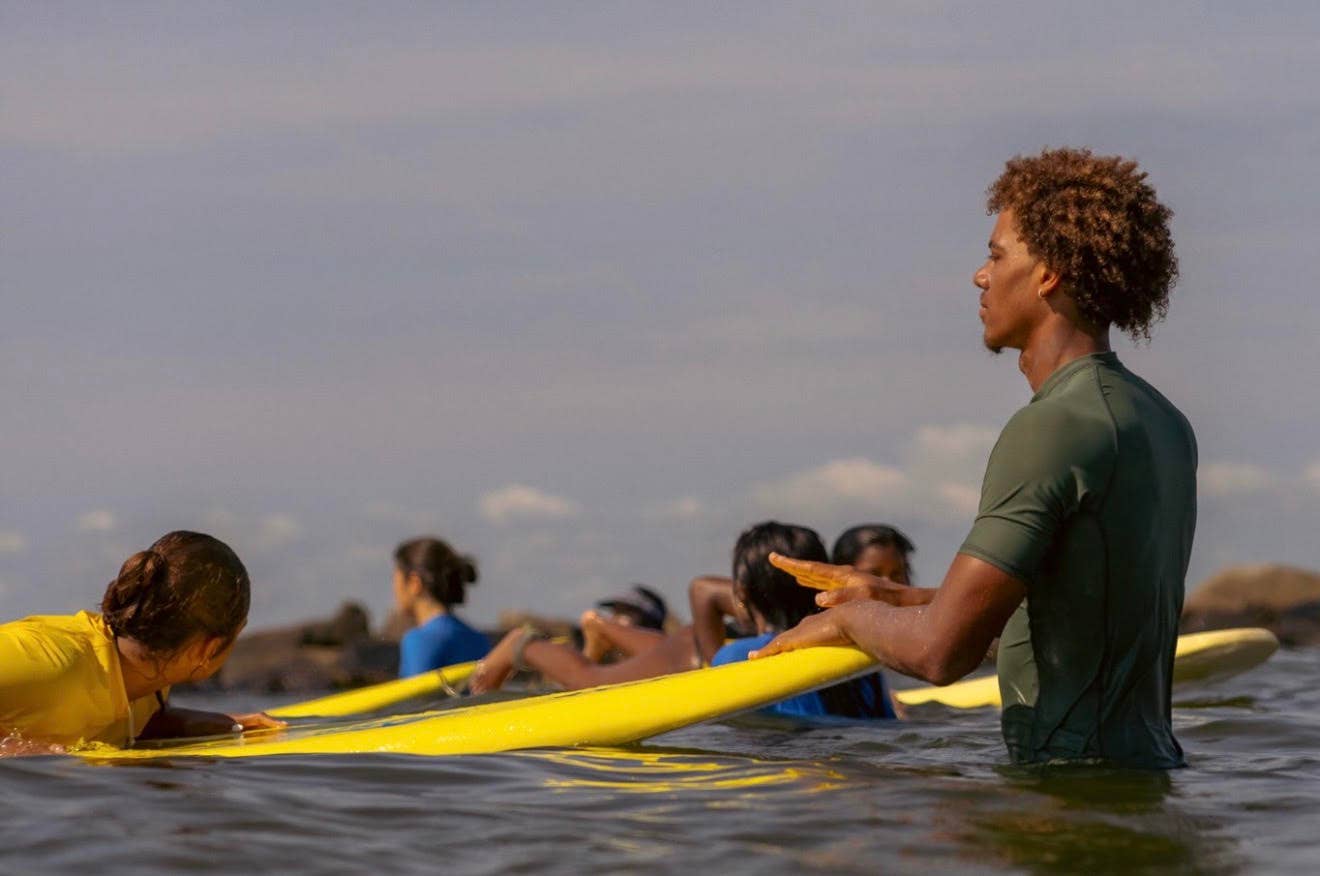
Take the A train to Beach 67 Street in Far Rockaway and you’ll find one of the steadiest surf organizations on the East Coast. Laru Beya Collective — the name means “on the beach” in Garifuna, the language of an Afro-Indigenous people of Central America and the Caribbean — has been teaching historically excluded Rockaway kids to surf and swim since 2018. On a peninsula where plenty of kids live a short walk from the ocean, knowing how to handle yourself in it isn’t optional.
Co-founders Warren Sampson and Aydon Gabourel, now Laru Beya’s executive director, had spent years watching surfers in the water just beyond their Far Rockaway front doors. When Aydon’s 11-year-old daughter Adanya expressed interest in learning to surf, Aydon Aydon and Warren saw a chance to share that joy with other young people in the neighborhood. That became Laru Beya.
The volunteer-run nonprofit now reaches more than 150 young people a year, ages 8 to 18. Lessons cover water safety, lineup etiquette and individual instruction in the water, but the structure is built around mentorship: young surfers work alongside volunteer mentors, some of whom are working toward surf-instructor certification. Members also train for competitions like the Sisters of the Sea Classic in Jacksonville, and the program extends beyond the shoreline into art workshops, media classes, environmental stewardship and community events. “The Laru Beya Collective means being surrounded by a safe and supportive community,” Adanya Gabourel told Field Mag.
In October 2026, New York’s surf and art communities teamed up for Shared Waters, an auction of ten hand-shaped boards painted by artists including Mickalene Thomas and Felipe Baeza and glassed by Kings Glassing, a measure of how strongly the city’s surf community has rallied behind the program.
How To Give:
- Donate: Donate to Laru Beya Collective.
- Gear: Laru Beya accepts gently used wetsuits and boards.
- Time: Volunteer on lesson days, beach cleanups, photography, or work beyond the water.
Related: From The Inkwell To A Wave-A-Thon
Beyond the First Wave
The first wave is what gets photographed. The real work happens before and afterward. It happens when a child learns to swim confidently, when a beginner comes back for another lesson, and when a young surfer who once needed someone to push them into a wave becomes the instructor helping someone else.
That’s how access becomes belonging. And that’s how belonging becomes a lasting surf community. I’ve seen this up close. No matter how many sessions I’ve worked, and no matter how exhausted I am by the end of a long day in the water, there’s a euphoria in watching a kid ride their first wave that never gets old. Every kid on those beaches deserves that wave, and a community that brings them back for the next one. That continuity depends on sustained funding, and it’s exactly what a Giving Tuesday gift can support.
Related: Why Community-First Surf Events Like A Great Day In The Stoke Matter So Much
More Than a Donate Button
Money matters most to small organizations like these, and Giving Tuesday matching campaigns can double what you give. But a check isn’t the only way in:
- Clean out the garage. Black Surf Santa Cruz and Laru Beya both accept gently used gear. Check with any group before you drop off that 4/3 you outgrew.
- Show up. Every group here needs water helpers, photographers and people to haul boards to and from the van.
- Bring your shop or club. Sponsor a beach day, host a film screening, or run a fundraiser session at your local break.
- Make room in the lineup. Share a wave. Say hi to the new kid. It costs nothing.
These organizations aren’t just introducing people to surfing. They’re raising its next generation of instructors, leaders and ocean stewards, because the future of surfing depends on who gets access to it today.
Tony Corley wrote to SURFER looking for a few people who looked like him out in the water. Half a century later, they fill beach days at Cowell’s, Dockweiler, Tourmaline, and Rockaway by the hundreds. On December 1, help make sure that the next kid who paddles out for the first time has a board under them, a trusted mentor beside them, and people who will still be there next season.
Related: Kickin’ It With Kyle Rapps at Bruce’s Beach in Manhattan Beach
Sources
- The Black Surfing Association Is Empowering Black Youth in Rockaway — World Surf League
- Tony Corley — Encyclopedia.com
- Black Surfing Association — Encyclopedia of Surfing
- Diversity in the Lineup: Black Surfers Collective Draws 125 to Beach Day — The Click
- Nick Gabaldón honored — Cronkite News
- Black Surfers Collective — LA Sentinel
- A nonprofit celebrates Juneteenth by helping people catch waves — KTVU
- Black Surf Santa Cruz — City on a Hill Press
- Black Surf Santa Cruz — Benevity
- Native Like Water
- Native Like Water InterTribal Youth camp — Times of San Diego
- Native Like Water — The Surfer’s Journal
- Paddle for Peace — Benevity
- Paddle for Peace donations — Givebutter
- International Surfing Day with Paddle for Peace — Surfrider San Diego
- No Wetsuit November 2024 — Givebutter
- Laru Beya surfboard art auction — Field Mag
Additional sources and organization pages (checked October 21 and November 7, 2026)
- Black Surfers Collective program and sponsorship details — StupidDope
- Black Surfing Rockaway — CBS New York via KVIA
- Black Surf Santa Cruz — official site
- Native Like Water — official site
- Bird Rock Coffee x Paddle for Peace
- Blavity: Black Surfers Collective founding
- Laru Beya Collective Is Breaking Barriers for Black Surfers in NYC — Field Mag
- Rockaway Beach World Ocean Day with Laru Beya — QNS
- NYC kids can learn to surf for free thanks to Black Surfing Rockaway — Time Out New York
- Louis Harris — The Explorers Club 50
- How pro surfing is evolving with the help of Indigenous leaders — World Surf League