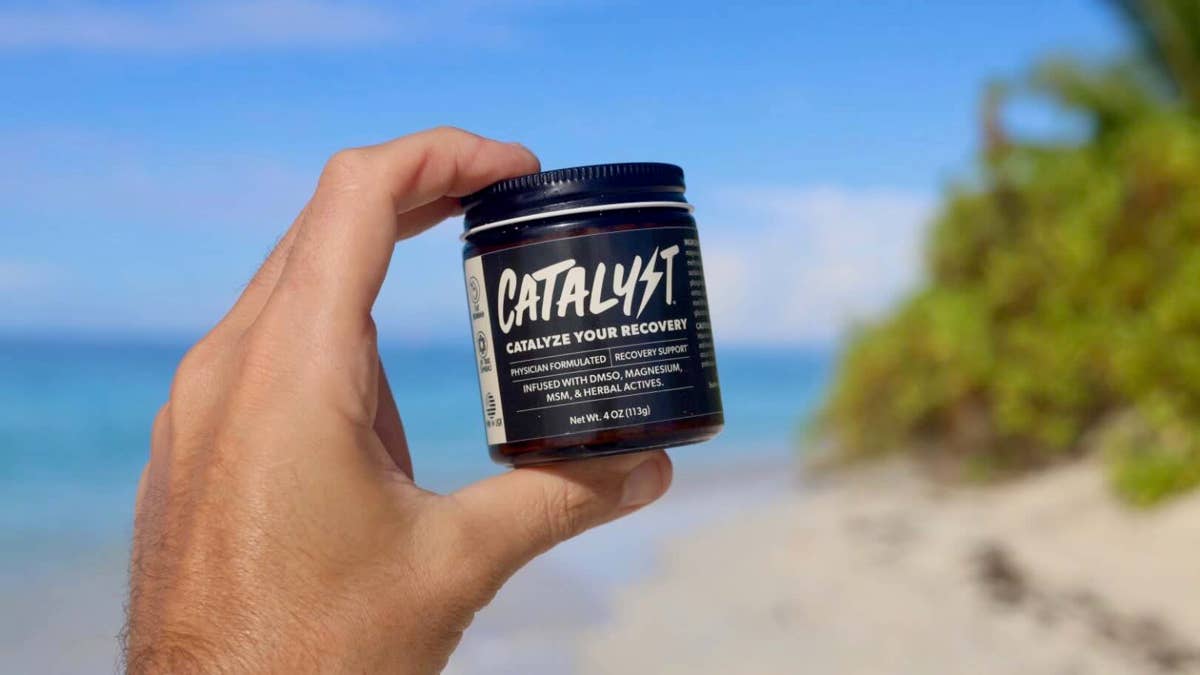
Over the past few years we’ve featured several contributions from Dr. John Baker whose North Shore studio is essentially a healing headquarters for everyone from elite surfers to everyday athletes. Throughout this time, Dr. John was developing a unique product to help patients bounce back from injuries to stay nimble and pain-free in the lineup.
We caught up with the doctor to learn all about Catalyst and why it may be one of the most practical tools you can add to your kit.
First of all, what is Catalyst Cream?
Catalyst Cream is a physician-formulated recovery cream developed on O’ahu’s North Shore for the demands of heavily used bodies. Originally built for surfers, athletes, watermen, laborers, and active people who want to recover more efficiently, the formula was designed around ingredients traditionally associated with connective tissue health, post-activity comfort, circulation, hydration, and healthy inflammatory balance — supporting the body’s natural recovery processes rather than simply overpowering sensation temporarily.
Tell me about the common surf injuries you see and what is the nature of the pain?
Surfing creates a strange kind of wear on the body because most of it doesn’t happen all at once. It accumulates — sometimes slowly, sometimes quickly.
A lot of surfers aren’t walking around saying, “I blew my shoulder out.” Catastrophic injuries absolutely happen, but they’re usually not what takes most people down. It’s usually more like: “My body just kind of feels worked over, all over, all the time.”
You can usually tell how good the surf has been by how slowly everyone gets out of their trucks the next morning, or how slowly everyone is moving around Foodland.
The body absorbs an incredible amount of repetitive stress in surfing. Thousands of paddling repetitions. Constant end-range spinal extension. Rotational force through the ribs and shoulders. Ankles, knees, and hips adapting to unstable surfaces wave after wave. Then add wipeouts, long hold-downs, travel, poor sleep, repetitive impact, and years of accumulated wear.

Dr. John Baker
At a certain point, the issue usually isn’t one dramatic injury. It’s that the body starts struggling to keep up with the amount of demand being placed on it. That’s when people start noticing persistent tightness, tissue irritation, inflammation, stiffness, reduced recovery capacity, and the feeling that they’re carrying fatigue longer than they used to.
And surfers are notoriously good at pretending none of it exists.
On the North Shore especially, bodies don’t get much of an off-season. People organize their lives around movement and swell. If the waves are good, most people paddle out anyway — or fly somewhere where they are. There’s a joke around here that people from the North Shore won’t drive to town for a swell but have no problem flying across the world for one.
That’s really the environment Catalyst came out of — heavily used bodies that needed recovery support strong enough to keep pace with the lifestyle surrounding them.
Related: The Winter Surfing Playbook: Train Smarter, Recover Faster, Surf Longer
How does Catalyst Cream help address pain and support healing?
The philosophy behind Catalyst was simple: the body isn’t asking to be ignored. It’s asking for support.
A lot of recovery products are designed primarily around sensation. Intense cooling. Intense heating. Temporary distraction. The goal is often to dominate the nervous system strongly enough that you notice the sensation more than the tissue underneath it. But sensation and recovery are not the same thing — and I’ve seen a lot of people get hurt far worse from covering up the body’s signals and continuing to push under-resourced.
Recovery is an active rebuilding process. Your body is constantly remodeling itself around the demands placed on it — restoring connective tissue, managing inflammation, regulating hydration, replenishing minerals, and adapting to stress. Those processes require resources. That idea became the foundation of Catalyst.
The formula starts with grass-fed tallow — not because it’s trendy, but because it’s biologically compatible with human skin and tissues. Rich in fat-soluble vitamins A, D, E, and K, along with supportive fatty acids, it creates a nourishing recovery environment while integrating naturally into the skin.

Dr. John Baker
From there, supportive minerals, sulfur compounds, botanicals, and connective tissue-focused ingredients were intentionally layered together. DMSO, a tree-derived compound, has long been valued in recovery settings involving heavily stressed soft tissues and for its ability to rapidly penetrate tissues. Magnesium supports muscle relaxation and neuromuscular function. MSM provides sulfur compounds traditionally associated with connective tissue health. Arnica has a long history of topical use for bruising and post-impact comfort. Vitamin C and copper were included for their roles in connective tissue and collagen-related processes. Rosemary, noni, and gotu kola have traditionally been used to encourage circulation, connective tissue integrity, and tissue comfort.
Even the menthol was approached differently — it provides immediate cooling and comfort, but it’s far from the entire point. Every ingredient was selected because it served a functional role in the recovery environment the formula was designed to create, vetted over decades of use.
And importantly, Catalyst wasn’t designed to replace good recovery habits. Saunas matter. Mobility work matters. Strength training matters. Sleep matters. Cold plunges, massage, hydration, nutrition, movement quality — all of it matters. But many of those practices primarily stimulate recovery processes rather than directly contributing supportive compounds involved in rebuilding tissues.
You can stimulate recovery all you want, but construction still requires building materials. That’s where Catalyst fits in. Most surfers use it after sessions, after training, before bed, or during stretches where physical demand starts outpacing recovery. Others apply it before surfing on areas that tend to tighten up — shoulders, neck, ribs, upper and lower back, hips, knees.
The goal isn’t temporary relief. The goal is helping the body maintain the resources and recovery environment it needs to keep adapting well over time.
Catalyst Cream is not intended to diagnose, treat, cure, or prevent disease or injury. It is a recovery-support product designed to complement active lifestyles and the body’s natural recovery processes.
Related: Hip Mobility: The Secret to Staying Deep in the Barrel
If someone has a good movement foundation, how can Catalyst Cream keep them feeling good and get them back in the water quickly after an injury?
Good movement quality is still foundational. You can’t out-cream poor mechanics, chronic overload, terrible sleep, and ignoring recovery completely.
But even people doing everything right still accumulate stress. The surfers who stay healthiest long-term are usually the ones who respect recovery before the body forces them to. They understand the body adapts incredibly well when it’s given the right environment and resources.
If someone overloads a shoulder after six hours of paddling, tweaks their low back during a heavy swell, or strings together multiple days of surf and training without enough recovery time, Catalyst helps reinforce the tissues going through that stress.
A lot of surfers describe the experience as feeling less stiff, less beat up, more capable of bouncing back between sessions. And in surfing, recovering even slightly better every day compounds dramatically over a run of swell — and over years.
Because eventually recovery stops being about comfort and starts being about access. Access to movement. Access to the ocean. Access to the parts of life that make people feel most alive.
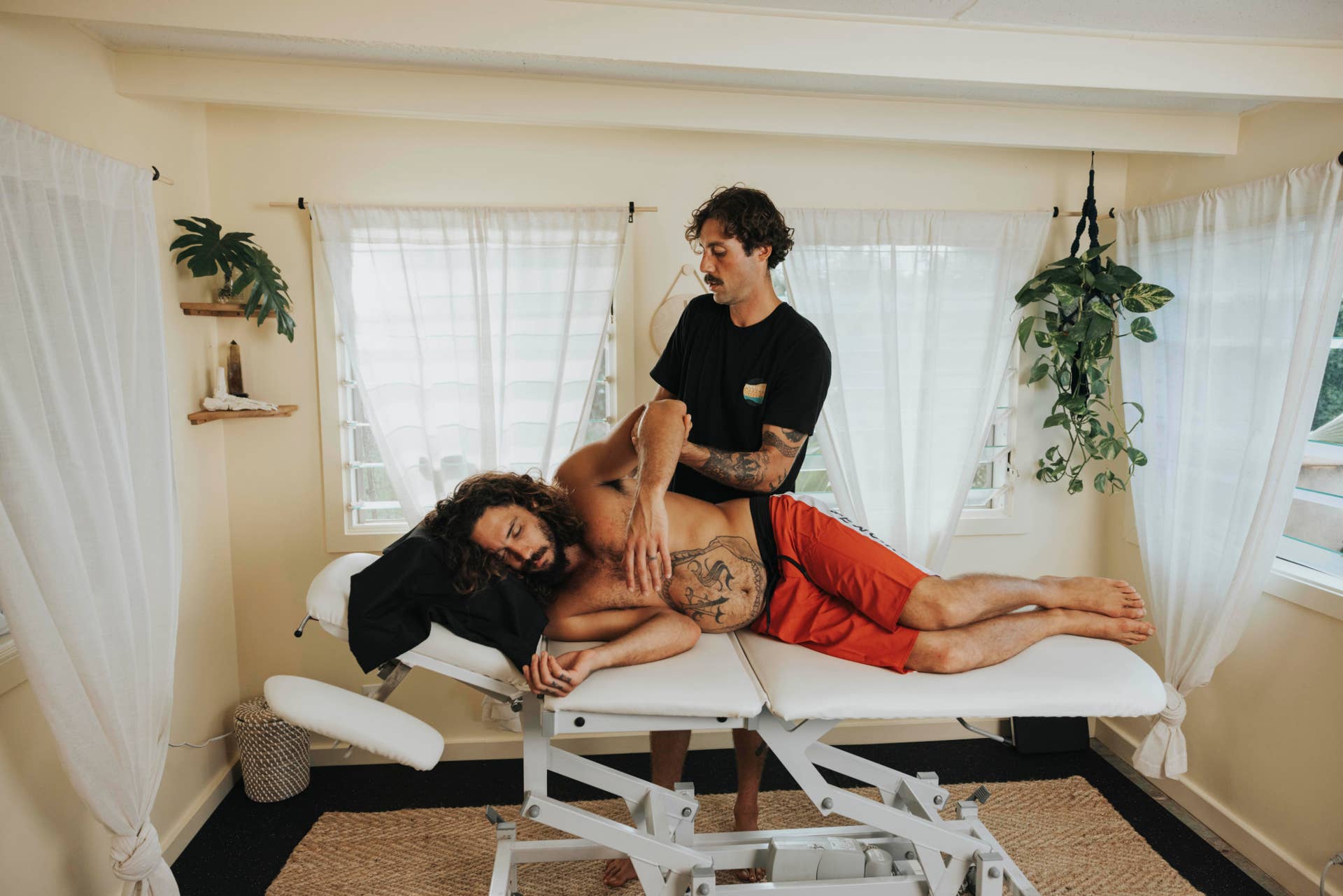
Dr. John Baker
Anything else you’d like to add?
Most surfers spend years chasing better boards, better waves, and better swell forecasts. Eventually you realize your body is the piece of equipment making all of it possible.
Nobody ignores maintaining their board after heavy use. Dings get patched. Wax gets reapplied. Broken leashes get replaced. The human body is no different.
Catalyst wasn’t created in a boardroom trying to capitalize on wellness culture. It came out of working with heavily used bodies on the North Shore — surfers, athletes, watermen, fighters, laborers — people whose lives are deeply tied to movement.
The goal was simple: create something that helps reinforce the body’s natural recovery processes so people can continue surfing, training, moving, and living at a high level for a very long time.