Since the beginning of the year, Hawaiʻi has had little time to catch its breath in between storms and disasters. In March, Kona low floods swept across Oʻahu’s North Shore and parts of Maui. Since then, Hurricane Lala has battered Hawaiʻi Island, Hurricane Lowell unleashed havoc on Kauaʻi, and just this past week, Hurricane Nolo threatened to deliver another blow before weakening and sparing the island a direct hit. For families still displaced from the last storm, each new one arrives before recovery from the last is complete.
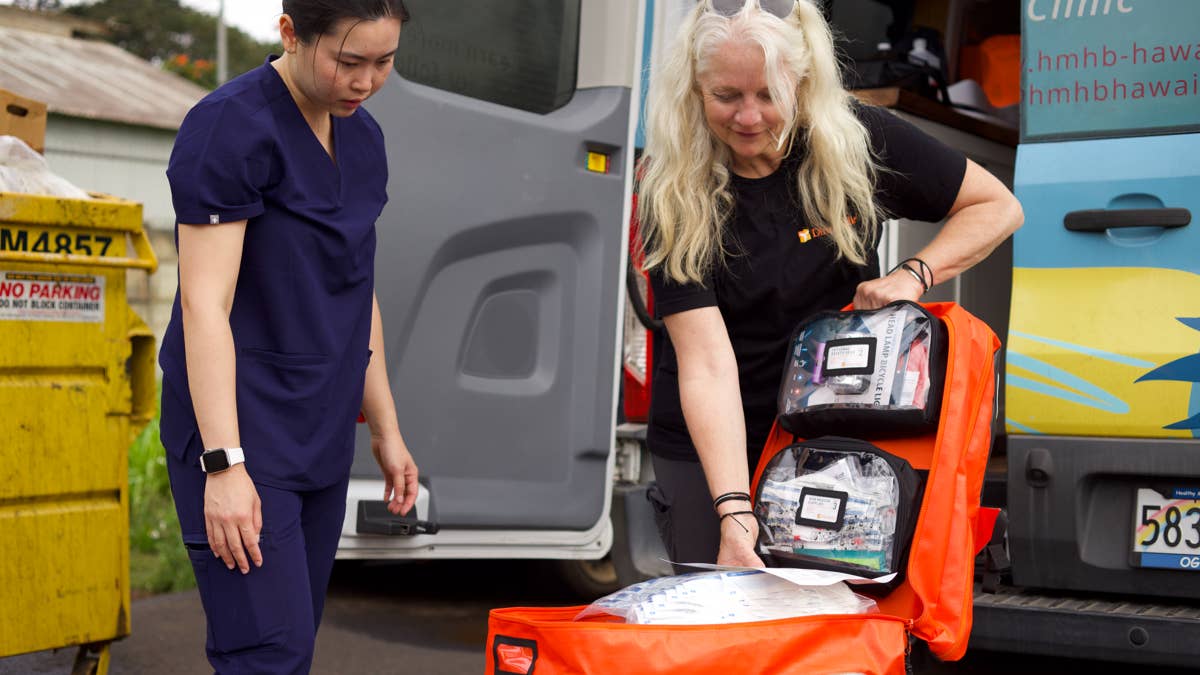
Through it all, Healthy Mothers, Healthy Babies (HMHB) has been on the ground, delivering diapers, formula, car seats, medication, and clinical care to families navigating disaster on top of pregnancy, newborns, and daily life. The organization’s partnership with Direct Relief, dating back to its COVID-19 response in 2021, has helped fund and supply that work through the Maui fires in 2023 and the string of disasters hitting the islands this year.
We spoke with Jacquelyn Ingram of HMHB about what it takes to keep showing up, storm after storm, and what recovery looks like for the families still living through it.
SURFER: From the Kona low floods in March to Hurricanes Lala and Lowell, Hawaiʻi’s communities have faced repeated disruptions. Looking back at the flood response, what did it take to get supplies and care into communities, and what helped establish a foundation for responding again?
After the floods, HMHB mobilized quickly to identify families who needed support and move supplies into affected communities. The response was very practical: families needed diapers, wipes, formula, safe sleep items, car seats, strollers, hygiene supplies, direct financial assistance, and help navigating medical and social services. With each disaster, people looked to HMHB for support, so this has really been an ongoing service all year.
One of the biggest challenges was access. Roads were impacted, traffic was backed up in key areas, and families were spread across coastal and rural communities. Even when supplies were available, getting them to the right place at the right time required coordination, local knowledge, and trusted relationships.
Another challenge was that many families were hesitant to ask for help. Some wanted to save resources for others they felt were in greater need, even though they were also struggling. That is part of the spirit of Hawaiʻi, people often think of their neighbors first.
What worked well was the combination of strong partnerships, mobile outreach, and community trust. HMHB was able to deploy mobile vans, coordinate with partners, and bring supplies directly to families. Having established relationships before the disasters made it possible to respond faster and with more care.
SURFER: How has HMHB’s partnership with Direct Relief helped you keep showing up for families across successive disasters? What does that partnership look like on the ground, from getting a mobile clinic into an isolated community to supporting families long after the immediate emergency?
Direct Relief has supported HMHB since the launch of our clinical work in 2021. This started with COVID-19 pandemic response supplies and vaccines, including PPE. We were able to distribute information and supplies along with local produce boxes, a unique way to support families and farmers on Oʻahu, while increasing our visibility. Since then, we have received in-kind donations and medications from Direct Relief, as well as support for our health equity work, reproductive care, and disaster relief funding for our response to the Maui fires (2023) and Kona low flooding (2026). We are established as maternal child health experts as well as trusted community responders, emphasizing clinical care and social services for the whole family.
After the devastating fires in Maui, with the swift support of Direct Relief, we were able to deploy our mobile clinic and clinical staff within 48 hours. We established some of the first medical relief tents on the beach. When the road to Lahaina was closed, we got on a boat, with our Direct Relief field medic packs, and were jet skied to shore. We stayed on to support families with re-entry, offering families returning to the burn zone a safe and respectful way for them to visit their properties, with medical, mental health, and local volunteers assisting daily.
Non profit organizations like HMHB often serve as the backbone of local support systems, helping to fill gaps through preventative services, outreach and culturally responsive care.
When the Kona lows came in, one right after another, HMHB was there to assist rapidly once again. Our mobile clinics were able to quickly deploy resources to people who may not have transportation, childcare, documentation, or insurance, things that were needed immediately to receive clinical care. And again, our work continued beyond emergency response, with pop-up distribution events, support at community hubs, and the ability to reach people wherever they might be. Even now, community members and families continue to reach out to us, demonstrating their trust that HMHB will be there for them and what is needed.
SURFER: Surfers, lifeguards, firefighters, and watermen know these coastlines and the people who live along them. What does that local knowledge make possible during a disaster, and how do those relationships help you reach families when storms repeatedly disrupt access?
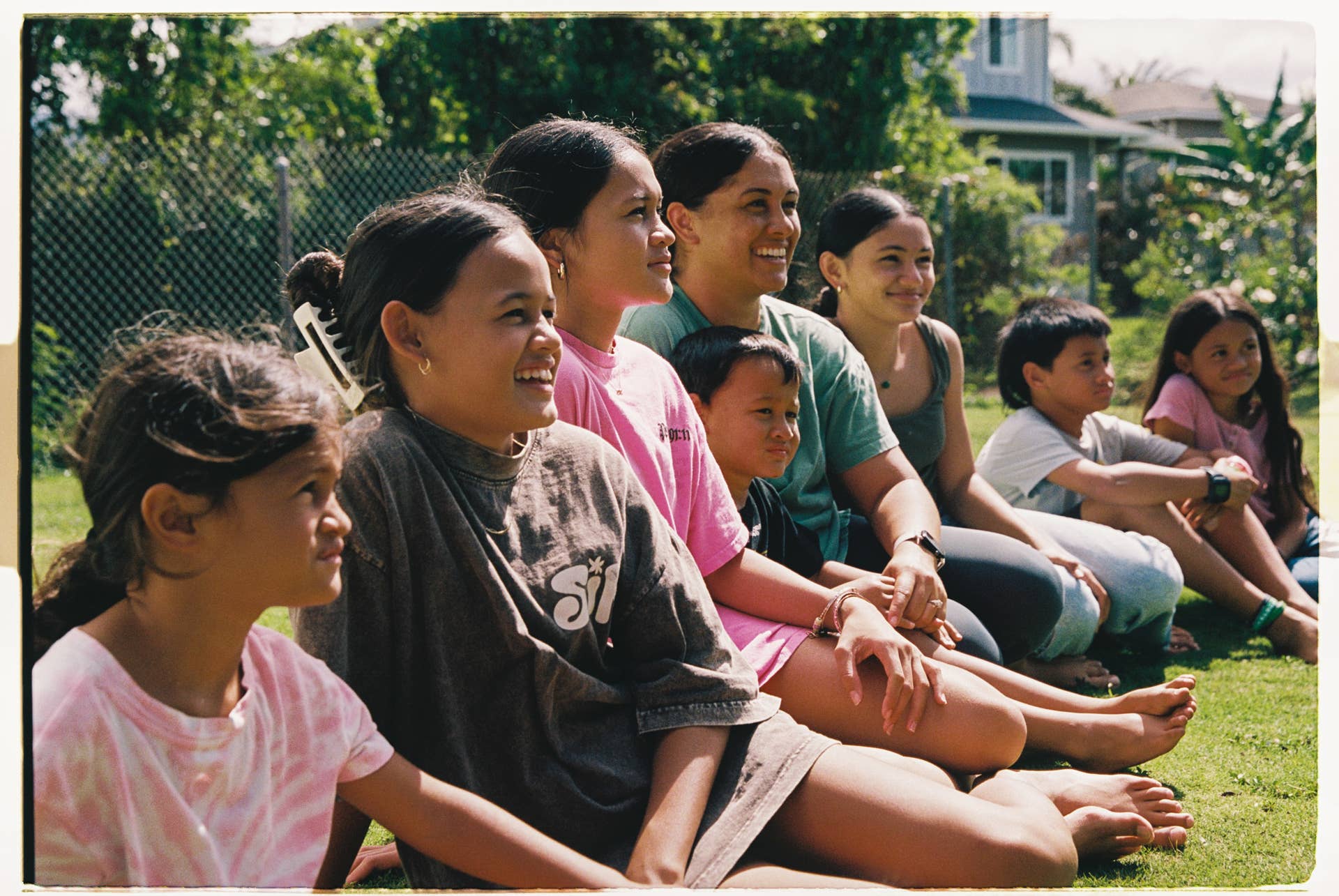
In Hawaiʻi, local knowledge is essential. Lifeguards, surfers, firefighters, watermen, aunties, uncles, and neighbors often understand their coastal communities in ways no outside response system can replicate. They know which roads are passable, which families are isolated, which areas are vulnerable, and who may need help but may not ask for it. They also tell us when someone has changed islands, so we can continue to support them, no matter where they are.
That knowledge makes disaster response faster, safer, and more effective. It also builds trust. After a traumatic event, families are more likely to receive help when it comes through familiar people and trusted local networks. This is critical because local residents and first responders knew which roads were passable, which areas were unsafe, which families might be isolated, and who might need help but not ask for it. From our past experiences working alongside communities during disasters, HMHB also plays an important bridging role, helping connect grassroots community response with formal emergency response partners so that resources move more smoothly, families are not overlooked, and support reaches rural, coastal, and hard-to-reach areas in a timely and respectful way. Our relationship with Direct Relief is a beautiful example of how an international aid organization can support local efforts, and they do so incredibly well, listening first, and only sending what we specifically ask for.
HMHB
SURFER: What should readers understand about the recovery still happening in the communities across Hawaii? What have you seen that captures both the ongoing needs and the way neighbors continue to care for one another?
This response shows how communities come together, lending a hand to neighbors even when they are navigating their own recovery. During our response to the Kona low floods, one mother on the North Shore of Oʻahu requested support but wanted to save resources for families she felt were in greater need. After her baby arrived, she was ready to receive help. That is the spirit of the people here, thinking of their neighbors even while facing challenges of their own.
Needs are on-going after the headlines pass. People must have access to healthcare and essential services, to rebuild their lives and have a sense of normalcy. We show up for our community. Our consistency provides reassurance and helps build resiliency.
For people who know these islands through their waves and beaches, it is important to remember the families who call these communities home. From the Kona low floods on Oʻahu to Hurricane Lala’s impacts on Hawaiʻi Island and Hurricane Lowell’s impacts on Kauaʻi, successive storms have disrupted daily life and access to care. Each island’s experience is different, the needs are different. But what remains unchanged is our ability to stand by our ʻohana during difficult times.
People need continued access to healthcare and essential supplies to rebuild their lives and find a sense of normalcy. Our work is to keep showing up, through mobile care and community outreach. That consistency provides reassurance, especially when another storm comes before recovery from the last one is complete.
SURFER: What has HMHB’s response to Lala and Lowell looked like? Can you share a specific example of how supplies, mobile clinics, or relationships established during earlier emergencies helped you reach families during these more recent storms?
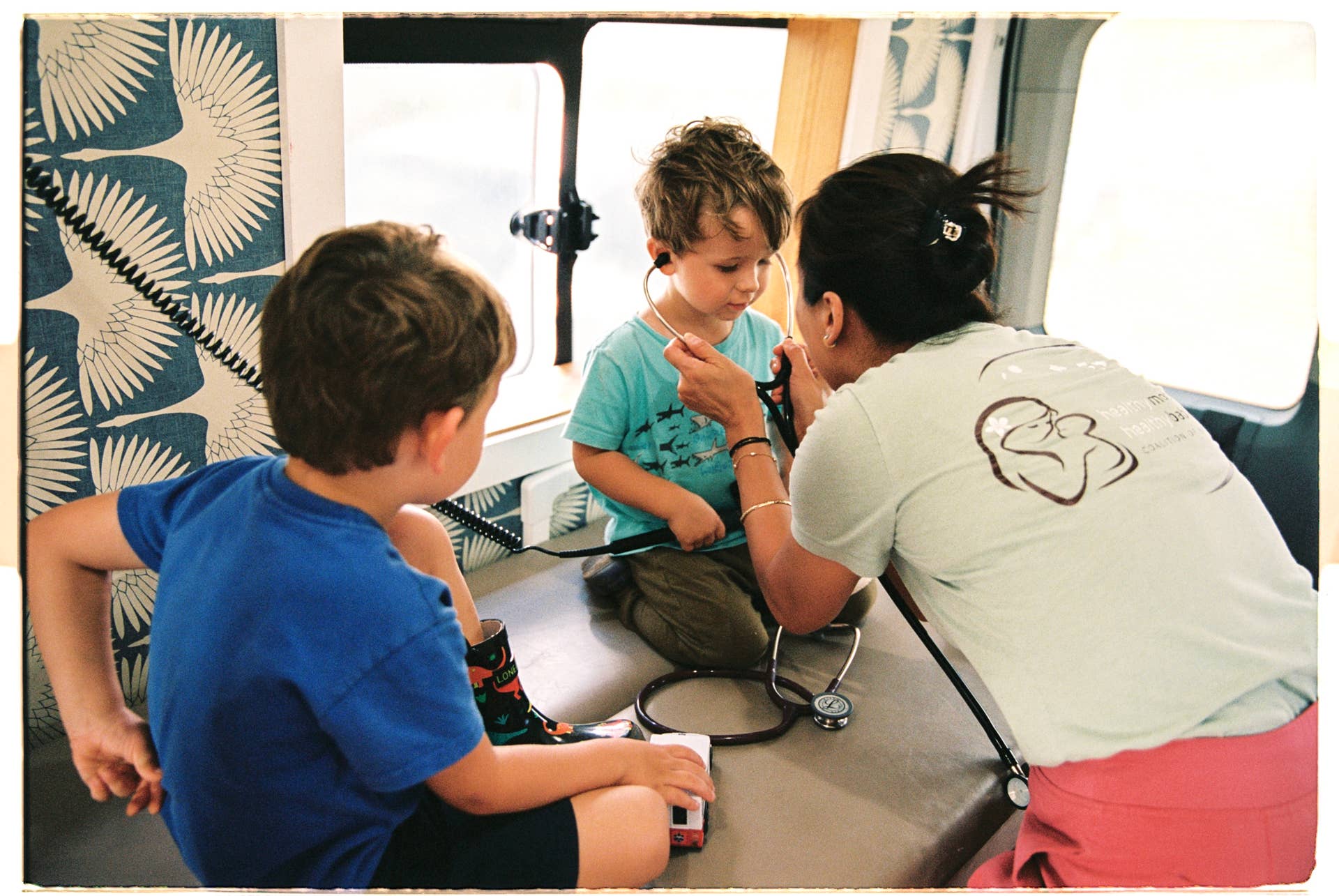
Following Hurricane Lowell, we conducted mobile outreach on Kauaʻi, and continue to support the community even just this week as Hurricane Nolo threatened to be another major event. Luckily Kauaʻi was spared an additional hurricane, but heavy rains, high surf, and gusty winds are expected. Following Hurricane Lala on Hawaiʻi Island, our team spent about two weeks in Kaʻū and has continued reaching families in their homes and temporary housing. These mobile clinics allow us to bring care and supplies directly to people whose transportation, housing, and routines have been disrupted.
One example is our recent visit to a hotel in Hilo, where 25 families displaced by Lala are staying. We met with a mother who lost her home in Puna. She and her fiancé have four young children, and she had been so focused on finding shelter and stabilizing her family that she had not had time to address her own medical needs. We provided clinical care and replaced needed medication, as well as diapers, children’s snacks, and some items to bring the kids a sense of normalcy and joy, things like bubbles, books, a doll.
Our long-time relationship with Direct Relief helps us prepare aid ahead of an emergency situation. Ahead of Lala and Nolo, Direct Relief responded to our request for urgently needed medications, water purification supplies, solar chargers, and more, and within a day or two it arrived at our offices. The partnership works because we trust they will show up when needed, with what is needed, and that in turn allows us to maintain trust with our patients and the communities we serve here. We bring local knowledge, clinical teams, and rapport with families, they support us with donated aid. Together, that helps us meet people where they are, with exactly what they need.
HMHB
SURFER: What happens when another storm threatens while families are still recovering from the last one? For a pregnant woman or a family with a newborn, how can repeated disruptions affect access to care, essential supplies, and a sense of stability?
Another storm can arrive just as a family is beginning to regain its footing. After the Kona low floods on Oʻahu, Hurricane Lala on Hawaiʻi Island, and Hurricane Lowell on Kauaʻi, recovery is happening at different stages across the islands. On Hawaiʻi Island, some families displaced by Lala were still in temporary housing when Nolo approached. They were trying to find work, return their children to school, and address their health needs while facing fresh uncertainty.
For someone who is pregnant or caring for a newborn, those disruptions can make it harder to attend appointments, refill medications, or obtain diapers and infant-feeding supplies. When finding shelter and food takes all of a family’s attention and resources, a parent’s own healthcare can fall behind. We saw that with Ambrie, who had been concentrating on getting a roof over her children’s heads.
The needs also change over time. In the first days, families may need basic supplies and immediate medical care. Later, they may need help navigating housing, dealing with mold, returning to school, or managing the emotional effects of displacement. Another storm adds stress before those needs have been resolved.
That is why continued outreach matters. People know and trust we will show up in vulnerable times. We listen, provide care, guide families to available resources, and keep checking in. Sometimes it is a prescription or a prenatal visit. Sometimes it’s a snack or a toy that helps a frightened child feel more settled. These are all part of helping families regain stability.
SURFER: Any other things you would like to share about what happened or is still happening?
This response shows how the community can work together, lending a hand to neighbors in need, even when everyone has gone through a traumatic event. Today, I drove up to the North Shore to see a client that requested support earlier, but also wanted to save resources for those more in need. Now that her baby is here, she is ready to receive help. This is the spirit of the people, putting others before themselves.
Construction still continues at Waimea Bay, one lane of traffic backing up in each direction. This is an El Niño year, and every day continues to rain off and on, then the sun comes out and a rainbow peeks through. The grocery stores have reopened, tourism is trickling back with those visiting food trucks or starting to take surf lessons again, and kids are hoping it’s summer as usual, with a little more love.
Recovery does not end when the rain stops or the roads reopen. Families are still carrying the stress, disruption, and trauma of what happened. Our work is to keep showing up after the emergency response has moved on.
On Hawaiʻi Island, affected families are in transition, some have lost everything, some are displaced, and some are already rebuilding their homes and community. People are picking up the pieces while preparing for the next climate disruption. It is a long road ahead, but one filled with resilience and hope.
On Kauaʻi, there are still pockets of the island without power, and people are settling into this new reality. Community leaders have activated, and they are collaborating with nonprofit organizations and local volunteers to get through all the lingering hard work: vegetation management, mold removal, hazardous cleaning, structural repair. There has been innovative offerings like chainsaw training offered at no cost, and a free indoor play and co-working space, so that parents can get wifi and coffee, kids can play, and everyone can enjoy some cool AC. It’s pure aloha to see the island community come together at this time.