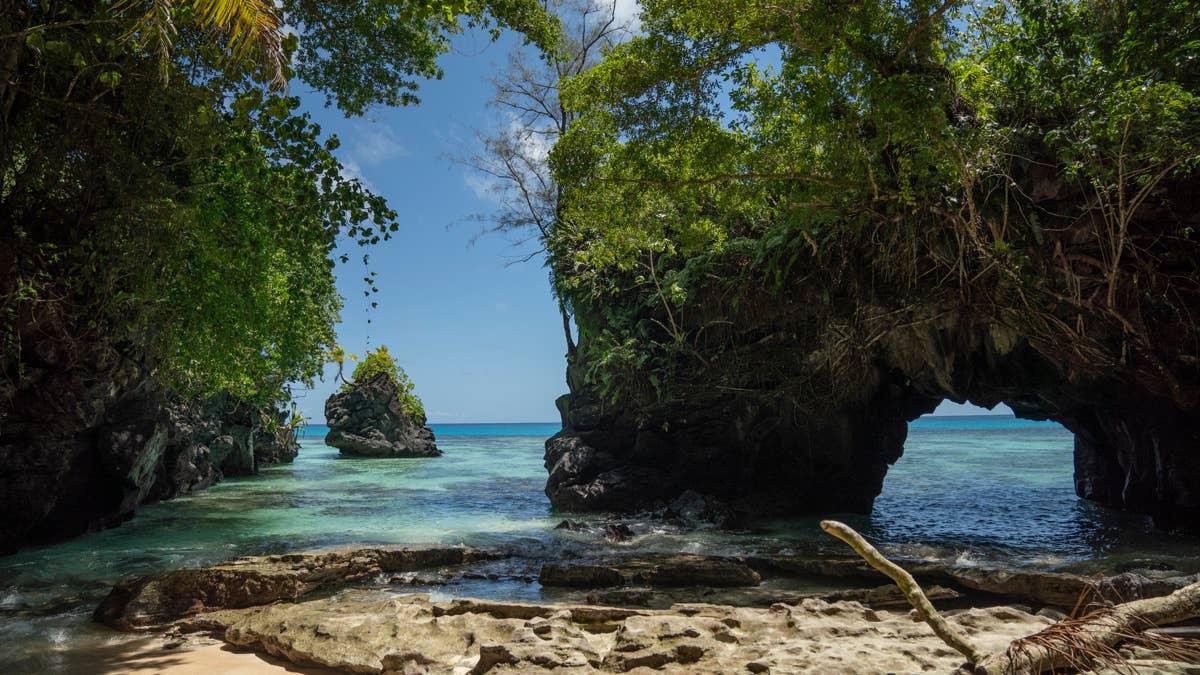
For those who tuned into Final’s Day for the WSL Fiji Pro, Cloudbreak did not disappoint. Yet, as perfect as Gabriel Medina’s 10 point ride was, that’s only a fraction of what the wave can really do. If Pipeline is the Vatican of surfing, Cloudbreak is Mecca.
No matter, there is much more to Fiji than just Cloudbreak. Home to over 330 islands, only 111 of which are permanently inhabited, where over 15 distinct languages (and over 300 regional dialects) are spoken. Through all of this diversity, there is a common thread of hospitality, warmth, and a willingness to welcome outsiders with open arms.
In the outer islands, the old way is still alive. Remote islands like Rotuma where there are no surfable waves, tourism is basically non-existent, and invitations must be granted by the chiefs. To some, ancient ways have little value in our modern world. To others, they’ve never been as important. Hannah Bennett is one of the people who realizes the value of the old ways are too important to simply let go. Although she is the point of focus for this story, this isn’t just about her – it’s much bigger.
Editor’s Note: The above clip is a scene from the upcoming film Passages of Na Kurukuru, featuring Hannah Bennett, which will be released in 2027.
If you tuned in earlier in the broadcast of the Fiji Pro, you likely saw Hannah as a guest announcer for the WSL. Her credentials include being Fiji’s first-ever female pro surfer and outgoing President of the Fiji Surfing Association (FSA), where she has served for 10 years. We recently profiled Hannah in a piece you can read here and are continuing to follow her as she enters her next chapter, a non-profit foundation called Hanua.
We’re following up because Fiji is one of surfing’s most revered regions and, from our point of view, the spirit embodied by Hanua is exactly the kind of thing we at SURFER love to see and support: locally-led organizations that aim to empower the youth and community through surfing.
Why? As surfing has exploded around the world, the access hasn’t exactly been equal. That is especially true in Fiji, where visitors have long had far more access than locals. Sure, you could write it off and say, that’s just how life is…
And you wouldn’t be wrong, but that doesn’t mean that it has to stay that way. That’s exactly what Hannah noticed coming up as a surfer in Fiji and, later, by her political science studies in the US. Plenty of non-profits groups would come in to help from the outside, but there was very little happening from within. All of this contributed to a deep calling to help Fijian youth restore their ancestral connection with the ocean and help create a bridge of opportunity into this modern world.
That is the root of it all, yet, there is much more to the story. The catalyst for Hanua is intimately intertwined with the history of surfing in Fiji, from the discovery and early days of Cloudbreak, to the evolution of Tavarua and the WSL contest, to her becoming a mother, and to the emergence of the next generation of Fijian surfers like James Kusitino. As well as the ten years she spent with the FSA and her ongoing support and mentorship from Save The Waves coalition.
These stories are all woven together as the foundation of the formation of Hanua, and are poetically captured in an upcoming film project called Passages of Na Kurukuru. SURFER is proud to be a partner in presenting this film, which begins with Hannah’s journey. To best tell this story, we caught up with Hannah on the heels of the WSL event to talk about what’s at stake for the future of Fijian surfing.
Between two worlds
Hannah introduces herself with a word: Kailoma.
“I’m what we call in the Pacific a Kailoma. In Fijian terms, Kailoma means half iTaukei (indigenous), and half something else. My mother being Rotuman, Polynesian, I’m half, and my father being American, English, German. So I am your quintessential Kailoma. And navigating those two worlds, one deeply rooted in ancestral wisdom and traditions, one very much in Western civilization, navigating those two worlds has been the story of my life.
It was challenging in the beginning when I was younger. But as I’ve grown up and matured and now have kids, I have really embraced that. In between is actually where I flourish. I love adapting to both and drawing from both.”
On growing up in the Pacific
Steve Engman
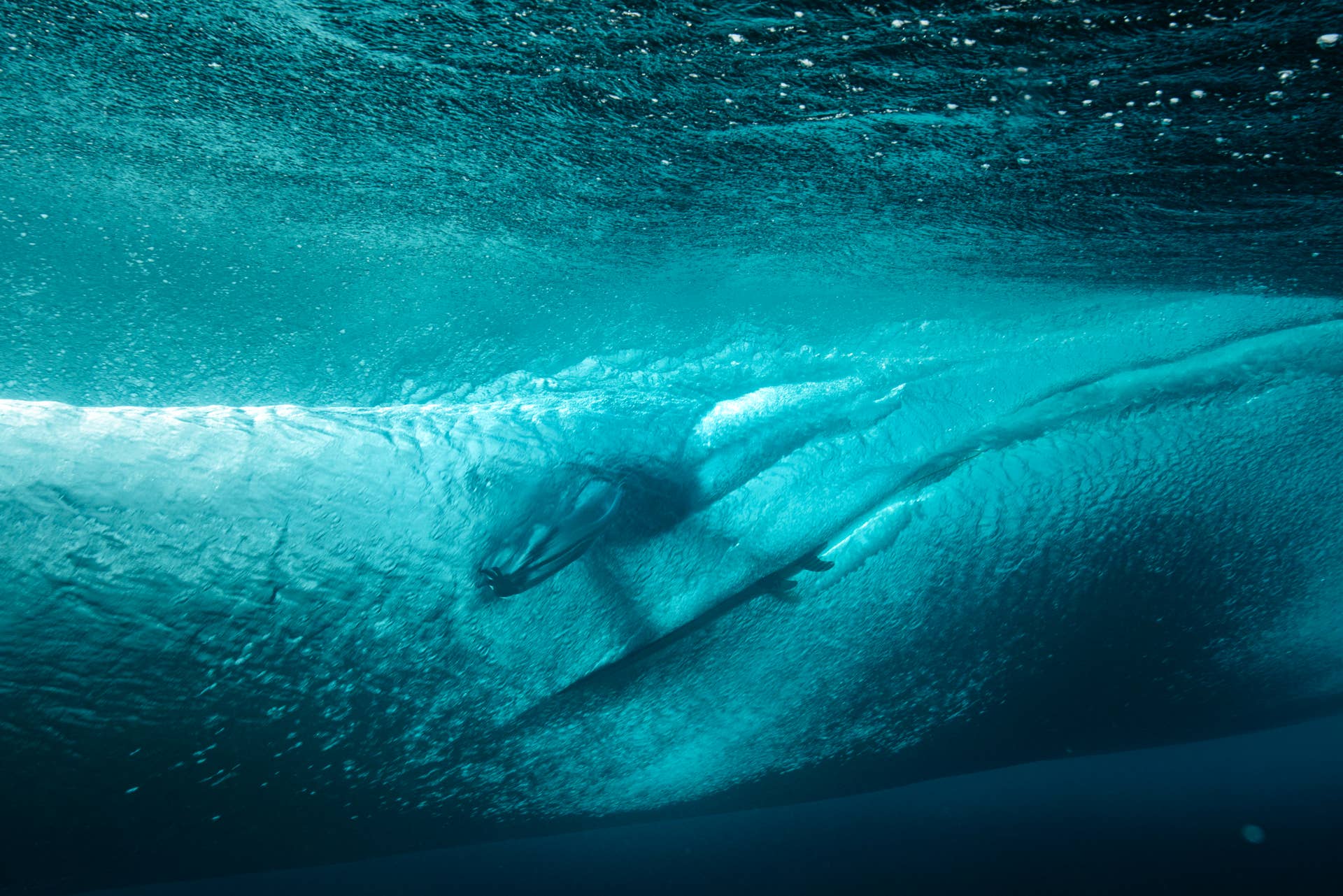
“Hanua is deeply rooted in my heritage, in that as a kid growing up, we were always recipients of something. Rotuma as an island, because it was so small and it was so remote, we were always a recipient of some sort of aid, some sort of infrastructure from governments or NGOs. There was always help coming to the island. Like, ‘oh, we’re here to help.’ That’s a wonderful thing.
But I also kind of grew up, because of that, thinking there was something wrong with us. That there was some imminent threat we were always having to be guarded about.”
I didn’t know at the time when I was a child that it was rare. It wasn’t until I started visiting America on family holidays that I realized how rare it was to come from a place like Rotuma. It was literally like stepping back in time. You were stepping into a bubble of another world that no longer existed anywhere else.”
On the stakes
“Now as an adult, I realize that although these people who were visiting were there to help us, the approach was not empowering at all. In fact, since I was a child, things have gotten worse. Rotumans are now declared an endangered culture, like an endangered language by the United Nations. We are deemed extremely vulnerable. With climate change and extractive industries approaching our shores, we’re more vulnerable than we’ve ever been.”
Hanua’s mission
Steve Engman
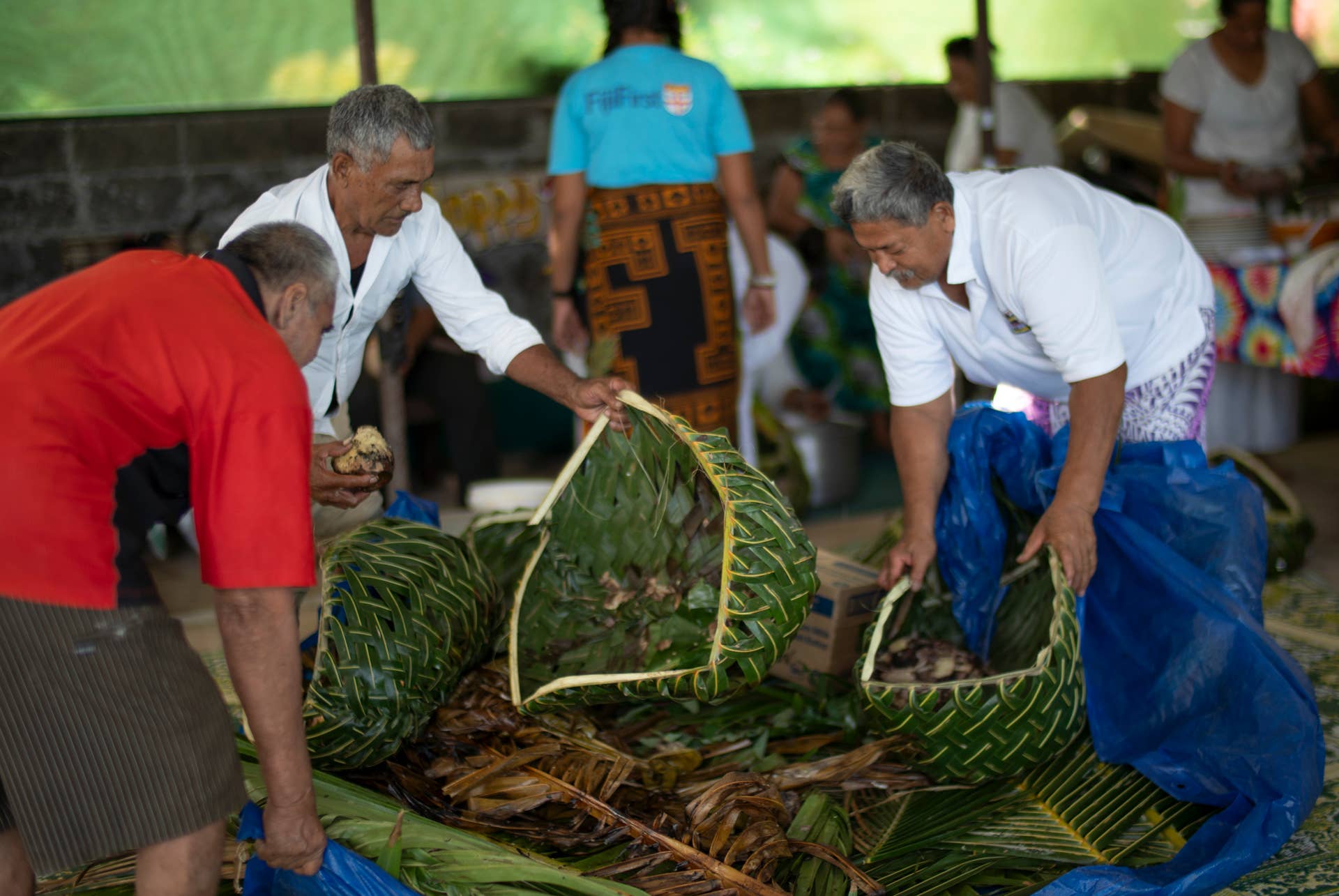
“Hanua is inspired by that fundamental error of approach by outsiders coming in to help. I want to change that approach and flip that pyramid completely on its head, and ensure that actually it is we who are the ones who have the knowledge that can help others. We’re the ones within ourselves that have the power, the wisdom, the customs, and the practices that we still practice. That is what can help the outside world.
If we could just get back to that, if we could just realize the value of that, if we could just become empowered by that again, then maybe we’d be a little bit more self-reliant and self-sufficient. And then when NGOs and groups and governments come, they’re not telling us how to plant our food, where to get our fish, when to fish, or how to manage our resources. They come instead to learn from us, to learn how we’ve done all those things for centuries in complete harmony and peace with our surroundings.
We as Indigenous peoples have our own forms of conservation that are so underrated, so undermined in today’s policy shaping, framework development, and even in science. I believe Hanua’s mission is to put that Indigenous practice, wisdom, knowledge, values, riches, whatever it is, at center stage. That needs to take precedence, and everything else follows.”
On coming home
Hannah left the U.S. after graduating from Concordia University Irvine with a bachelor’s in political science. “I always knew I wanted to move back. I felt like I could contribute more to a smaller island nation like my home than to a big country like America. I felt like just another college graduate. If I went home with the experience gained, with my degree, with all these skills, I could actually make a difference.
At the same time, there was a new chapter emerging for me as an athlete. I had played water polo as a scholarship athlete throughout college. When that came to an end, I was still in athlete mode. I was still fit and hungry and super competitive, and I was searching for something to fill that void. The natural fit had become surfing.”
Chasing Cloudbreak
“I was offered the opportunity to go on to the WSL Qualifying Series. It was an opportunity that had popped up, and I was all in. Even though I wasn’t ready, my surfing ability, my competitive surfing experience wasn’t there, the opportunity to be the first Fijian to do it, and a female doing it, I took it.
Cloudbreak had just recently been opened, and it wasn’t a part of our surfing heritage as locals as much. Every time I met someone in California and said I’m from Fiji, they’d say, ‘oh wow, you surf Cloudbreak.’ Fiji was always associated with Cloudbreak in the surfing world. And the thing is, no, I didn’t grow up surfing Cloudbreak. I didn’t really know how to surf Cloudbreak or what it was all about.
I was catching a four-hour bus, hitchhiking off the road, sleeping at friends’ houses, couch surfing, going out on super uncomfortable boats, living at Stu’s house sometimes. I made that my thing. I want to be the wildcard. I want to be a competitive surfer.”
On motherhood and legacy
“I was really inspired to create Hanua because ultimately, I just want to help my island home. How can I take everything I’ve learned, the connections I’ve made, all these different things that have gotten me to where I am today, how can I take all of that and help my island and help my people and preserve this culture and this wisdom that is being lost?
“Because I ultimately just want to give my children as well the type of childhood that I had, and that my ancestors had. I believe the right approach is to reclaim that perspective, those practices, and put that at center stage.”
Past, present, future
Passages of Na Kurukuru , is a multi-year collaboration between Hannah, filmmakers Steve Engman and Jeffrey Abramson, to tell the story of Fijian culture from their perspective while also highlighting the past, present, and future of Fijian surfing heritage.
The film includes a rare collection of voices like John Ritter, a humble sailor who first surfed Cloudbreak and the surrounding waves in 1976, and returned for the first time in 2023 after meeting Hannah and traveling with her to Rotuma. As well as Fiji’s former President, Jioji Konrote, also from Rotuma. Most interestingly, the film does what few projects think to do, to tell the story from the perspective of the land itself and thus give a proper perspective to the Polynesian/Fijian concept of Mana.
Related: Meet the Woman Guiding the Future of Surfing in Fiji