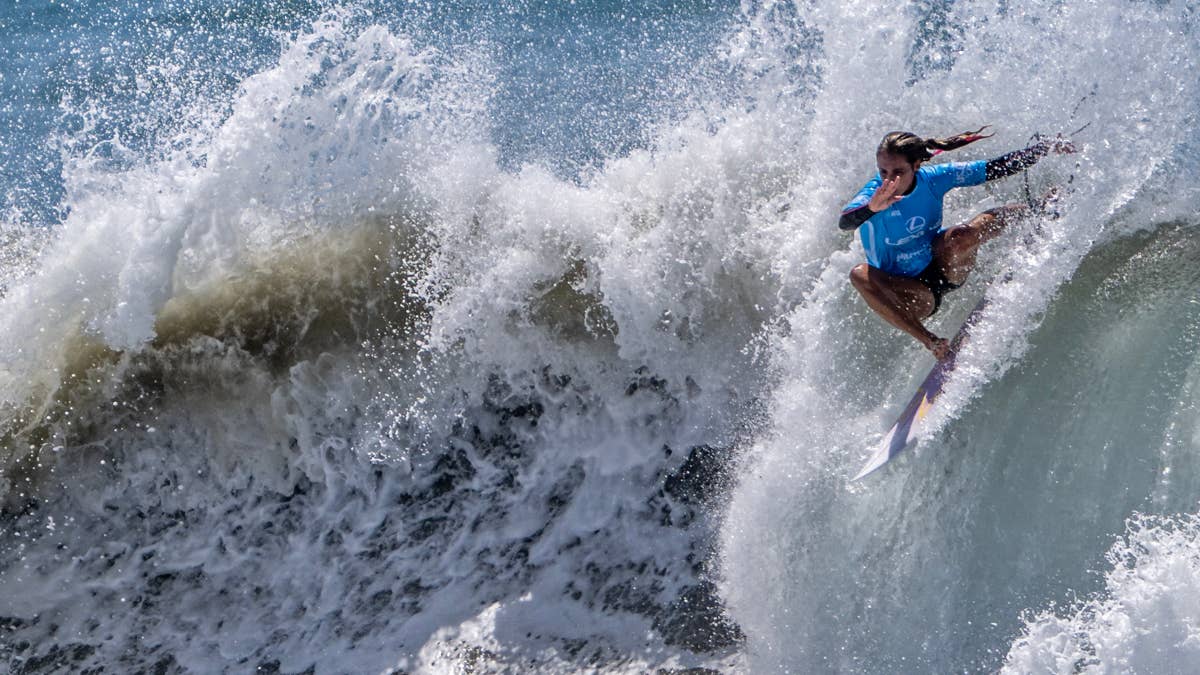
With hype around the women’s 2026 CT rookie class reaching fever pitch with the arrival of a new generation of young guns, Basque surfer Nadia Erostarbe’s name wasn’t really hitting headlines. But with the first half of the season complete, it’s Nadia who has broken through, cracking the top 10 in the rankings with semifinal finishes in Snapper Rocks and Brazil. In 2026, Erostarbe hasn’t needed hype – her surfing speaks for itself. Not only has she moved into the top 10, but unthinkably, she’s done it without a sticker on the nose of her board.
Erostarbe is the first Basque or Spanish woman to qualify for the Championship Tour. In 2025, she joined the Tour for five events as a replacement surfer but hadn’t truly yet found her place amongst top-flight competition. She got the replacement spot after finishing one click on the wrong side of the CT qualification line on the 2024 Challenger Series.
“I felt like such an outsider,” Nadia said. “Everything was so new for me, and I felt like I didn’t belong there. All of the girls had been my idols forever, and suddenly I was sitting alongside them while they were all talking to each other. I just remember thinking, ‘Wow, I don’t belong here.’
“I also wasn’t getting any good results or putting together great performances, which only reinforced that feeling. I thought, ‘This isn’t for me. I need to earn my spot and come back stronger.'”
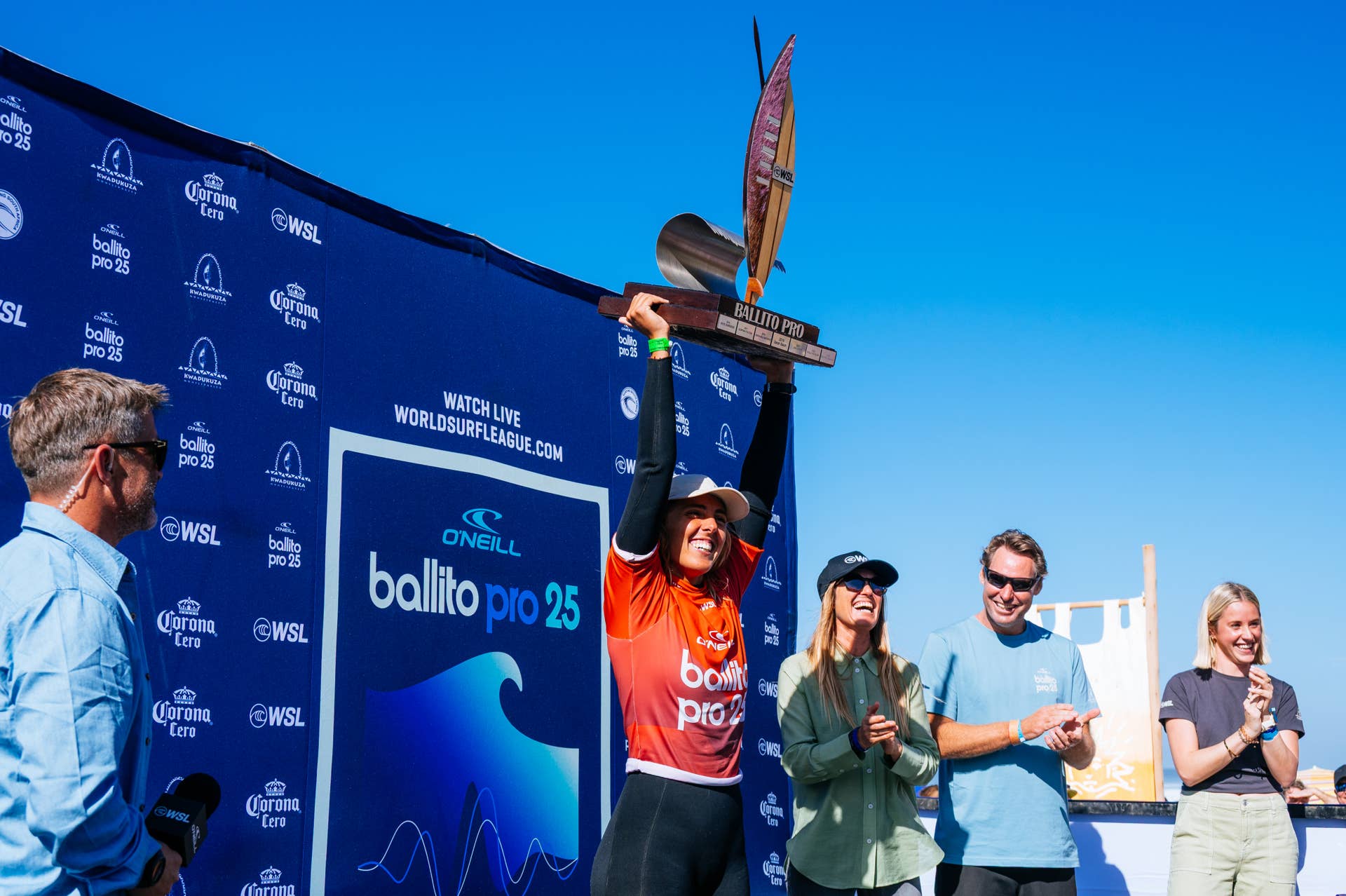
And come back stronger she did. Nadia returned to the 2025 Challenger Season with a vengeance – winning the Ballito Pro and remaining at the pointy end of the rankings until the end of the season. With the final event held in Newcastle, Erostarbe bowed out early, so she wasn’t able to fight for her place on Tour – she faced an excruciating two-day wait to find out if she’d qualified.
“[They were] two of the worst days of my life. They were so long, and so many bad thoughts were coming into my mind, thinking that I was never gonna qualify, how did I fuck it up that way?”
“The feeling that I had [when I qualified] was pure relief. The biggest relief I’ve ever felt. The mindset coming into this year is different from last year. I have a lot more confidence, and the fact that I qualified this year, it made a huge difference.”
The Basque Country is a cross-border homeland on the Bay of Biscay, littered with waves along its glittering green-blue coastline. Spanning from the River Ardour in the north that meets the Atlantic Ocean just north of Biarritz, east across the Pyrenees mountains, and down beyond the picturesque metropolis of Bilbao. Basque people have long fought back against Spanish and French oppression of their identity, their language, and culture – keeping their traditions alive in the face of these colonial powers for hundreds upon hundreds of years. Nadia surfs with the Basque flag on one shoulder – her home community of Zarautz journeying with her across the globe as she takes on the world’s best. As you travel this coastline, home to one of the crown jewels of European surfing – Mundaka – it’s easy to see why people have fought so hard to protect their ancestral homeland.
“I feel really proud to be Basque and really proud to represent them on the CT,” Nadia said.
“I’m one hundred percent sure there will be more Basques on the CT soon and I’m looking forward to that. As Aritz Aramburu was a role model for us when he made it to the Tour, I hope to be one for all the next generations.”
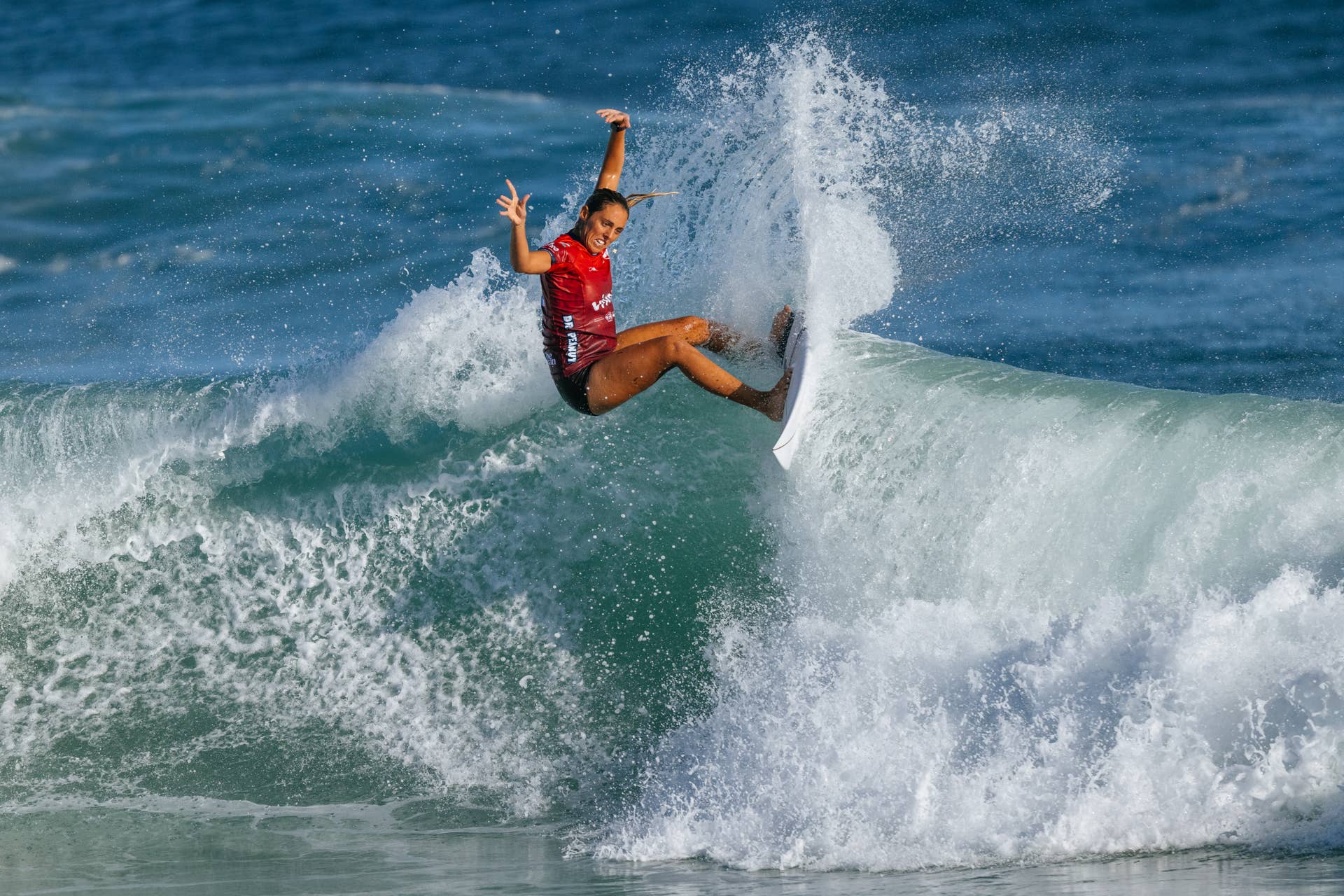
Nadia came into the CT event at Snapper Rocks as a bit of a dark horse. The goofy footer wasn’t who most punters would think of as a possibility to dominate in one of the world’s most perfect right points. With the spotlight on people like Steph Gilmore and Erin Brooks, who had dropped a 10 at the break when it was a Challenger Series event, Nadia started to quietly gain traction. Bit by bit, heads started to turn as the caliber of her backhand surfing began to reveal itself. She attacked the lip with surgeon-like precision and power, displacing gigalitres of water as she opened up – going excellent in every heat with perfectly placed power hacks. She pushed through rounds, defeating World Champions and reaching the semifinals. At this event, Nadia announced her arrival.
“Snapper was such a great event. I loved it, so, so much. I felt really confident on that wave,” Nadia explained. “I knew I had hard heats from the first round, and I knew it was gonna be hard to make it through any of those heats. I tried to keep it simple and keep getting two waves, the two best waves, and try to surf them as I know.”
“Before that event, I talked with my boyfriend, and I was like, ‘I feel like I’m making it through some heats, but never getting excellent scores. After my heat with Alyssa, I got an eight and a six, and I finally realized that I can get excellent scores on the CT.”
“After that first heat, something clicked in my mind, knowing that I could get excellent scores. I just need the wave. With my surfing, I’m able to do it.”
“The best part was after the heats, there were so many Spanish and Basque people on the beach cheering for me. I felt so much love. Even having the chance to have a heat against Steph in a Snapper semifinal, that morning I was in a dream. I felt like I was gonna win that event. I don’t know why. I felt really, really confident in myself.”
Brazil offered Erostarbe an opportunity to showcase a different side of her surfing. Unable to break through on her forehand in New Zealand, the junky beach break of Saquarema gave Nadia another chance to prove her skill wasn’t limited to her backhand. After finding some rhythm, Nadia’s path to the semifinals was the hardest of the whole draw – taking out reigning World Champion Molly Picklum in round two and Caity Simmers in the quarterfinals.
“Brazil was such a roller coaster of emotions,” Nadia described. “It was the last event after four months away from home, and it was an uphill battle. I had to give it the last bit I had.”
“Before the event, I was feeling the worst I’ve ever felt in my surfing. I’ve never been really confident on my frontside, and I know my strength is my backside, so once I got to Brazil, I knew it was gonna be a challenge for me.”
“I started making some heats, nothing special. Then, for the heat against Caity I was just trying to surf like I know I can. I was just trying to keep it simple. After the first wave, I finally felt increasingly confident. I got a five-point-something on the first one, then an eight and a seven. It was such a relief for me, because I realized that I can get excellent scores on my frontside.”
After the result, Erostarbe climbed to tenth in the rankings, leading the 2026 rookie class. The fact that she has achieved this without a major sponsor makes it even more impressive, relying on prize money to get her to some of the most distant and expensive locations on the planet, and without the copious resources required to perform as an elite athlete.
“Sadly, I don’t have a major sponsor,” Nadia said. “To be honest, it’s been like that forever, since I was a kid. I feel like no brand ever wanted to sponsor me, or bet on me, especially surfing brands.”
“I’m really grateful to the ones that are with me, especially DHD Darren Handley. Big shout-out to him. He’s one of those who thought I could get great results and got me on the team when I was about nineteen.”
“I’m used to it. Of course, I would love to have a major sponsor, so traveling would be a little bit easier, and I wouldn’t have to worry all day about the numbers,” Nadia said.
Heading home after Brazil, Nadia was given a hero’s welcome as she arrived at the beach. The local community at Zarautz formed a tunnel of surfboards and chaired her down onto the foreshore. It was an emotional scene as they celebrated their hometown hero, who took their spirit to the world stage and stuck it to the very best. Now, Nadia heads into the second half of the season confident, carrying some big goals and at home among the titans:
“The goals for this year are to be in the top 14, make the cut for the CT and for next year, be Rookie of the Year and, maybe it’s a little bit ambitious, win an event. Hopefully it’s Tahiti.”