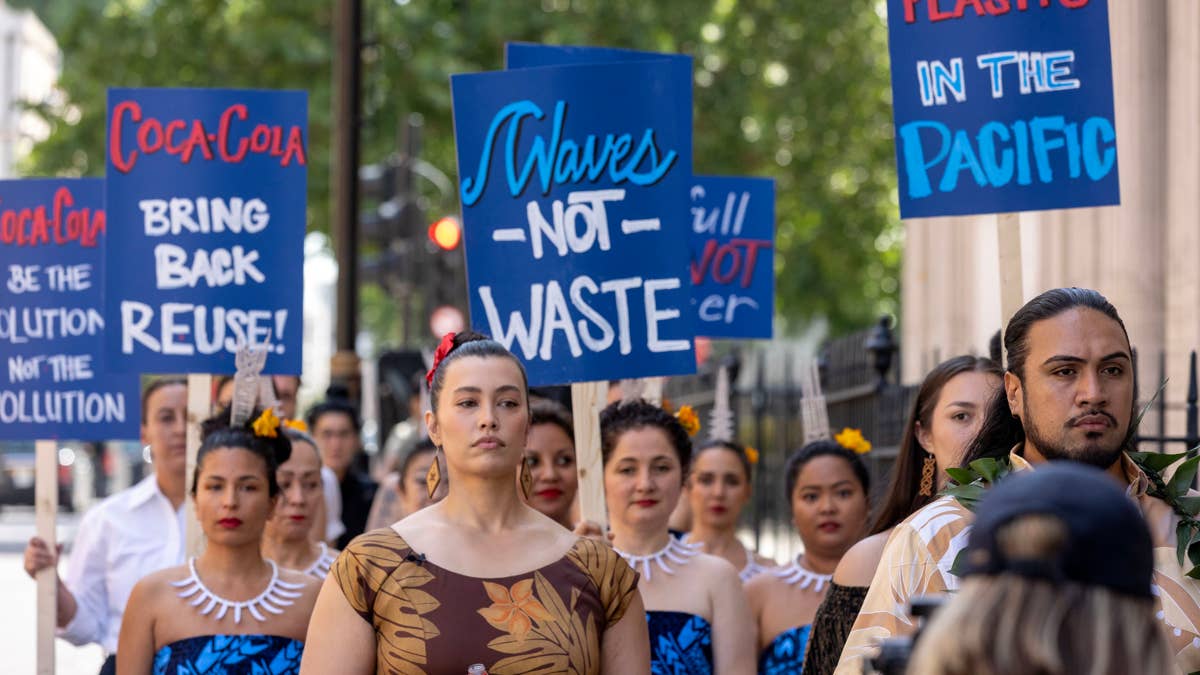
A single-use Coca-Cola bottle from Samoa landed at the company’s London headquarters this week. Inside it was a letter.
The letter was signed by the Samoa Conservation Society, the Pacific Islands Climate Action Network, Oceana, Break Free From Plastic, the London School of Hula and ‘Ori, and the Samoa Recycling and Waste Management Association. It was addressed to Damian Gammell, CEO of Coca-Cola Europacific Partners (CCEP) — the largest Coca-Cola bottler by revenue, distributing the brand’s products across 31 markets including the Pacific Islands. The ask was simple, and not new: bring back the reusable glass bottles in Samoa.
Outside the bottler’s annual general meeting on Thursday, members of the London School of Hula and ‘Ori performed traditional Samoan song and dance, including a piece called “O le vasa, we are the ocean.” It was a cultural protest — Pacific voices showing up at the headquarters of one of the world’s largest plastic polluters to ask, in their own way, for the company to do better.
Here’s the quick history. In 2021, Coca-Cola stopped bottling its products in reusable glass in Samoa. The company didn’t replace the glass with anything local — it simply switched to importing single-use plastic bottles from Fiji and New Zealand. Imports more than doubled between 2020 and 2025. Coca-Cola products now account for roughly one-third of beverage bottle waste in the country, in a place where recycling capacity is limited and most of the waste ends up littered, burned, or landfilled.
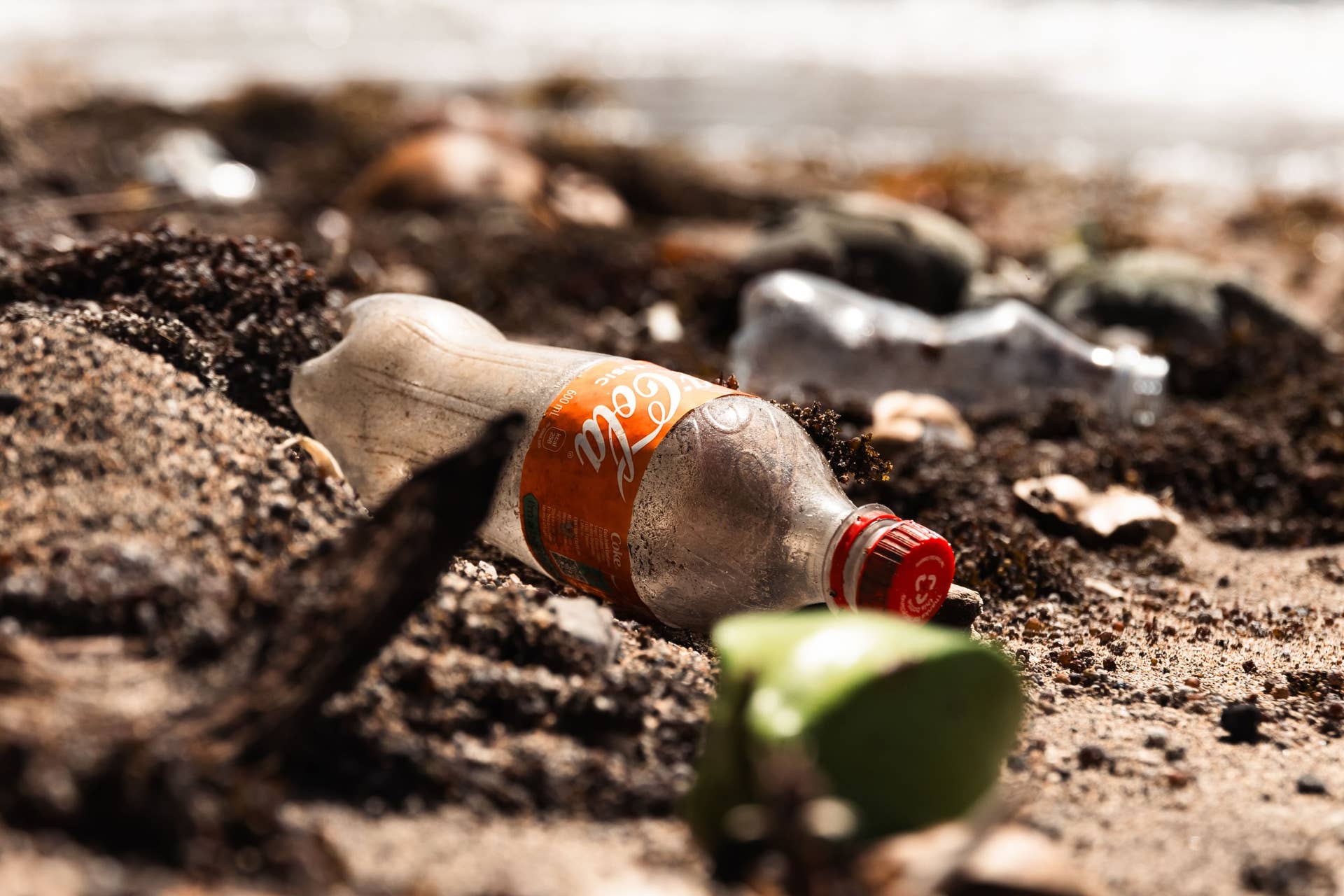
Oceana
For surfers, the problem is obvious wherever we are and no one is happy about it. Microplastics have been documented in 97% of fish species sampled across the Pacific — nearly 50% above the global average. Samoa’s beaches and waters are downstream of every decision a company like Coca-Cola makes about packaging.
“We encourage Coca-Cola to be on the right side of history by moving back to reusable bottles, like glass, in Samoa,” said James Atherton of the Sosaiete Faasao o Samoa / Samoa Conservation Society. “As one of the most recognizable global brands, we believe that Coca-Cola can be a game changer in the fight against plastics, should they choose to prioritize planet over profits.”
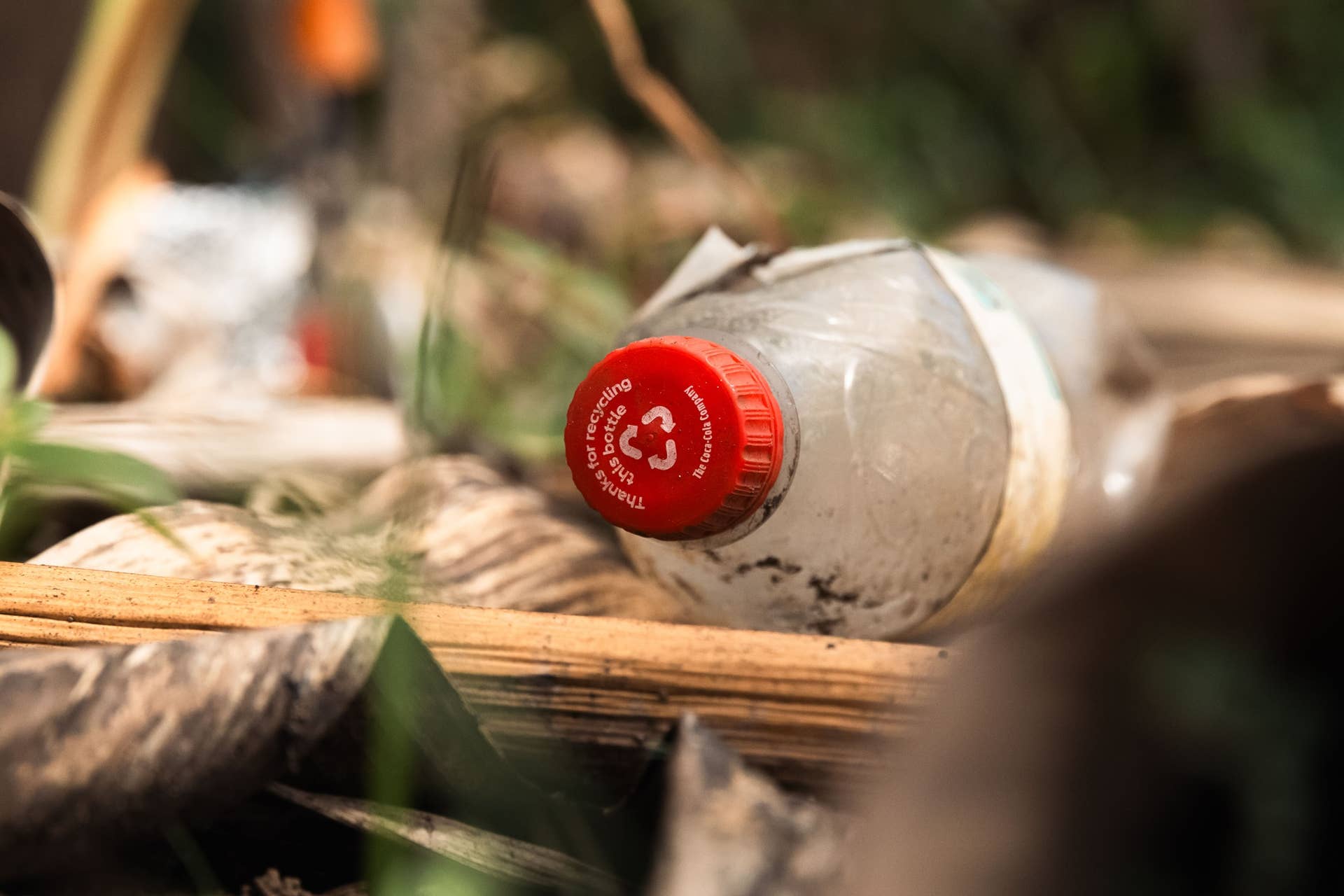
Oceana
For those of us who care about the ocean — meaning, presumably, anyone reading this — the timing and posture of the protest matters. Coca-Cola has been named the world’s worst plastic polluter six years running, according to peer-reviewed research published in Science. The company accounts for at least 11% of all branded plastic waste found in the environment. And in December 2024, after years of public commitment, the company quietly abandoned its goal of increasing reusable packaging. Now, it’s all just greenwashing.
The trajectory, if nothing changes, is dire. A 2025 report from Oceana projects that Coca-Cola’s plastic use will exceed 9.1 billion pounds per year by 2030 — a 40% increase over 2018 levels. Up to 1.3 billion pounds of that packaging would enter the world’s waterways and oceans annually. That’s enough to fill the stomachs of more than 18 million blue whales. Given the current state of plastic pollution in the ocean, this shouldn’t even be a question.
What’s grimly ironic is that the company already has the playbook. Coca-Cola bottled in reusable glass in Samoa for decades. The infrastructure existed and the customers were used to it. The Oceana analysis estimates that if Coca-Cola reached just 26.4% reusable packaging globally by 2030, the company’s annual plastic use would drop below current levels.
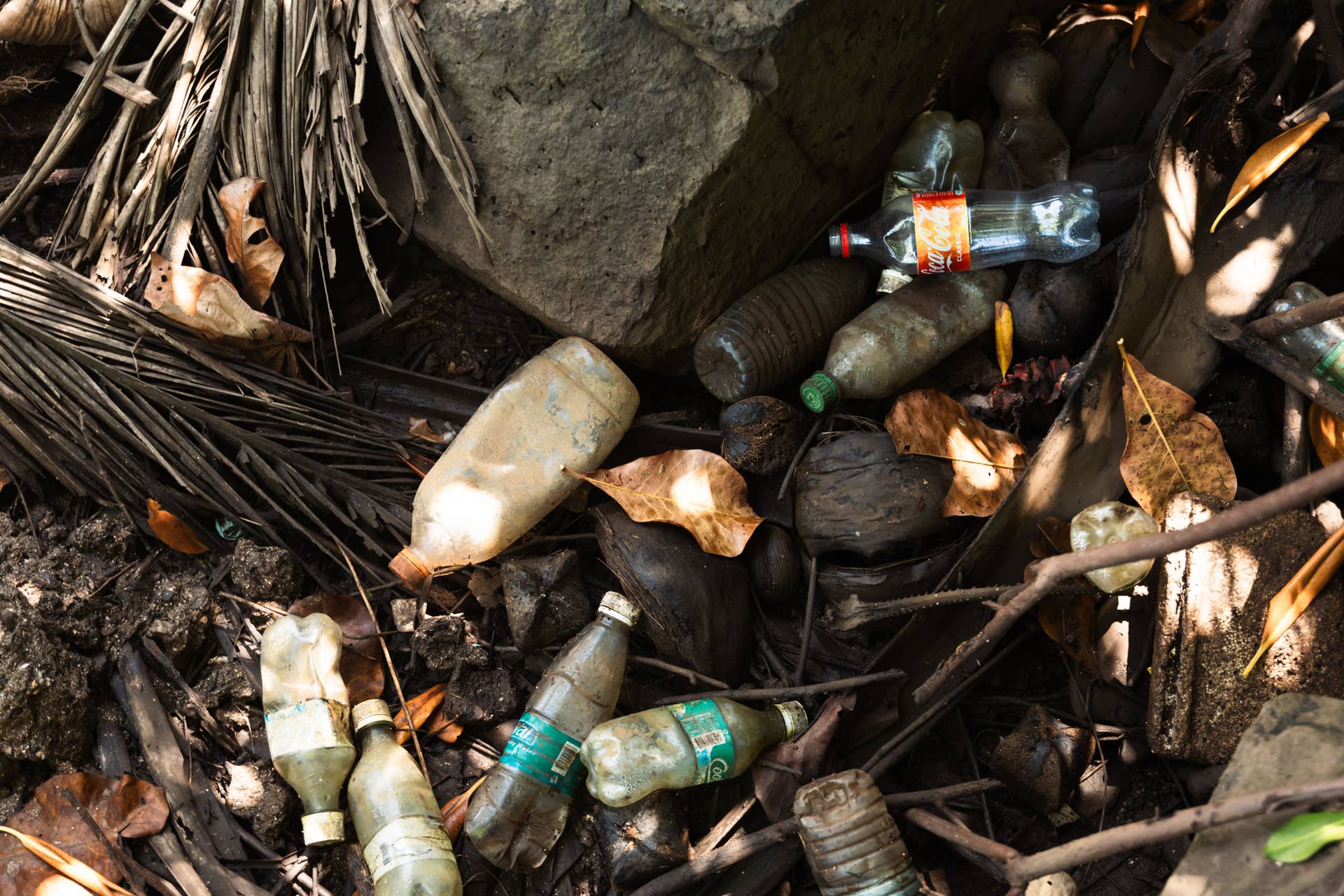
Oceana
“Plastic pollution and the climate crisis share the same fossil fuel origin, and Pacific Island communities bear a disproportionate share of both,” said Rufino Varea, Director of the Pacific Islands Climate Action Network. “Reinstating refillable systems in Samoa is not a favour to the Pacific; it is the evidence-based, climate-consistent decision a company of CCEP’s scale is well-positioned to make.”
The message-in-a-bottle is, of course, a symbol — an emergency cry for help. The actual letter inside is legitimate and honest: a request, in writing, from the communities most directly harmed by the plastic decision, asking for something the company has already proven it knows how to do.
Whether the CEO opens the letter is up to him. What the rest of us drink — and where we spend our money in the meantime — is up to us.