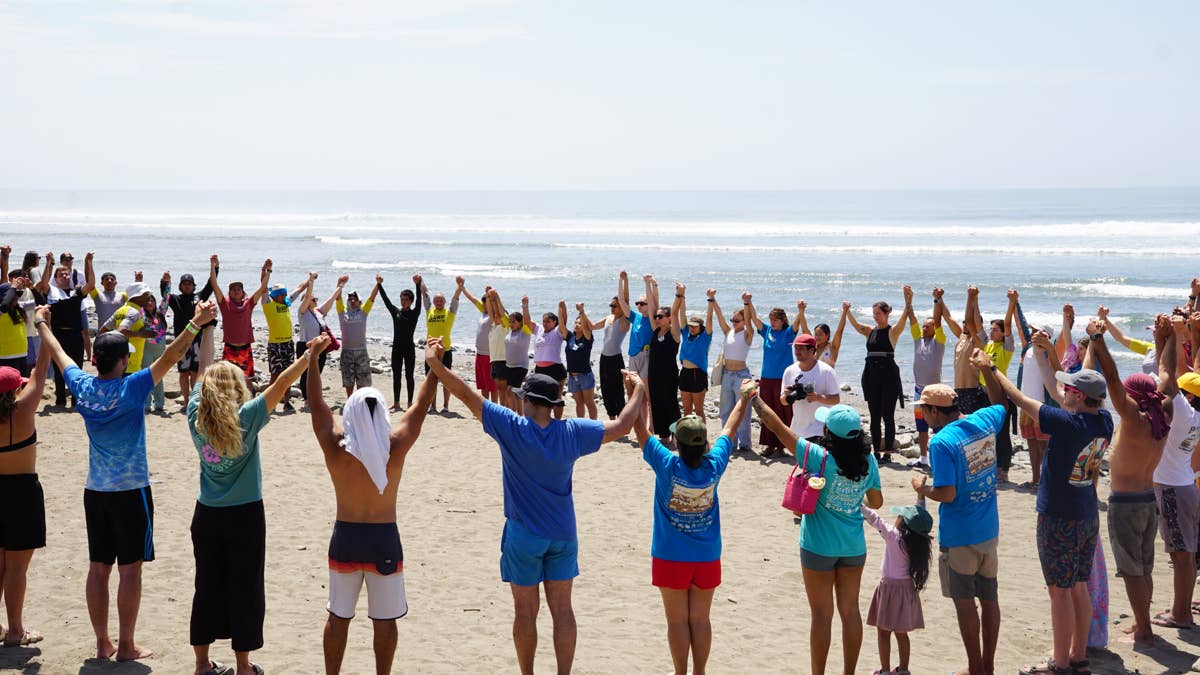
Marcelo Muñoz is one of the many amazing people who have been recognized and brought together by the Aloha Award. Last spring, he joined Dr. Giovanni Martinez, founder of SURF4DEM in Puerto Rico, and Cisco Arana, founder of the Escola Radical de Surf in Santos, Brazil, on Namotu Island, Fiji, for a week of connection, relaxation, and inspiration, in acknowledgment of their tireless efforts in surf therapy.
Together, the three of them have accomplished things in their hometowns no one thought possible when they began. Giovanni pioneered surf therapy for children with autism and other conditions in Puerto Rico. Cisco started helping people with special needs start surfing back in the early 90s, before “surf therapy” was even a concept.
Marcelo and his team will now channel this spirit as they host the Regenerative Surf Congress in his hometown of Totoralillo, Coquimbo. Running November 4-8, 2026, the Congress is an international gathering that unites surf, blue health, inclusion, and surf-break protection, with organizers aiming to turn the sport into wellbeing, community, and legacy for the ocean. It isn’t about high-performance surfing and luxury developments, but about leaving the coast, and the people who live on it, better than it was found.
The Congress organizes that mission around three pillars: regenerating the ecosystem, by protecting surf breaks, beaches, and biodiversity as shared heritage; regenerating people, through blue health, surf therapy, and mental wellbeing from the ocean; and regenerating the territory, through local economy, responsible tourism, and living ocean culture.
Ahead of the event, we spoke with Muñoz about his own journey with surf therapy, the program he’s built in Coquimbo, and what it means to bring this movement to Chile.
On the Significance of Bringing the Congress to Chile
The first Regenerative Surf Congress began with a simple question, What if surfers left the places they visit better than they found them?
That conversation was started in Lobitos, Peru, by WAVES Lobitos and the people who believed surfing could contribute not only to tourism, but to local communities, conservation, youth development and wellbeing. People like Dave Aabo, Kike Basurto and Henry Espinoza helped build that foundation.
Now, we are bringing the Regenerative Surf Congress to Chile. This November, Totoralillo will bring together people working in surf therapy, adaptive surfing, blue health, conservation, regenerative tourism and sport for social impact. For us at Surf Therapy Coquimbo, hosting it is a huge responsibility. We want to honor what Lobitos started while giving this chapter a strong Chilean identity.
Latin America has given the surf world incredible waves for decades. Maybe now we can also join the conversation in a bigger way and show the world a different idea of what surfing can become.
His Personal Journey Into Surf Therapy
@vineasurfar
I never planned to create the Coquimbo Surf Therapy organization. My connection with this work came from my own life. I went through difficult periods with addiction and depression, and the ocean became one of the places where I could breathe, reconnect and begin rebuilding myself. Later, through my work in social innovation, I realized that something that had helped me personally could become useful to other people too.
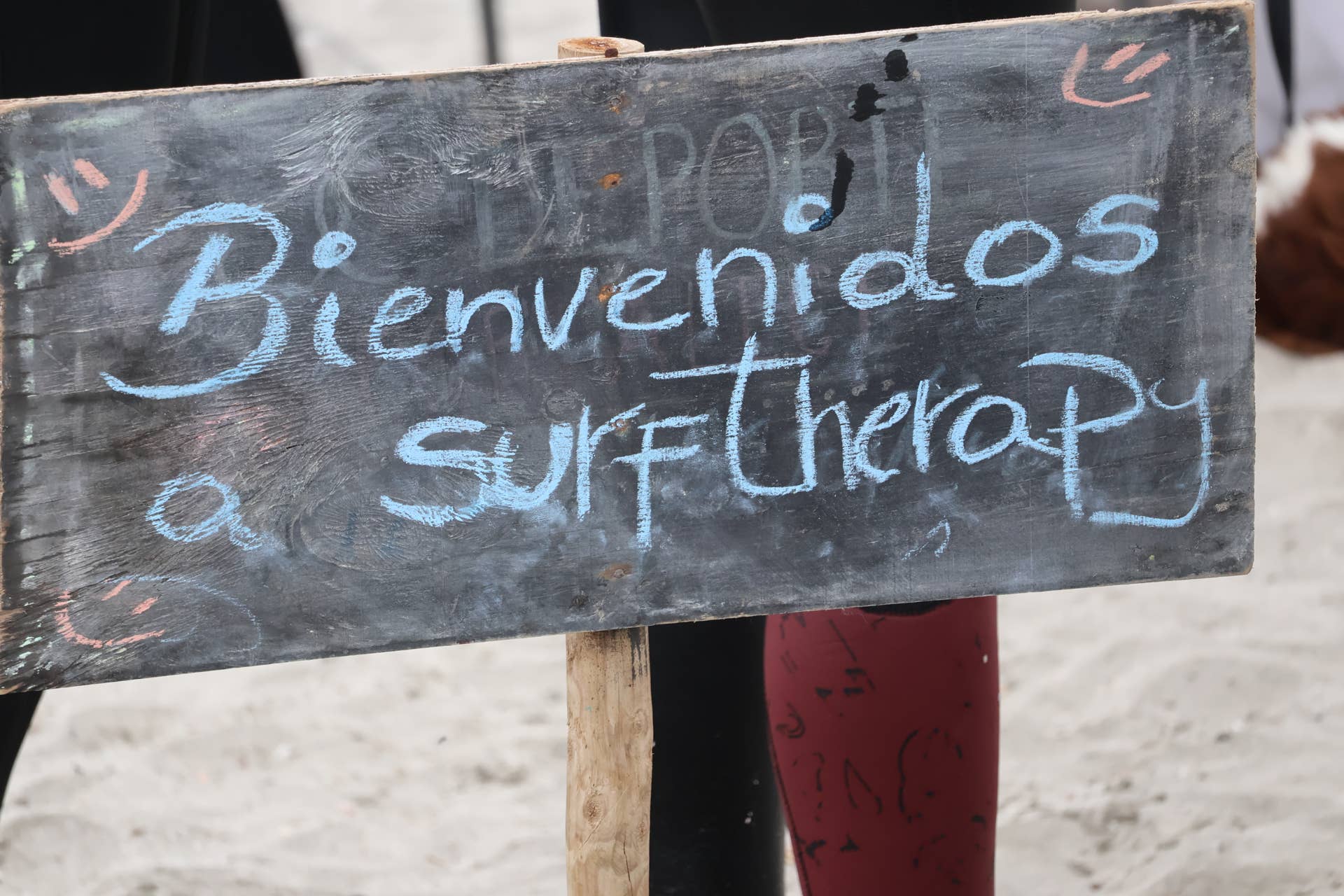
In 2021, training and connecting with the surf therapy movement in Peru changed everything. I understood that surfing could be intentionally combined with safe relationships, breathing, play, emotional regulation and community.
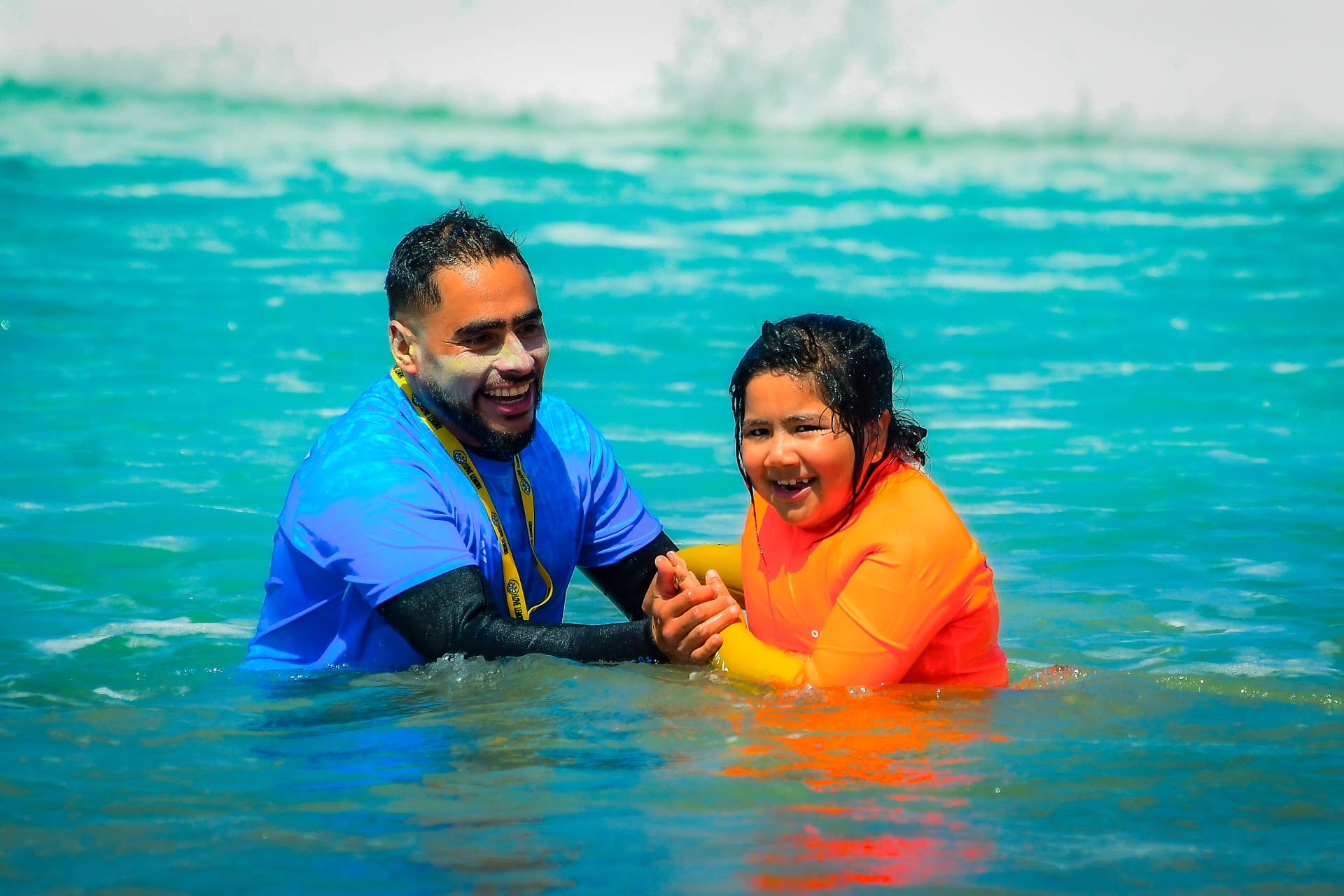
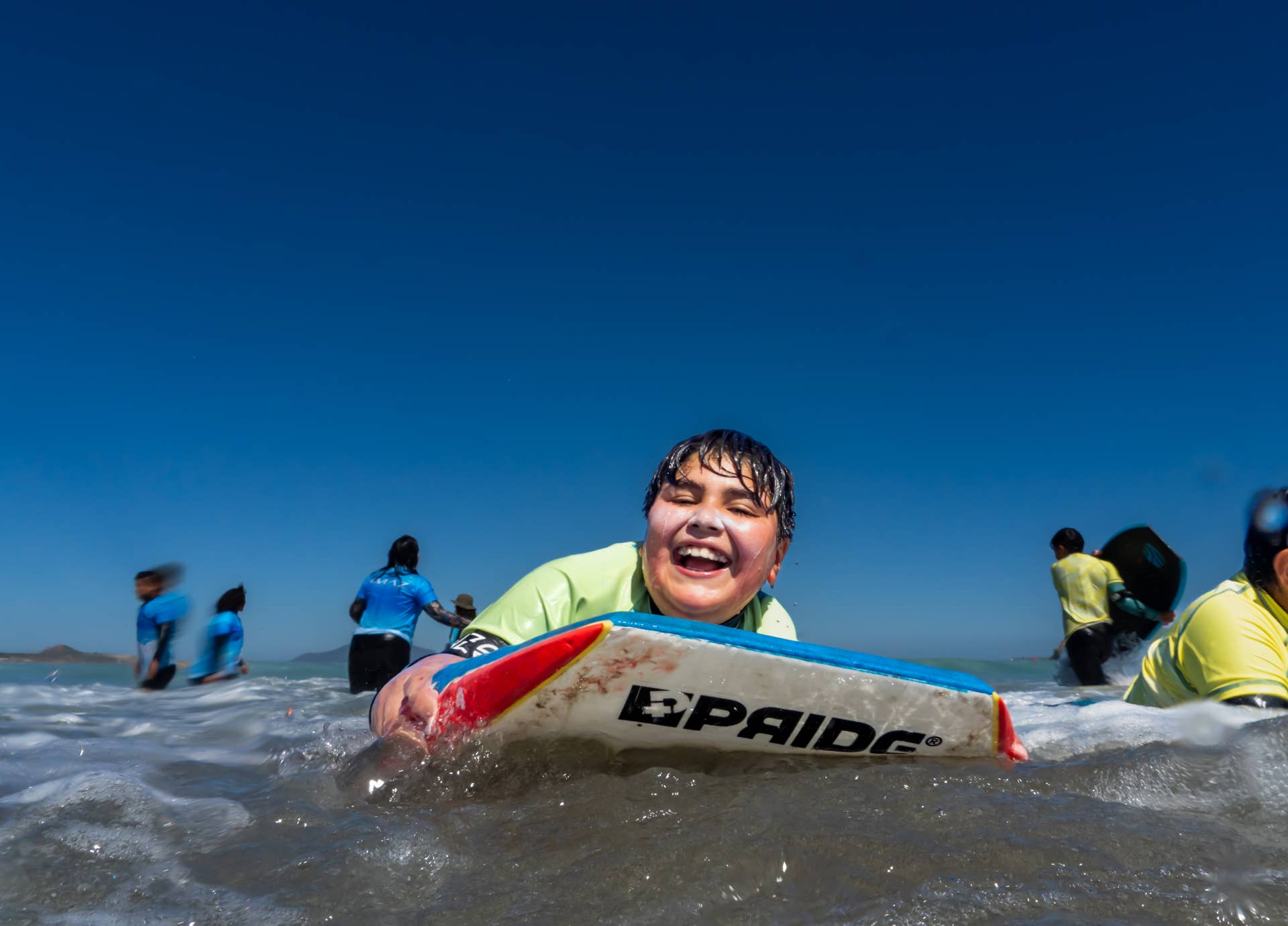
Since then we have worked with hundreds of children, adolescents and adults, including young people in vulnerable situations, neurodivergent participants, people with disabilities and other communities that historically have had very little access to the ocean. Every time a child discovers that the ocean can also be a safe place for them, I remember why we started. And becoming a father has made that feeling even stronger.
The Changes He’s Seen in Coquimbo
@vinearsurfar
Now we are in a place where people are beginning to understand that this work is about much more than teaching someone to surf. Surf is the vehicle. What we really work with is confidence, relationships, emotional regulation, physical activity, belonging and connection with nature. A beautiful example is our current program Semillas Azules, Del Aula al Océano, with the Patricio Lynch School in Andacollo, an inland mountain community more than 1,000 meters above sea level.
Surf is the vehicle. What we really work with is confidence, relationships, emotional regulation, physical activity, belonging and connection with nature.
Children travel from the mountains to the ocean, but the important part is that the process doesn’t end at the beach. Twelve teachers, including the school principal, are learning elements of the methodology and already using breathing and regulation exercises with students before tests and during the school week.
We’re also creating an Espacio Azul inside the school: a permanent place for calm and emotional regulation inspired by what children experience at the ocean. For me, that is real impact. The ocean starts at the beach, but the learning has to follow the child home.
A Story That Stands Out: The Bus From Andacollo
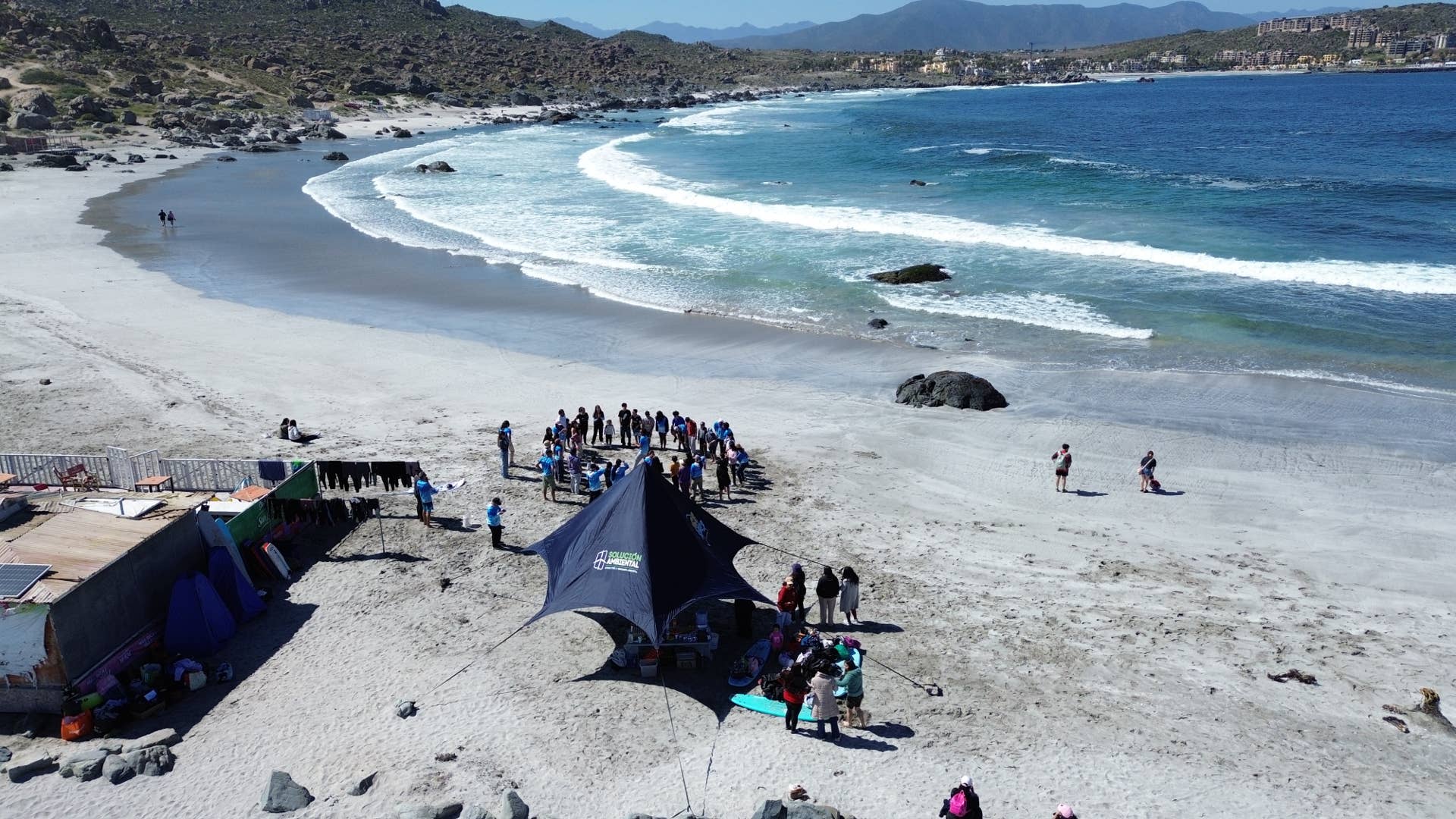
I often think about a bus leaving Andacollo. Children standing outside their school in the mountains, and a few hours later those same kids are barefoot in Totoralillo looking at the ocean. For people who grow up near the coast, access feels normal. But what if your family doesn’t own a car? What if you live hours away? What if you are neurodivergent or need additional support? What if nobody in your family knows how to introduce you safely to the ocean?
Then surfing becomes something very far away. That is why one of my favorite moments isn’t necessarily seeing someone stand up on a surfboard. It is seeing the moment a child realizes: “I belong here too.” Sometimes the most therapeutic thing isn’t the wave. It’s the community that forms around the person before they catch it.
@vinearsurfar
The Access Gap for Families Across Latin America
There are incredible organizations and incredible people throughout Latin America. What we don’t have yet is enough consistent access.
Many programs still depend on a grant, donated transportation, volunteers, wetsuits, equipment or whether the right trained people happen to be available. So families often have to fight very hard simply to access an opportunity. My dream is that Surf Therapy and adaptive surfing stop being exceptional experiences. I want a teacher, psychologist, doctor or family member to eventually be able to say: “This person could benefit from an ocean-based program,” and actually have somewhere professional and accessible to send them.
We’re not there yet. But compared with five years ago, the movement in Latin America is growing incredibly fast. And bringing everyone together through the Congress can accelerate that process.
What People Should Know
@vinearsurfar
I think people should know that this movement has grown because people have been willing to share instead of compete. I will always recognize the work of WAVES Lobitos and people like Dave, Kike and Henry. They helped create the Regenerative Surf Congress and showed that a surf destination can become stronger when local leadership, conservation, social impact and surfing grow together.
Now Surf Therapy Coquimbo has the privilege, and responsibility, of leading the Chilean chapter. We are bringing our own experience: Surf Therapy, Blue Health, neurodiversity, schools, vulnerable communities, adaptive surfing and the idea that the ocean can become part of how communities care for their mental health. Our work has also grown from small local sessions into collaborations, training initiatives and projects designed to expand Surf Therapy throughout Latin America.
And personally, there are people I need to thank. Kris Primacio and the International Surf Therapy Organization believed in our work and helped make us feel part of a global community. And friends like Mark Hartman and the Aloha Award believed in me at moments when that recognition meant much more than an award. Being recognized as an Aloha Award finalist gave international visibility to work that, for years, was being built quietly from Coquimbo.
People like them opened doors, connected us with others and sometimes simply said, “Keep going.” You never forget the people who believe in you before the rest of the world notices. I’ll always be grateful to them. And maybe that is also what regenerative surfing is about. Someone gives you something valuable. You take care of it. You help it grow. And eventually, you pass it on.
Related: How a PhD, a Brother, and a Big Risk Created Puerto Rico’s Most Powerful Surf Program