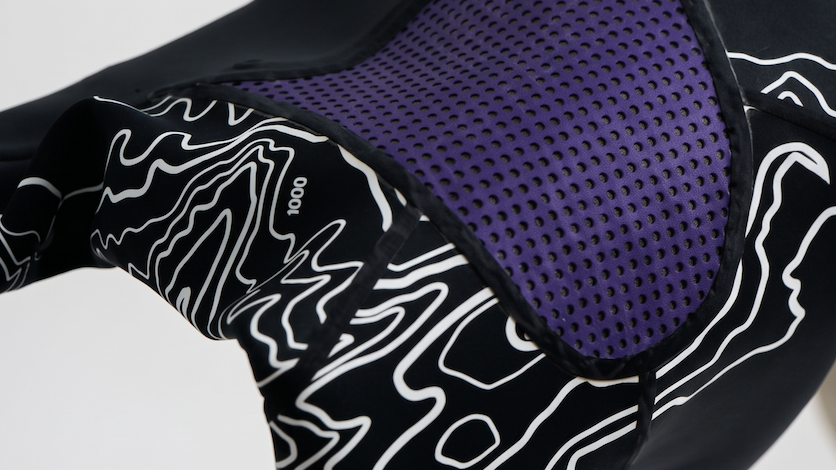
How many people would pay almost 1,500 bucks for a wetsuit? Born Slippy founder Charles Gadsdon is hoping for exactly 1,000. Retailing at €1,295 for men’s and women’s 5/4, 4/3, and 3/2 suits, Aptus 1.0 is among the most expensive wetsuit currently on the surf market. The obvious question is why?
“Custom wetsuits exist. So do Yamamoto neoprene and alternative thermal technologies. But our ambition with APTUS 1.0 was to combine these elements into one exceptional product”, explained Gadsdon. “It’s not about one standout feature, but bringing everything together without compromising on the specification. That’s what €1,295 reflects: materials, craftsmanship, individual fit and technical construction.”
The production is also capped at 1,000 individually numbered pieces worldwide. When unit 1,000 ships, the Aptus 1.0 line ends. This could be seen as a way to inject scarcity (and therefore price) into the equation, maybe even adding some luxury-lined FOMO. Gadsdon, however, counters that it is more about disrupting how the surf market currently operates. The decision to make fewer products and prioritise quality is a way of challenging the industry’s obsession with volume.
“I like that Charles isn’t from the surf world or even a surfer,” said Andrew “Cotty” Cotton, Founding Athlete and Partner who has provided testing and technical feedback. “He’s thinking outside the box. And crucially, the wetsuits are so warm. With the first model, I described it as like having a radiator against your chest.”
The British-born Gadsdon spent two decades in the music biz, at the intersection of music, brands, and culture (to use the LinkedIn lingo), working with Apple, Google, Nike, Coca-Cola, and Samsung. But the ocean lover was looking for a change, and hit, of all things, on the humble wetty. During his early research phase, it was at the World Junior ISA Games at Huntington in 2019 that he had his neoprene lightbulb moment.
Originally exploring sustainable angles, he asked a young competitor what he really wanted from a wetsuit. “His answer was brutally honest,” recalled Charles. “He said, ‘Honestly, I don’t give a fuck, man. I’m an athlete. I just want the best equipment.’ He wasn’t asking for a sustainable product. He was asking for the best product and I feel those two ambitions shouldn’t have to compete.”
He pivoted, and he took a different approach. The goal was to have less product, but make them exceptionally well. He summed it up as a simple philosophy: “Fewer. Better.”
Now, custom wetsuits aren’t a new idea. Axxe make handcrafted, custom-fitted wetsuits in Japan that currently retail between $750 and $1,000. Snugg in the UK have manufactured made-to-measure wetsuits for decades, though they are much bigger in the triathlon world. Much-loved California-based 7TILL8 wetsuits also closed its doors after eight years of trading in March this year. Given surfers’ love of a custom surfboard, it makes sense that they would be open to an alternative to off-the-rack rubber.
“The limited edition is a cool concept, and being custom obviously makes for a better fit, but the success will come down to performance, comfort and durability,” said Cotty. “So far, testing I’ve done in Devon and early season Nazare has been great. The lining, which isn’t the standard fleece, feels lighter and warmer.”
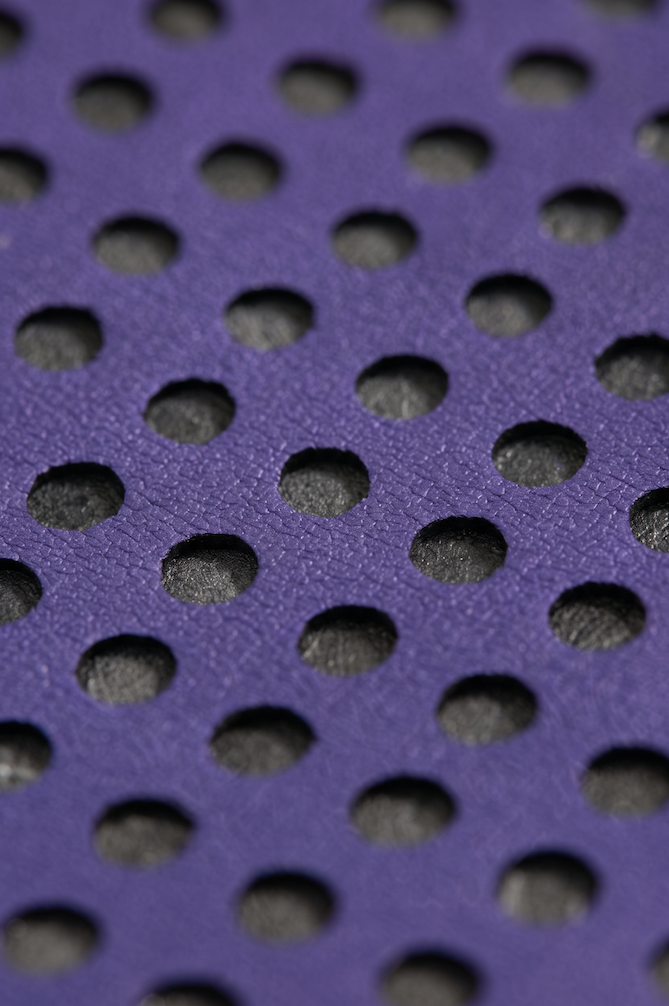
Gadsdon calls that technology Micro-chamber thermal insulation. He describes it as the inside of the wetsuit being covered in hundreds of tiny, shallow pockets, almost like the dimples on a golf ball. In the surf, a small amount of water gets inside the suit and settles into these chambers, close to the skin. Your body naturally warms that water.
I’ve been around long enough to hear almost every form of wetsuit tech. Rip Curl has E-Dry Thermal Lining, Quiksilver’s PrimaLoft® bio stretch; some of it is state-of-the-art manufacturing, a lot is pure marketing speak. Whether this Micro-chamber thermal insulation works as well as, or better than, the established wetsuit brands might determine whether there will be 1000 Born Slippy custom wetsuits out in the wild.
“This is not off-the-rack; it is a precision instrument built for your exact physiology using the best materials possible,” concluded Gadsdon. “We are not chasing O’Neill, Rip Curl, or Billabong on volume, and we never will. The goal is to have the best wetsuit on the planet, not the most wetsuits on the planet.” Over to you, wetsuit buyers.