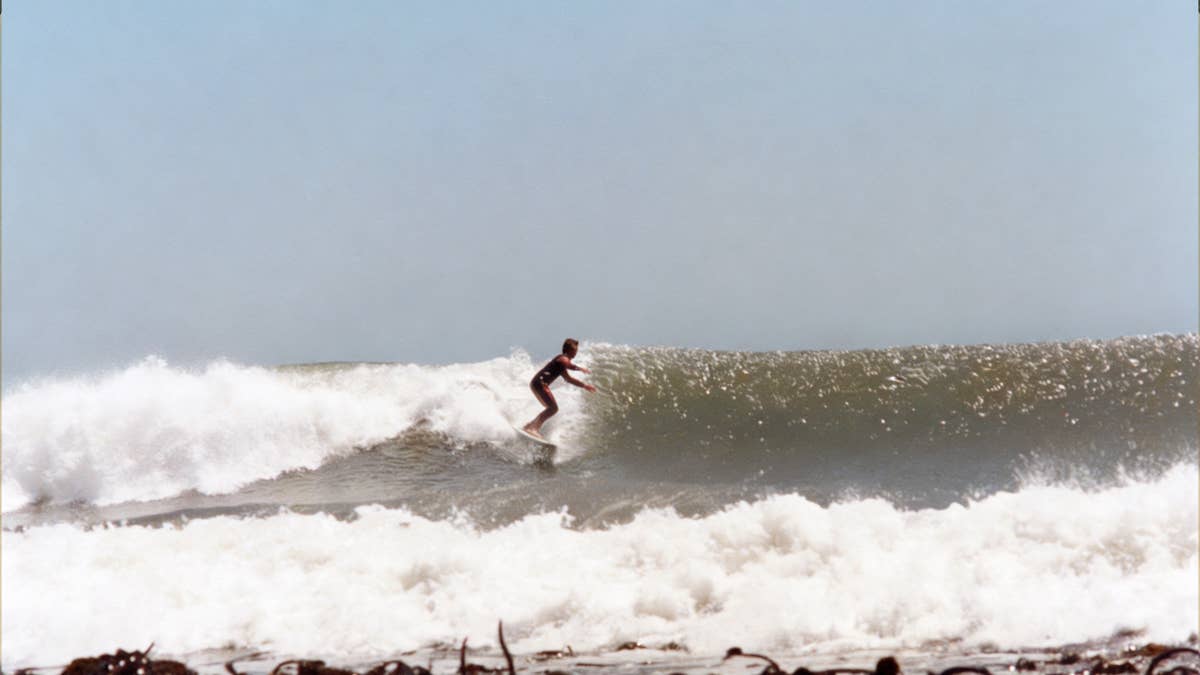
Earlier this year, my younger brother Herman scrolled past a photograph on the internet. His childhood friend Alan Zondagh had posted it. Alan’s wife had taken it. It showed Herman riding a small wave at Big Bay, Blouberg — on the windswept coast of South Africa where the two of us spent every Christmas of our youth, and where Herman had just returned to spend two months walking the beaches of his boyhood. Two years ago he lost his wife. He had gone home to reconnect with what raised him.
I saw the photo too. And I started writing.
I’m Julian Roup. I’ve written eight books and spent a lifetime around the surf world — close enough to have shared conversations with people like Shaun Tomson, far enough to have watched most of it from the shore. At Blouberg, though, I was in the water too, on the same heavy boards, riding the same waves alongside my brother and the boys he came of age with. This story isn’t really mine. It belongs to three little boys on inflatable Lilos at the end of the 1950s, to the windswept beach that made them, and to my brother — who returned to it this year and found that the water still knew his name.
I’m sitting now in his garden in Santa Barbara, on a cliff overlooking the Pacific Ocean and the Channel Islands. Pelicans fly past at eye level. The line of surf below has the same sibilance it had in Bloubergstrand, half a world away.
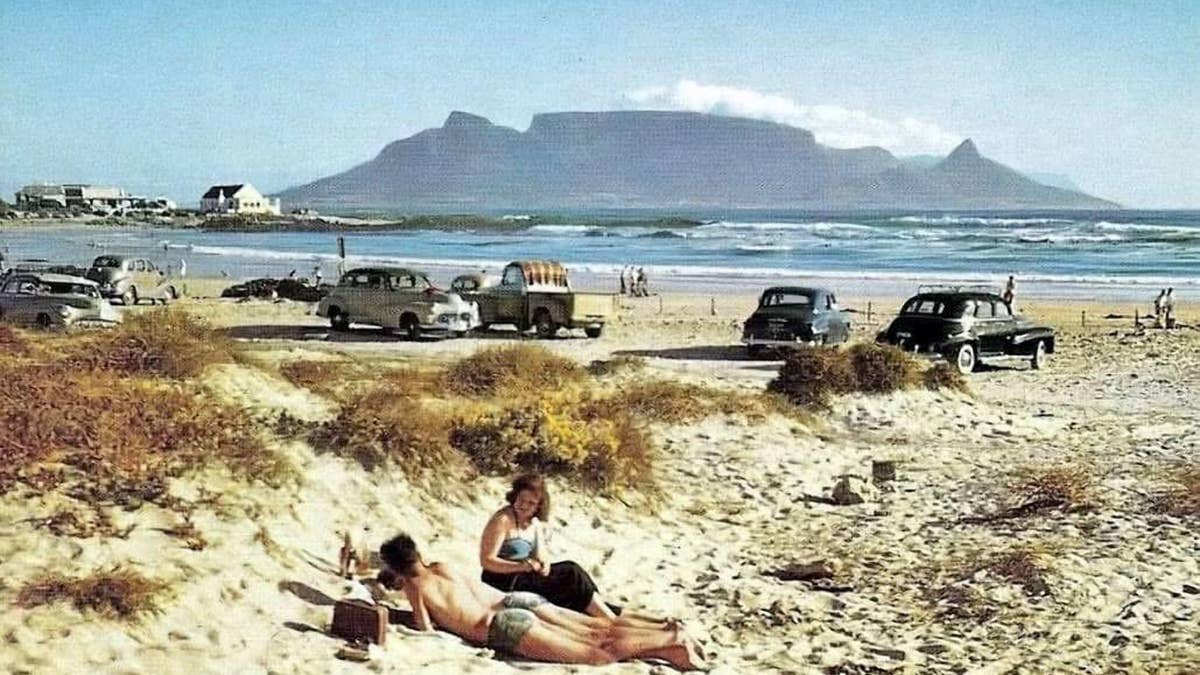
Seven decades of shared history with Herman carry me back to memories of our Cape youth, halfway round the world, to Bloubergstrand — where our parents built a summer house washed by the tides of the cold South Atlantic, with waves my brother and his friends would discover offered wild rides.
Roup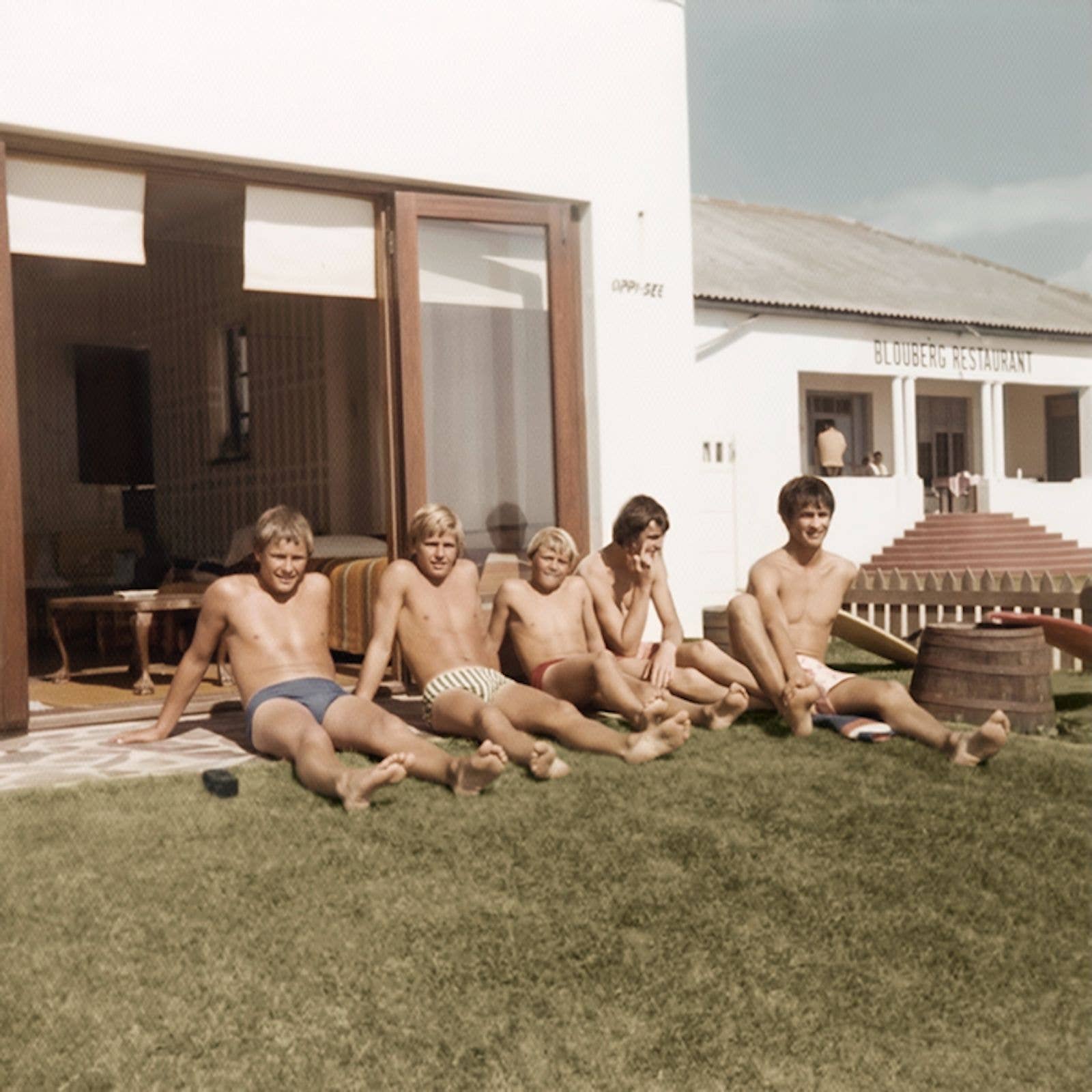
Blouberg: Surf Capital of the West Coast
Blouberg, the small beach resort 17 miles from Cape Town where my family spent our summers, was not the most promising of places from the very start, situated as it was on the Cape of Storms at the southern tip of Africa. And yet, look at it today.
In an age driven by sail, its exposed coast — subject to the howling hell of the South-Easter and North-Wester winds — made it a place to avoid, a lee shore that would eat ships, as the story of the heroic Wolraad Woltemade and his horse tells us. Woltemade was a 71-year-old Cape Dutch dairy farmer who died on 1st June 1773 while swimming his horse out repeatedly to rescue sailors from the wreck of the De Jonge Thomas in Table Bay.
The Blouberg sea is icy and beset by dangerous currents and tidal rips, and there is no local fresh water source. It might well have remained a wind desert but for a few key factors: Durbanville farmers searching for a holiday resort close to home, the voracious expansion of Cape Town, and — strangest of all — three little five-year-old boys sitting on their blow-up Lilos in the surf of Small Bay at the end of the 1950s.
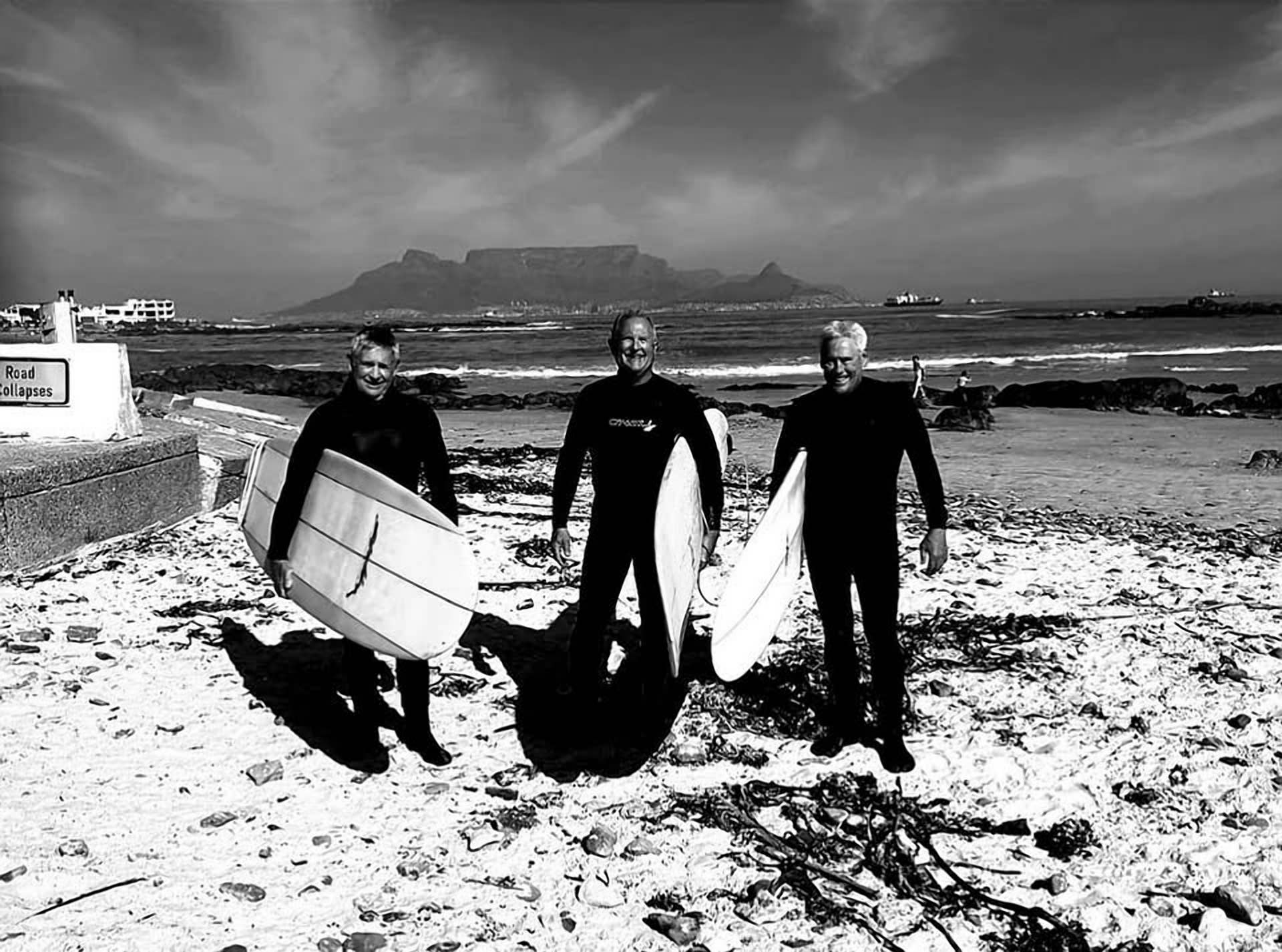
Brothers George and Alan Zondagh and my younger brother Herman Roup formed a bond on that beach that has lasted a lifetime — some 70 years and counting.
Roup
Blouberg had one not inconsiderable moment in history: the battle that took place there that changed the ownership of the Cape. The Battle of Blaauwberg, fought within sight of Cape Town’s Table Mountain on 8th January 1806, set the colonial power of Britain up in the Cape Colony for more than a century and ended the era of Dutch rule once and for all. The battle was a dispirited two-hour fight between 5,000 very tired, undernourished British troops and an estimated 2,000 Cape Colonists. British forces suffered 15 killed and 189 wounded; the Batavian (Dutch) forces lost around 353 men killed or wounded, though some estimates suggest more. This seemingly minor battle had massive ramifications for Southern Africa. It established a firm British hold on the region that lasted 150 years, until South Africa became a Republic on 31st May 1961.
And then, after the battle, Blouberg went back to sleep again, huddled down beneath the driving salt-encrusted winds that depressed many despite its staggering views of Table Mountain across the Bay. Anyone building a wind-wracked holiday home soon found out that it needed massive amounts of TLC thanks to the salt winds. Anodised aluminium window frames, glass, and concrete all helped take its architecture beyond thatched roofs and wattle-and-daub lime-washed walls — so typical of Cape fishermen’s homes, beloved by Cape artists.
Now let’s get back to those three robust little boys — Alan, George, and Herman — who did not seem fazed by the freezing temperatures of the sea. Water temperatures range between a minimum of 14°C (57°F) in the winter and peak around 20°C (68°F) during the height of summer. Years later, in their teens, they admitted that before the arrival of wetsuits it was the baking sun, brown sherry, and teenage girls who kept their spirits up — and maybe required a regular dip in the freezing brine to calm them down again.
Ironically, Blouberg works as a surf spot because of those damn winds — both winds clean up the waves and then knock them down. It’s just a matter of picking the right time and the right place where you can make the wind or lack of wind work for you.
I spoke to Herman about the start of surfing in Blouberg recently. He had just spent two months in Blouberg, walking the beloved beaches of his youth, a zillion miles away from his home of almost 45 years on the California coast. He said:
Roup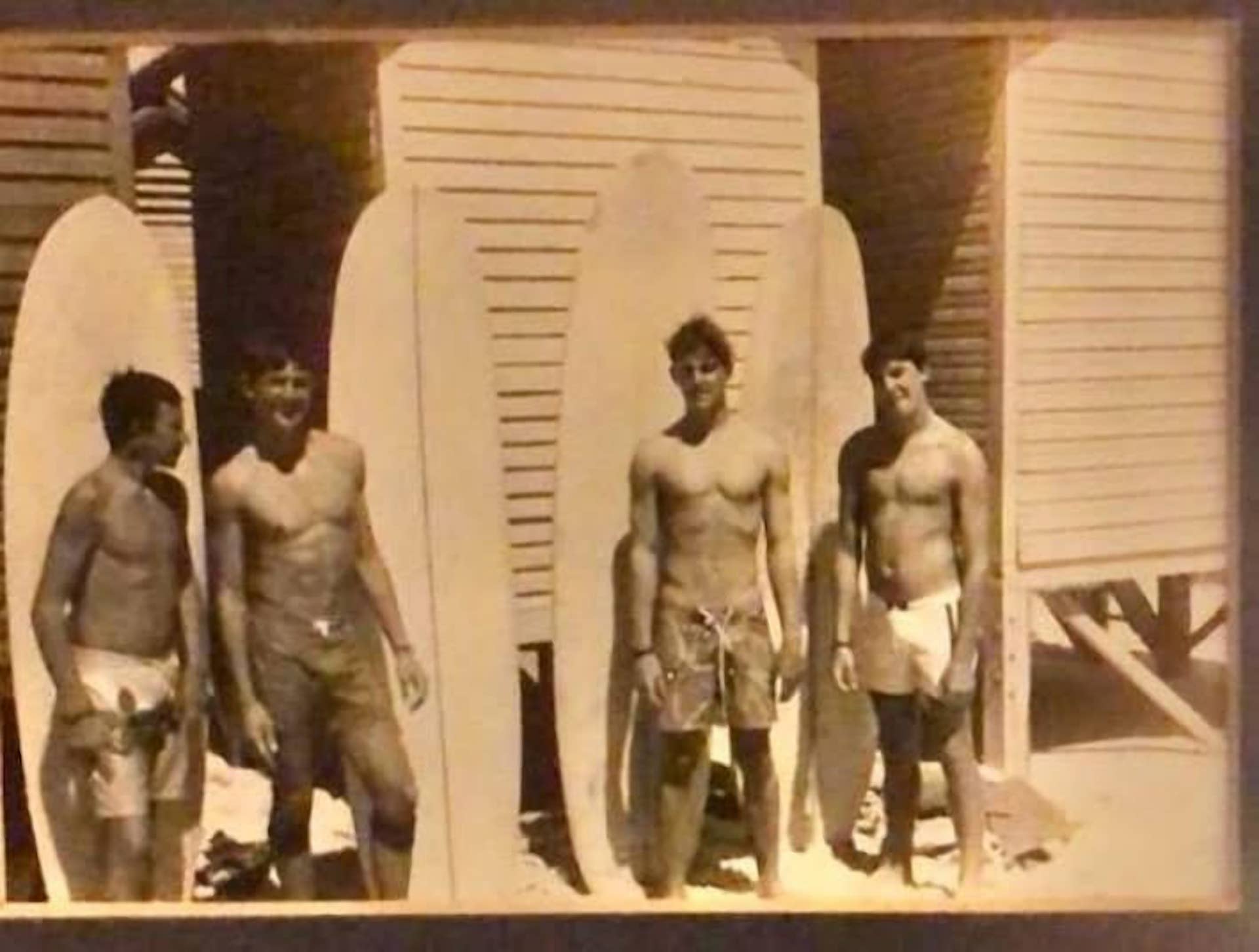
“You are talking about another lifetime, Boet. One where our arms could paddle nonstop for one or two hours before getting tired. One where our backs were as strong as oxen.”
To my amazement, I actually managed to paddle out to the back of Big Bay a few days ago, but let’s be real. It was a very small day, and I went in from the tidal island sandbar. I even made it out to the back with dry hair. The first small wave I tried to catch, I pearled, and it was one wipe-out after another. In the end I just held onto the board and let the sea take me in. In my head I was watching and laughing at myself.
But looking back to those Big Bay days of my youth and childhood — they were awesome. No wetsuit, no leash, just pure muscle and grit. Wipe-out after wipe-out, but never giving up. Then lying on the warm sandy beach, soaking up the warmth of the sun, slowly turning from white to brown all over. They will sit in my memory forever. So, so good.
I grew up as one of the luckiest boys on earth but didn’t know it. Our parents had built a home at Blouberg when it was still considered very much out in the sticks. From 1955, we spent every single Christmas holiday out there. Most people only thought about Blouberg as a tiny, very windy fishing hamlet. I thought about it as paradise, and still do.
Roup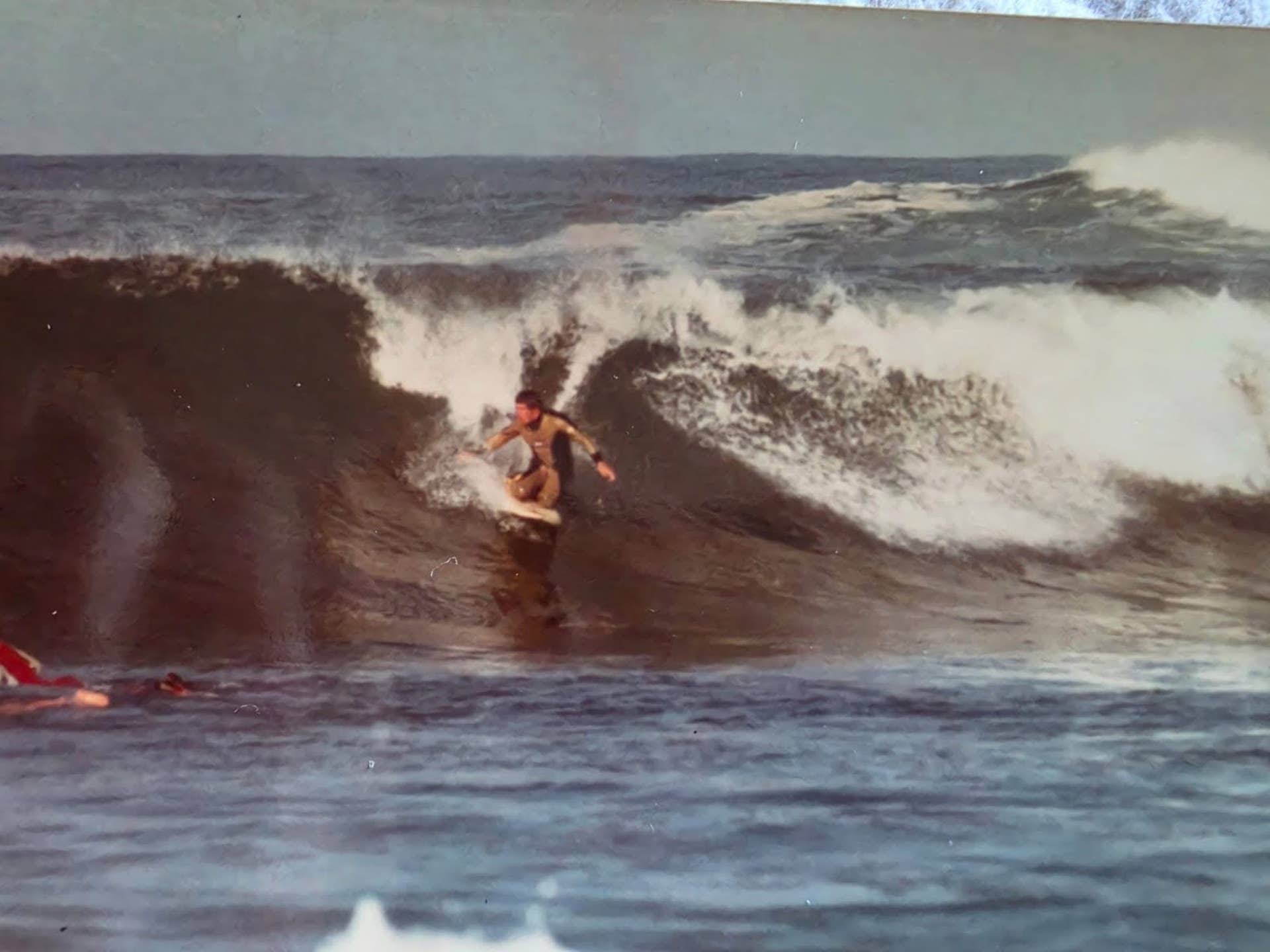
After the rigours of the South African school system, to have a six-week summer holiday out there when the beach and the rocks and the dunes were your own, and your parents weren’t watching — you could do whatever you wanted as long as you were home for dinner.
From the earliest age, my elder brother Julian taught me how to catch klipvis, little rockfish, in the pools right in front of our home — a passion that has stayed with me my whole life as well. And other friends taught me how to catch crayfish.
Our home’s name was Just Ashore, on Stadler Road. Its front wall on the ocean side was also the high tide mark. And twice the ocean did come right through — on one occasion even leaving a crayfish on the carpet. The bloody cheek of it.
But besides the fishing and taking out of crayfish and perlemoen (abalone) and bodysurfing in Small Bay at about the age of five or six, we started to ride waves sitting on our knees on inflatable Lilos.
Every little kid on the beach would take part to the best of their ability, and it was much fun. It was a mix of local Afrikaans boys with a sprinkling of English speakers like me, and it didn’t matter — the sea was our home. We were brothers of the surf.
We learned about the tides and the ocean and the wind. Most people would run away from the wind, but we knew that after the wind would come a calm. Then the water was crystal clear, the pools so transparent you could see the crayfish walking on the rocky bottom ten feet deep… Then it was heaven.
Roup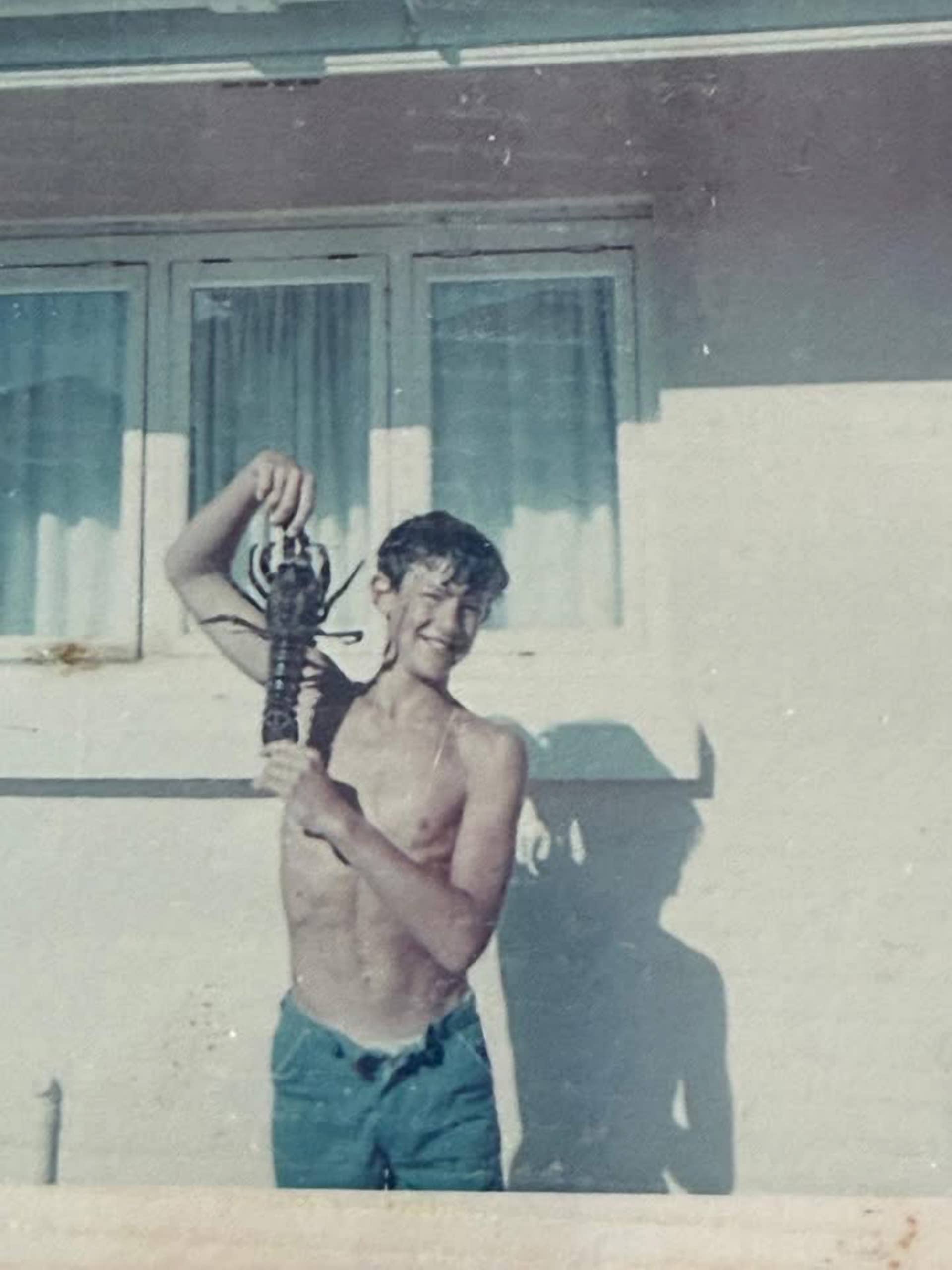
One day my older sister Janine (Jay) got a long 9-foot-6-inch surfboard. I’m not sure how or where it came from, but it was called Sun Deck, and I begged to use it. There were other brands as well, like Whitmore, and everyone that could get a board got aboard.
These boards were so heavy we couldn’t carry them under our skinny arms, so we balanced them on our heads, walking from our homes down to Small Bay. Then, wrapping a towel around our necks, we’d kneel and paddle across to where Little Bay and Big Bay met.
We were a motley crew: the two Zondagh brothers, Alan and George, Marius Smit, a few others, and me — joined later by Dolphy Mader and Vince Baker. In the end it was usually just five of us — Alan, George, Dolph, Vince, and me. The bonds of friendship formed amongst our little group have lasted a lifetime. I consider the Zondagh boys my other brothers.
In those days there were no leashes, and we paddled out on these long boards, wiping out again and again and again, and then had to swim to the beach against the current. How sweet it felt when our feet would touch the ground, knowing that we had defied Neptune one more time.
But as time passed, we got better and better. None of us would ever compete professionally; we just loved the sport for sport’s sake. We loved being out there. We loved the camaraderie.
The Blouberg waves were much harder than those at Muizenberg, where the water was warmer. But for the school year, I would spend most of my time at Muizenberg Surfers’ Corner.
However, it was the waves at Blouberg that drew me back. They were much faster and conditions were more dangerous, adding their own element to surfing. As a boy of six, I found my first dead body on the beach — a kid who had drowned and washed up. Almost every year a kid would drown trying to make it from the island to the shore at high tide.
My sister Jay nearly drowned one day, right in front of our house while swimming in the two tidal pools that became one at high tide. Aged around five, she was pulled out of the narrow sea passage through which these pools were filled and emptied. The mass of heaving sea bamboos was waiting to entangle her when, just in time, an incoming surge carried her clear back into the tidal pool, where she found her feet and staggered out of the water. A few seconds more and we would have lost her.
But those were golden days. We would surf all day with the skin peeling off our faces. We put zinc over our noses. Our hair was bleached by the sun, and our bodies were toned and tanned dark brown.
On the weekends, at Geo-kita’s — the café that George and Alan’s parents owned — there would be rock ‘n’ roll sessions. If we were lucky, we’d get to walk a girl home after the dance. And if we got a kiss, we were on cloud nine for the full six weeks. We surfed hard. At the same time, there was the diving for crayfish and the fishing — but it was the surfing that kept bringing us back and back and back. I started to hitch-hike during school term without my parents’ knowledge just to go and surf there before we had cars.
The water is freezing, but we learned to handle it. Our bodies hardened to it, and we could stay out for an hour to an hour and a half. When we staggered in frozen, we’d go up to the dunes and pitch face-first into the hot sand, letting the heat seep into our bodies from the sand and the sun on our backs as we felt ourselves slowly come alive.
Later in life, with wetsuits, our fingers would be so frozen that we couldn’t unzip our wetsuits — luckily girlfriends would help. Plus a shot of Old Brown sherry as well.
Herman Roup
As we got older and Alan Zondagh got his driver’s license, he would borrow his mom’s car and we’d all pile in and go looking for surf around Blouberg. We found places like Eerste Steen (First Stone), now called Third Stone — Haakgat, Witsands, Tableview. And of course Melkbos, where there was both a shore break and outer reef breaks, the best of which we only found many years later behind the seaweed at the very start of Melkbos.
And then somewhere between 1973 and 1978, the Gunston 500 — the first surf contest — arrived in Big Bay, followed by the Spur surf contests. We all watched in horror as the banners went up, the crowds came pouring in, and the pros from around the world arrived — including Shaun Tomson. This was not for us. We were solitary surfers who were just stoked with the ocean and loved our time out there. Our local Cape Town hero was Johnny Paarman, with his smooth big bottom turns.
Today Blouberg has hundreds of surfers — as I have just witnessed — and surfing schools with little kids going out and learning how fantastic the ocean can be.
In the 80s, the windsurfers came; the kitesurfers came later. To watch these acrobats fly 40 feet in the air and then land perfectly is unbelievable. The sport and the bay never ever disappoint. It is always a pleasure to watch.
Over the years, I brought a number of my Wynberg School friends out to Blouberg to surf as well. One Easter weekend our little under-15 rugby side came out, and they all started surfing Blouberg for the first time. Among them were Ken Bluff, Rob Louw, Mike Theys, Graham Owen, Henry Mathews, Rob Baillie, and Tony Roberts.
Roup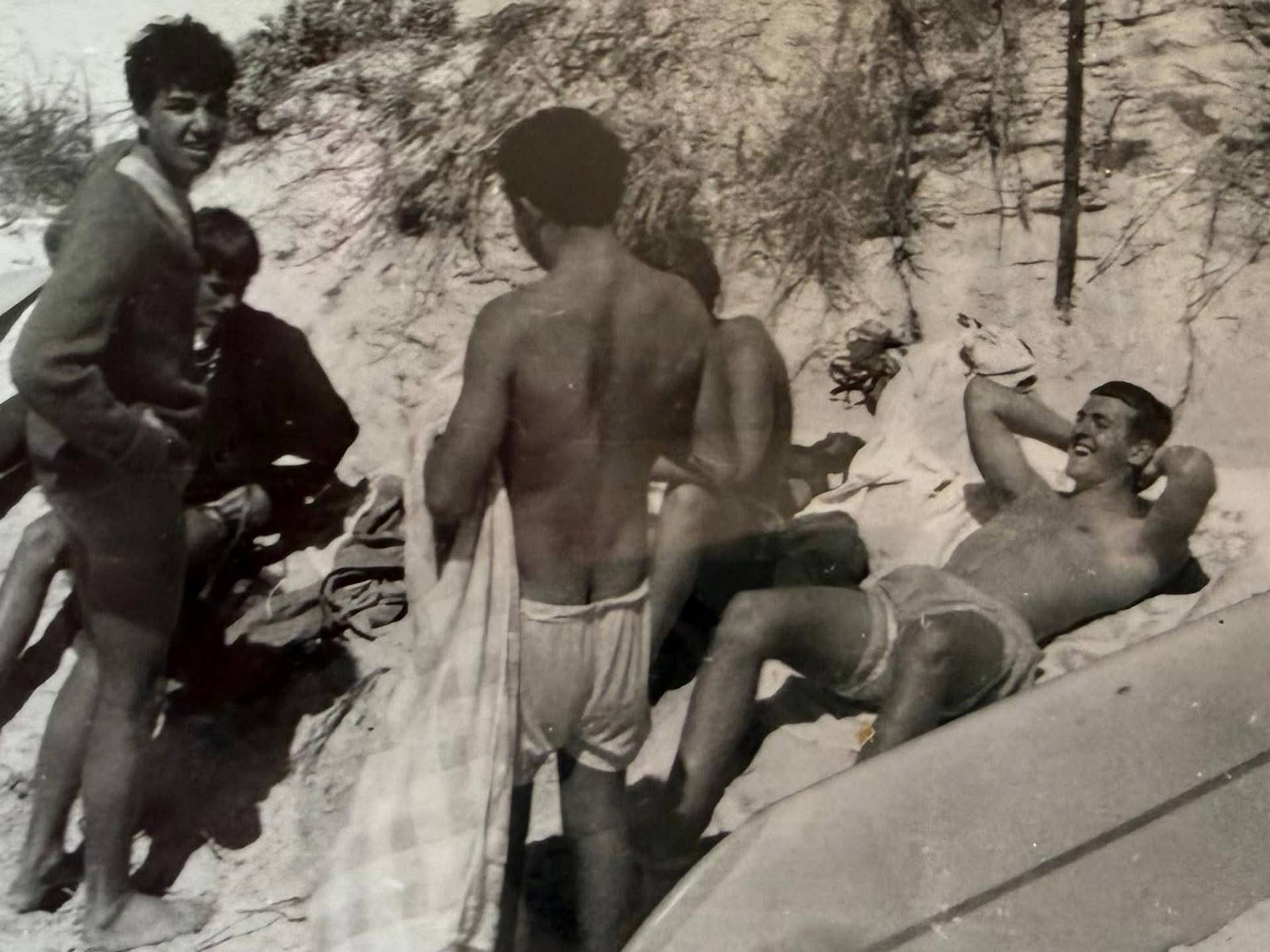
It’s interesting when I meet up with my school old boys all these years later that the memories of Big Bay Blouberg are one of the threads that still bind us. We laugh and joke about those happy times that we had out there on Big Bay — surfing, of course, and some bikini watching. Today we sit in the water speaking about medical conditions and retirement funds. Looking back, it was such a privileged time of our lives.”
And that is how it all started at Blouberg: a battle on the beach that transferred power from the Dutch to the Brits, a bunch of Durbanville farmers wanting a place to ontspan after the harvests were in, and three little boys and their friends sitting, kneeling, and then trying to stand on blow-up Lilos. And the nearby city stretching and growing, eating up the miles between Woodstock Beach and Blouberg.
Today there are no more thatched, whitewashed fishermen’s cottages left (except Ons Huisie, the restaurant), and you will need many millions of Rand to afford one of the beachfront properties. But if you are lucky — and it won’t be for much longer — you may bump into three 70-year-old friends still out there on the waves at Big Bay, laughing at themselves and remembering the good old days.
And the nights. Those Blouberg summer nights were pure magic. Imagine a windless full-moon night in 1972, let’s say, with a spring tide low — so low that you could walk straight across Small Bay and Big Bay over the island causeway, the only ripples on it those in the sand left by the last high tide. In your head you can hear the newly released Seals & Crofts song “Summer Breeze”: “Summer breeze makes me feel fine, blowing through the jasmine in my mind.”
When you paddle in the water, there is bioluminescence sparkling purple and silver light around your ankles. And — miracle of miracles — the water is warm. That one moment in the year when, by some magic confluence of currents, warm water had been fed into the bay, and you thought: if only it could always be like this. The summer breeze carried that iodine-rich smell of kelp and sea, mixed with smoke from innumerable braais, and anything and everything seemed possible.
Out of the corner of your eye you took in the pulsing flash of the Robben Island lighthouse. Across the bay, Table Mountain’s dim outline wore a collar of sparkling diamond light.
Your teen blood hammered in your ears, and there was a sweet inchoate ache in your gut for all that was and all that the night promised it would be. That was the time to be alive.