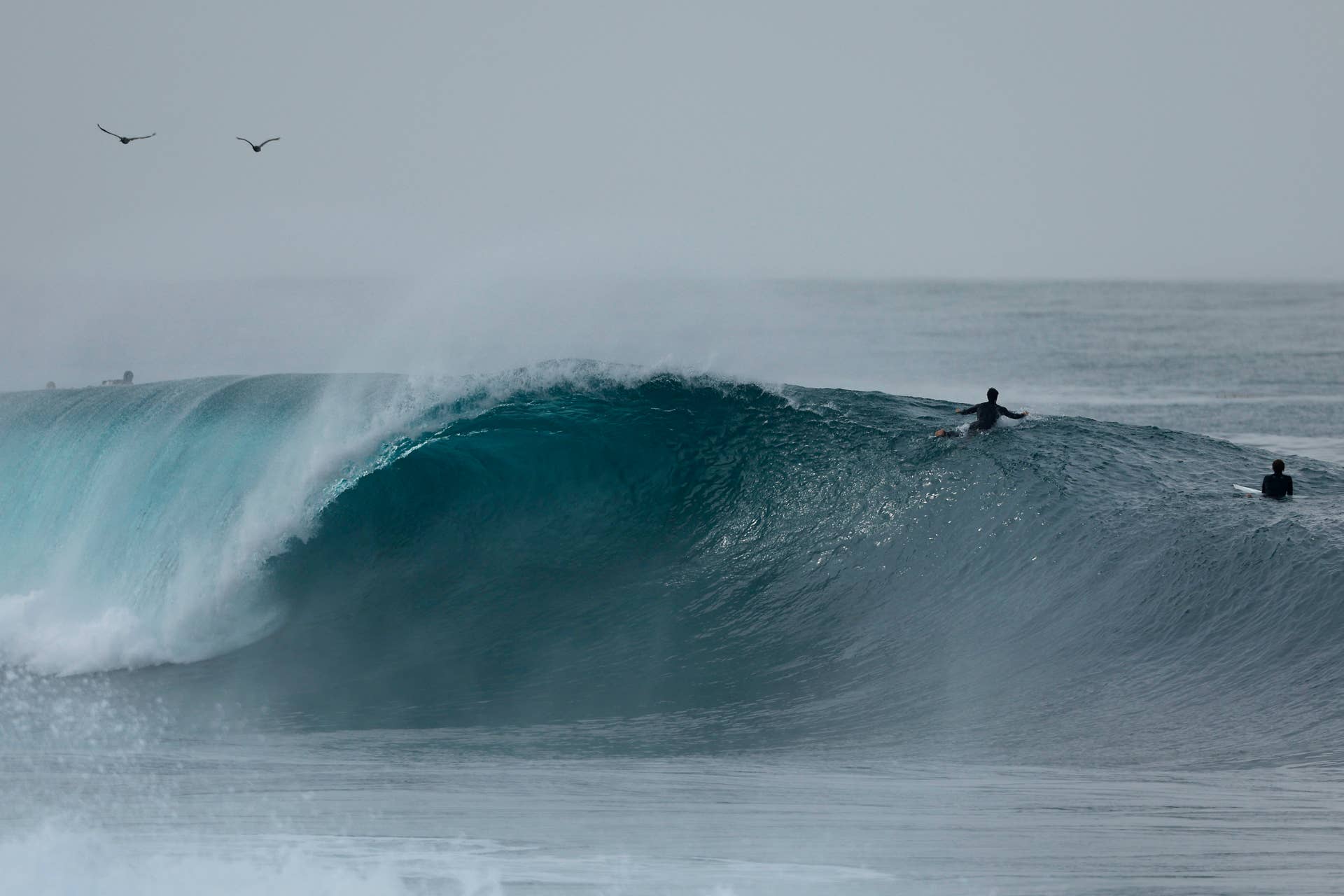
There’s a long, meandering weather front off the beach. It’s been there for days, sending cross-shore squalls across the sand, churning small sections into updrafted spirals of dust, before evaporating.
The coastline is quiet. And there’s a good reason for it; no-one wants to tackle the paddle-out. There will be dozens of duck-dives under solidly overhead whitewater, across a kilometer long close-out. Every now and again though, a somewhat organized unbroken line marches from the horizon. It hits a sand-bar and cracks in two, a wobbly, somewhat weird left and a slower right with a little section to drive over and then touch the lip, escape unscathed.
Three people have pulled up, looked, gone home. Yet, I’m stood here thinking, ‘that looks like a good workout, and maybe get into one of them.’ Joke’s on me, because it both was (physically) and was not (mentally) a good workout. The one wave I caught, after a 25 minute ordeal, went exactly as I expected; short ride, open face, little touch of the lip before falling to the flats with the white water detonating both left and right of me, for as far as I could see. And theres three-miles of beach here.
Related: How to Train for Surfing: 12 Essential Land Exercises That Actually Work
Anyway, I got out and looked back. It looks worse from eye-level. My little surf watch gadget flashed up, revealing I’d burned a total of 692 calories. Not bad for a cross-shore side quest. It did make me think; there really is no other workout like surfing.
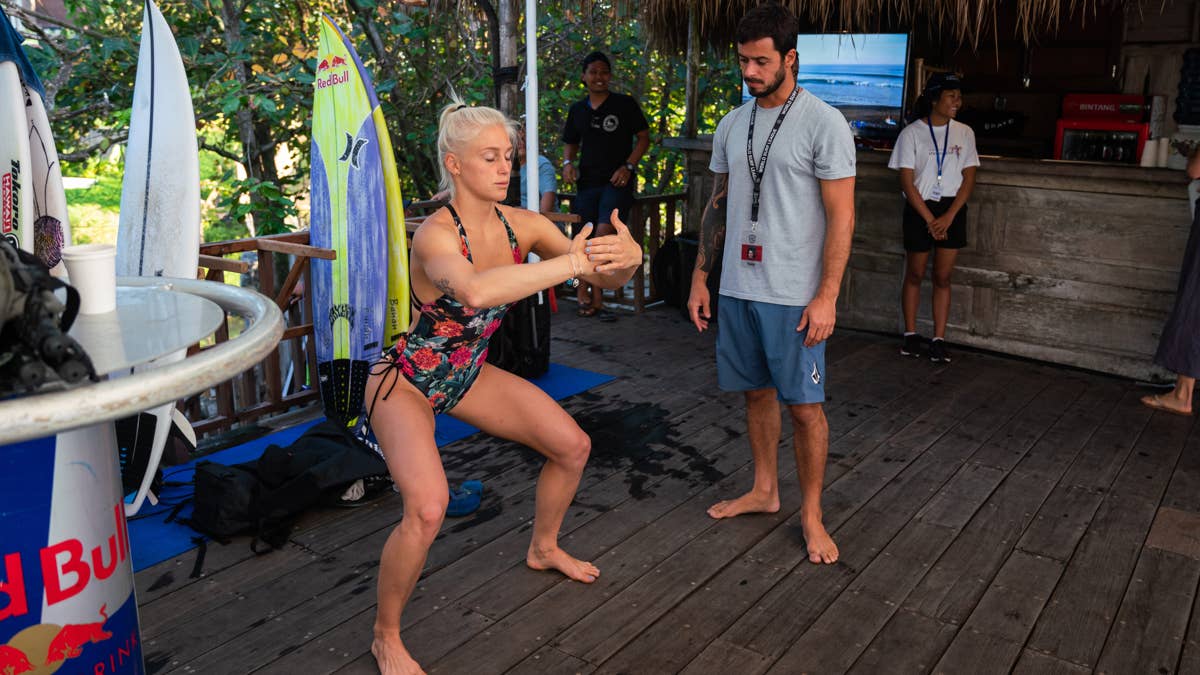
Step foot into any gym and you will see the same thing. Kettlebells swinging, treadmills churning, dumbbells pushed, chests pressed, and so on. The same repetitive programme to up a certain muscle set. But surfing is one of those past-times that demands strength, endurance, mobility, balance, coordination, reaction speeds and mental fortitude, all-in-one. It is hard to replicate in the gym, but there are myriad surf-specific workout programmes out there that can help during down-times.
Plus, surfing comes with that ever-changing natural landscape. Which sounds very poetic, but it certainly adds another dynamic to the rather hit-and-run nature of the gym.
Full-Body Upper-Cut
Here’s a really obvious statistic about surfing; you spend 60 percent of your time paddling. Paddle fitness cannot be understated – and there is a difference between being run fit and paddle fit, these are two wildly different types of movements. When we boil surfing back to that, this means that what you’re actually doing focuses around endurance.
Paddling uses your shoulders, upper back, lats, triceps and your core is constantly engaged. Unlike cranking out reps in the gym, paddling requires all these major muscle groups and stabilizer muscles working together.
How many waves do you think you catch in a session over an hour? 10, 20 – being realistic? That’s 10-to-20 pop-ups over an hour, the pop-up requires power, like a split-leg burpee and locking your legs in place.
This is all before actually surfing. Then, the legs compress, the core stabilises, hips rotate, power through turns. Find us an activity that uses as many muscle groups in harmony as this.
The Ocean Doesn’t Care
Predictably unpredictable, the ocean really doesn’t care what your training regime is or how hard you’ve been giving it. Waves are still going to break and it’s still going to kick you around every now and again.
While a gym session can be performed in safety, the ocean will drop a 10-wave set on your head and send you packing. Done.
It’s this sort of variability that plays into the training side of surfing too. The body is never in a predictable rhythm – you’re changing and moving with the conditions of what the ocean’s slinging your way. This creates both aerobic exercise (endurance paddling) and anaerobic exercise (duck-dives, pop-ups) meaning you’re getting all kinds of benefits from the body never entering into the same motions.
It’s a Mental Game, Too
As above, during said close-out steam-roll session; it all felt a bit like losing. One and done amongst an uncharacteristic summer-storm can make you feel a bit off. That’s because calorie burn and workouts and moving my body, aren’t the reasons I surf. When you paddle out on days like this one, you know it’s going to be one of those victory-at-sea moments. And you’re chasing the feeling of surfing through it all.
The mental olympics that come before and after that are part of the workout too. It’s a lesson in flipping the script. Was that a good surf? No. Had I surfed more waves than the three people who turned up and went home? Yes, by one.
In this modern life of face-stuck-in-screen moments, it’s rare to not have notifications snap you back to virtual land. Surfing removes all this. It’s the natural out of office location, one where you can enter a sort of flow state, a term first breathed into existence by Hungarian psychologist Mihály Csíkszentmihályi in the 1970s.
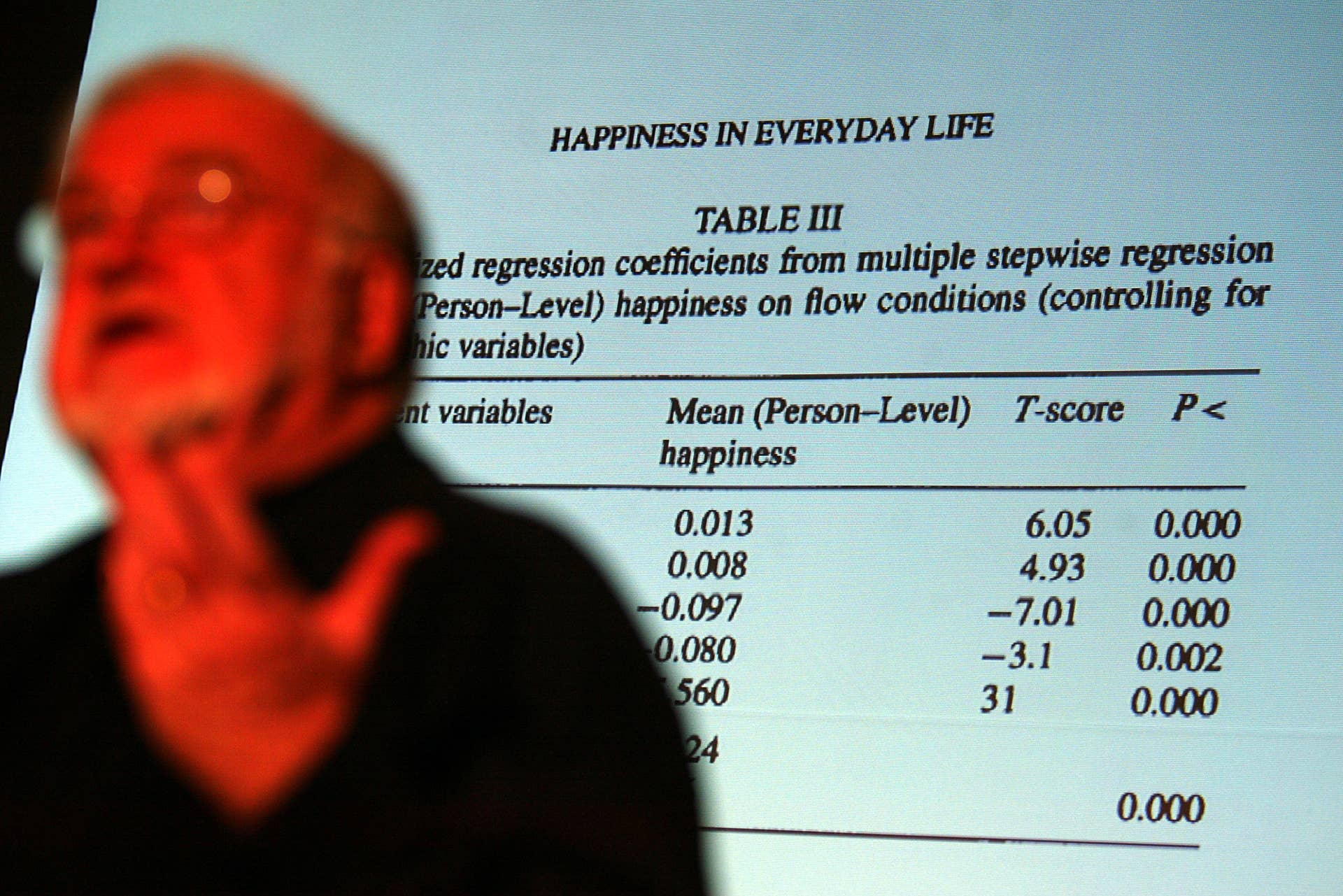
He said: “flow is most likely to occur when we find the perfect balance between our current abilities and the difficulty of the activity at hand. If a task is too easy, it fails to absorb our attention, so we become distracted, and our thoughts may wander to other preoccupations. If it is too hard, we start to feel stressed by the task itself. It is only when we meet the sweet spot in between that we find the optimum level of engagement – and all the pleasant feelings that come with it.”
To sum it up; flow is a meditative state. Amongst the noise of modern life, you could argue surfing enters into that rhythm. The detox of the mind, the removing of pressures of society. An internal mental cleansing is almost mandatory these days. These moments happen no matter if you’re a beginner, been surfing all your life or any other ability-level nuance. Perhaps that’s the real reason why surfing is a workout like no other, because it helps sort out your internal state.
There are other past-times and sports that can do this – but there are few that can make you feel something like being in the ocean. And long may it continue.