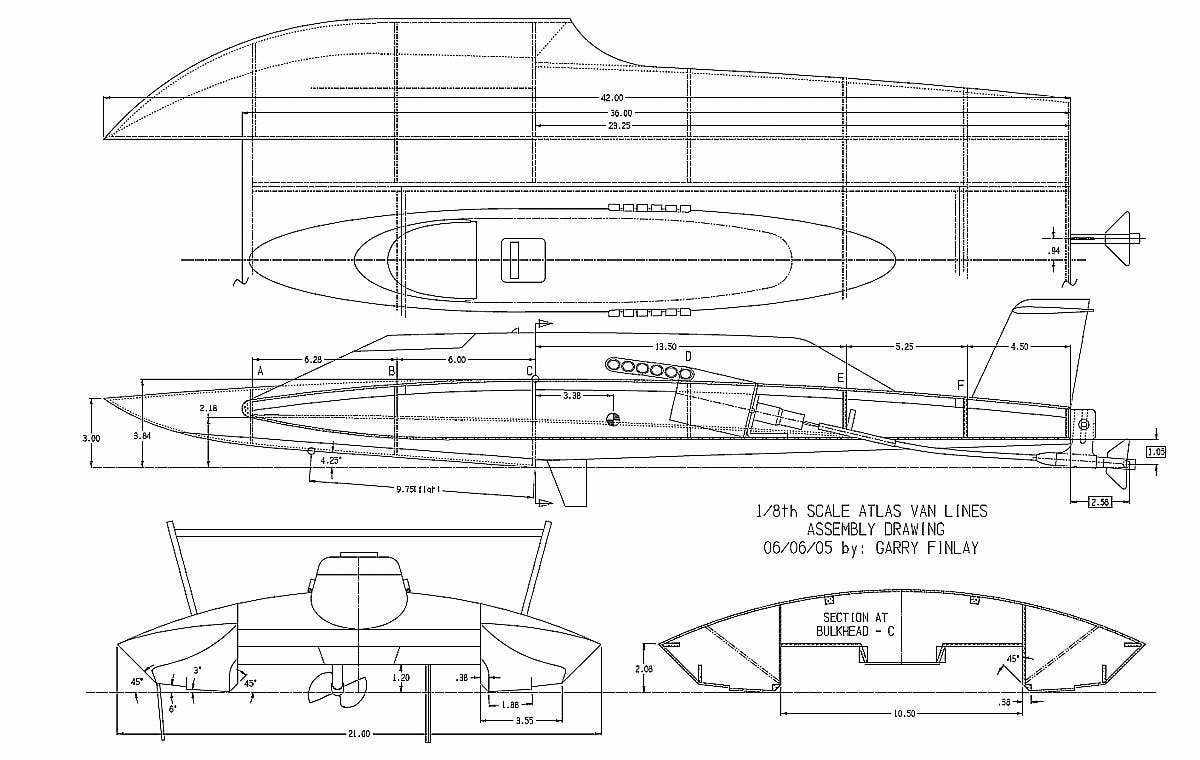
Ben Aipa was watching a boat race at Ke‘ehi Lagoon in 1974 when one particular hydroplane caught his attention. While the other boats slowed down and made wide, sweeping turns around the buoy, the hydroplane pivoted sharply, released a burst of water, and accelerated through the turn. For Aipa, the connection was undeniable.
He began thinking about how that same principle might be applied to surfboard design, how breaking the outline could allow a board to maintain speed and surface area while suddenly releasing and pivoting through a turn.
From Hydroplane to Surfboard
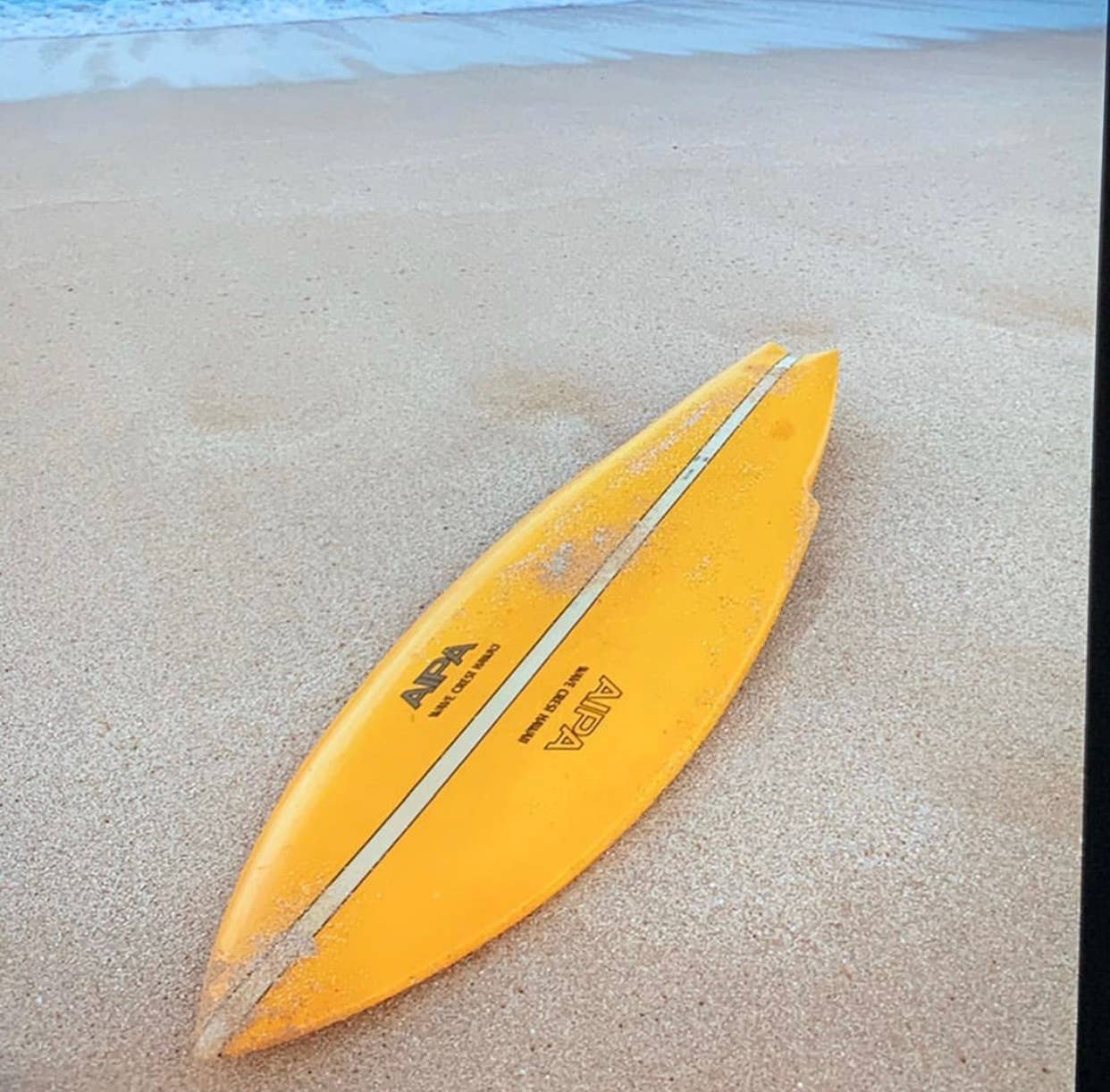
In the mid ’70s, the Shortboard Revolution was still underway, and boards were largely living in the single-fin era. Aipa saw an opportunity. He took a shaped blank with a swallowtail, dropped a template inside the outline to pull the tail in without sacrificing width farther forward, then carved a sharp interruption, a wing, into the foam with his fingernail. He looked at the finished outline and laughed: “Hydroplane speed boat design.”
That strange little break in the rail would become known as the Sting. Aipa’s new design wasn’t simply about making a surfboard look different. The wing created two distinct sections of the outline. The wider forward section provided planing area and carried speed, while the dramatically pulled-in tail allowed the board to release and pivot when put on rail.
For the first test, Aipa called in Larry Bertlemann. When Bertlemann saw the board, his reaction was essentially: Where’s the rest of my rail? Then he paddled out at Diamond Head. From the cliff, Aipa watched as Bertlemann began turning the board. The wing was doing exactly what he’d envisioned, allowing the tail to release and the board to pivot more sharply. Aipa reportedly called out that Larry was “stinging” the wave. The name stuck.
The Sting wasn’t developed in isolation, either. Aipa had come to shaping through an equally unlikely path. He didn’t start shaping until he was 22, after a football career was derailed by injury. Approached by surfer and shaper Joe Kuala, he was eventually convinced give shaping a try. Aipa walked into the shaping room, picked up a planer and a blank, and was essentially left to figure it out. Ten hours later, he had finished his first board. Kuala was stunned. That moment changed the course of Aipa’s life, and eventually, the course of surfboard design.
Aipa Family
Then Came the Cover
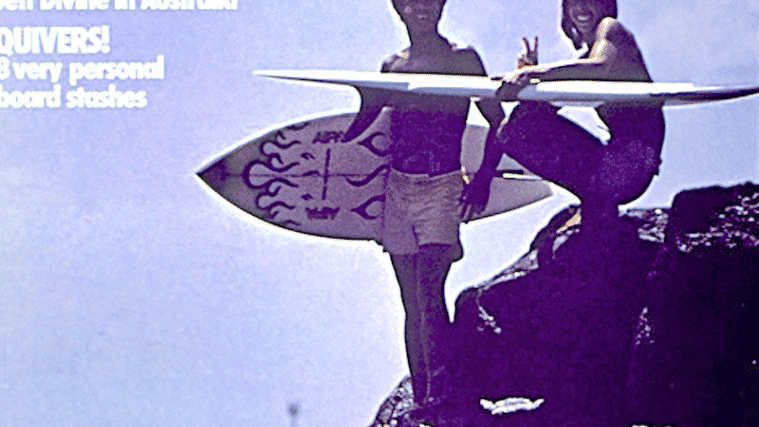
The Sting was already making noise in Hawaii, but the September 1976 cover of SURFER Magazine turned the volume all the way up. Buttons Kaluhiokalani and Mark Liddell appeared on the cover riding Stings, and suddenly a distinctly Hawaiian design was staring back at surfers everywhere.
Today, a new board design can be photographed, posted to Instagram, and viewed around the world before the shaper has even swept the foam off the floor. In 1976, it didn’t work that way. There was no internet. No social media. No YouTube. If you wanted to know what surfers were riding in Hawaii, Australia, or California, you waited for the next issue of SURFER to arrive. That made the magazine cover something more than a photograph. It was a transmission tower.
Aipa’s son, Duke, says his father always believed that the cover made the Sting “go viral” around the world. The result was immediate: shapers in California, Australia, and elsewhere began experimenting with the design, with many eventually calling their versions “stingers.”
And then there were the flames. The hot-rod-inspired artwork on the Sting boards became nearly as recognizable as the outline itself. Aipa later joked about the proliferation of flame graphics with a typically blunt observation: “Flames… we started that shit.”
Aipa Family
The Sting Becomes a Language
The real legacy of the Sting, though, isn’t one particular model. It’s the idea. The winged outline introduced a new way of manipulating a surfboard’s rail: maintain width and speed in one section, then strategically interrupt the outline to create release and maneuverability somewhere else.
That basic concept would eventually appear in wings, bumps, flyers, winged twins and countless other variations.
Mark Richards was one of the surfers who helped advance the idea. After riding Aipa Stings, Richards developed his own winged twin-fin design. He would go on to win four consecutive world titles beginning in 1979.
Aipa continued evolving the concept, too. As surfing moved from twins toward the thruster revolution of the early 1980s, he developed the high bump, adapting the interrupted outline to the new generation of performance boards. The design never really went away. It just kept changing.
Aipa Family
What’s Next?
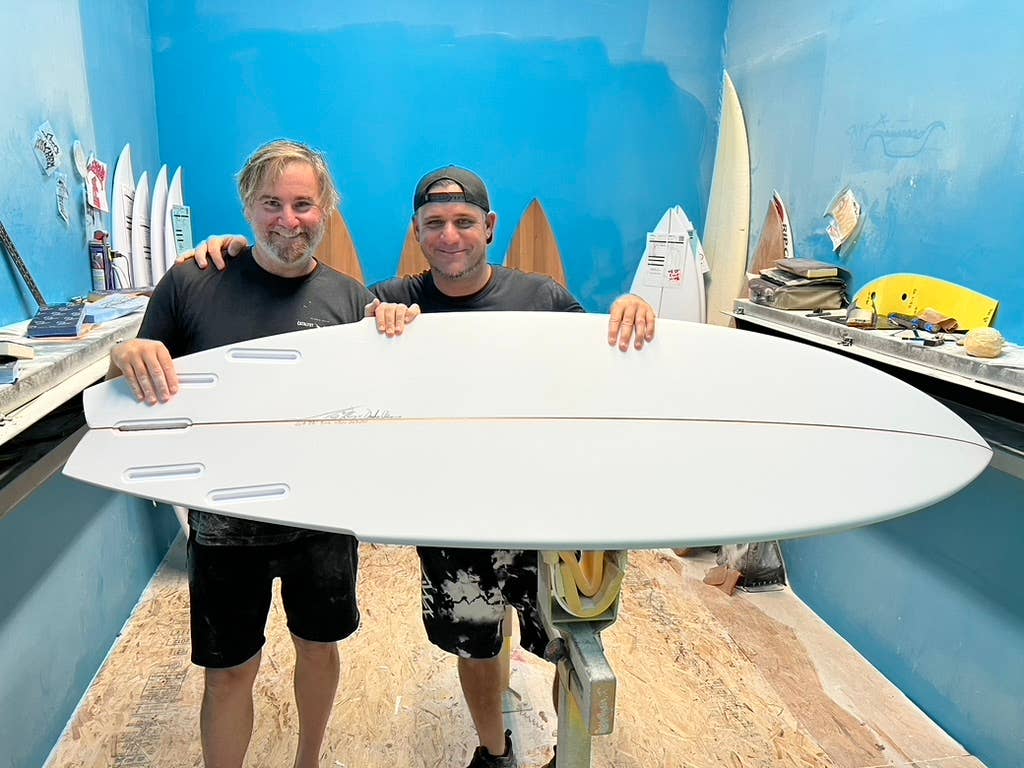
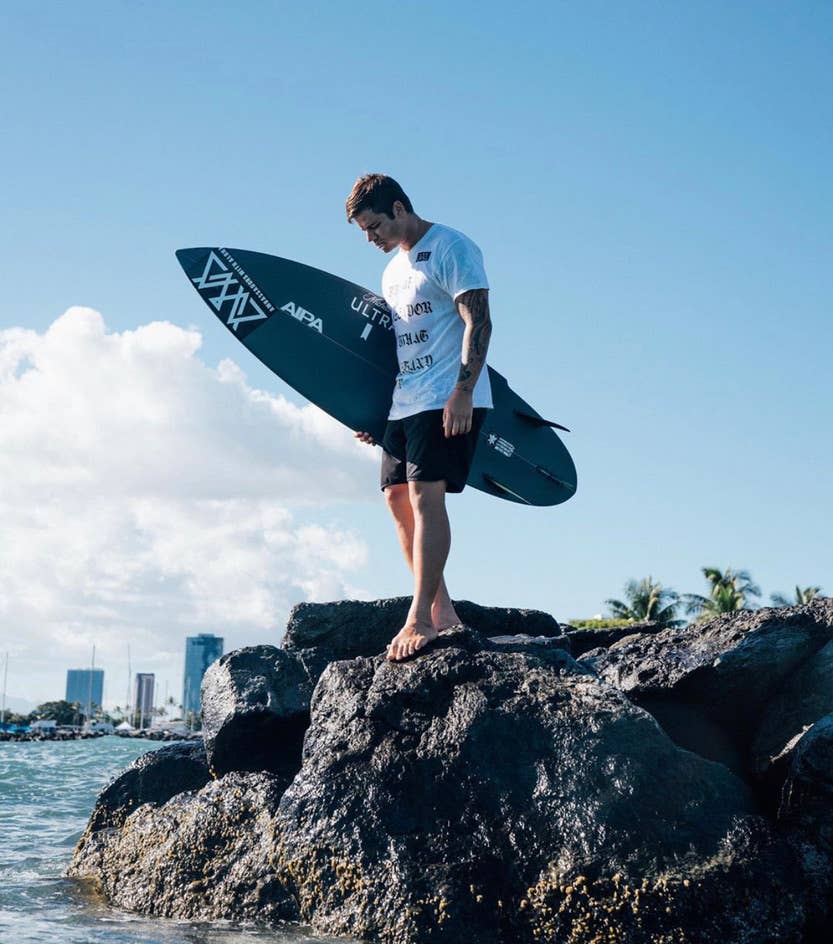
Fifty years later, Duke Aipa is carrying the Sting into another generation. Rather than simply reproducing his father’s boards, he’s working with contemporary shapers, including Matt Biolos, Matt Parker, and Dan Mann, to ask what happens when the Sting element is introduced into already established modern designs.
That’s probably the most fitting way for the story to continue. Ben Aipa never seemed particularly interested in standing still. His philosophy was simple: “In order for surfing to change, surfboards need to change.” The Sting started with a shaper watching a boat turn. Fifty years later, that same idea is still moving.
Aipa Family