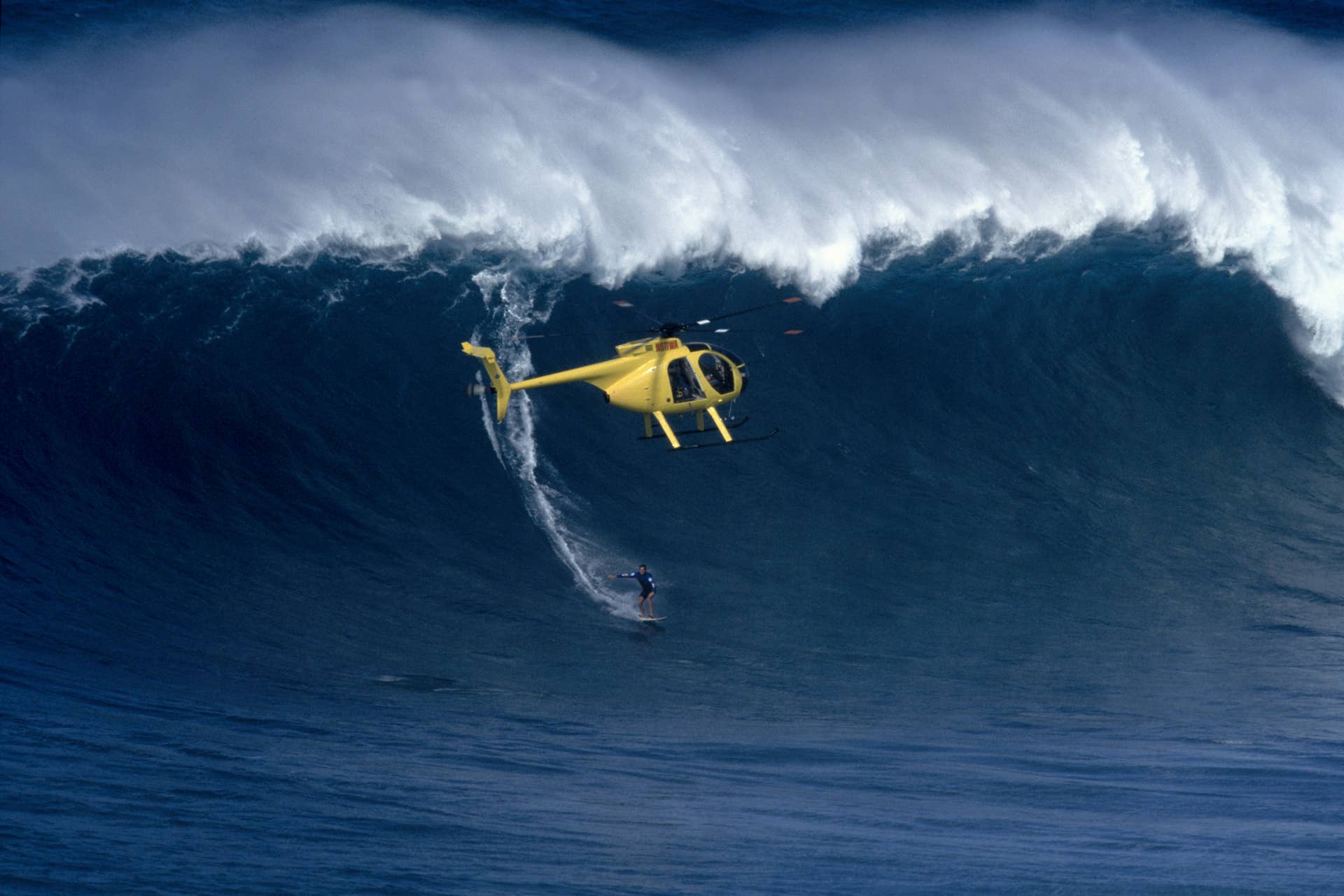
Do you remember the opening scene of 2003’s excellent surf flick Step Into Liquid? It is Mike Parsons, being towed into absolutely gargantuan Jaws – and the camera work is masterful. It starts with a tight crop of Mike, then pulls back. And pulls back. And pulls back, until he looks like an ant compared to the towering jaw-dropping spectacle of Pe’ahi.
For many, this was one of the first encounters with giant waves filmed in this way (by helicopter, back then, drones weren’t a thing for surf films 23-years-ago) and it left a long-lasting impression, 16-year-old me couldn’t scoop his face off the floor fast enough, setting a curiosity with big waves that was further solidified when Mickey Smith, Tom Lowe and Fergal Smith dropped Powers Of Three – which opened up the big wave surf scene in Ireland. Still one of the best surf films to this day, go watch!
And it also begs the question – how the heck do those waves form? And how powerful has the storm got to be to send those big wave joints into overdrive? Let’s take a look.
As With Most Surf; It Starts With Wind
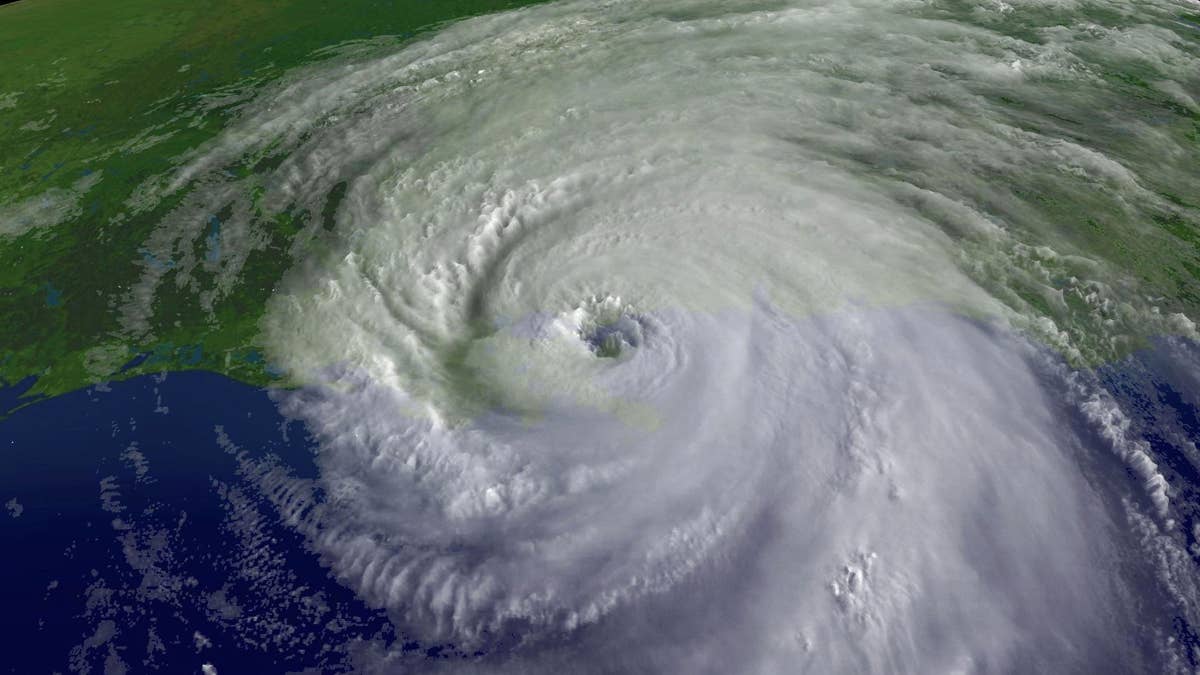
Most, if not all, surf begins with wind. As it blows across the ocean’s surface, it creates friction which transfers energy into the water. This creates ripples and if the wind keeps blowing, gravity and air pressure push against these ripples, turning them into larger waves. These usually form inside a storm, where there are strong winds. As these waves move out of the storm area, they begin to organize themselves. Under the water, swell rolls under the surface, like rolling a ball under a carpet, as they fan out and move closer to shore.
The stronger the wind at inception, the greater the distance over which it blows, the more energy it can transfer to the sea.
That distance is called fetch and this combined with weed speed and duration help determine how much energy a storm unleashes into the ocean.
Now, those giant swells are produced by intense low-pressure systems in the North Atlantic, North Pacific and Southern Ocean. These storms can produce behemoth seas, with waves travelling away from the storm in different directions.
This is why a storm doesn’t need to be close to shore to produce waves. And you can always tell which surf has come from a hurricane or similar system due to the long period of the swell.
Related: Could the World’s Biggest Wave Be Hiding at the Most Remote Island on Earth?
How Do These Swells Become Giant?
Now we’re talking – because your local might not get to 70 feet. Let’s imagine a little wave inside a storm – it is absolute chaos in there as the wind rips across the surface. Once waves are effectively sent out from the storm, they separate according to their speed and wavelength (that’s the distance between two waves). Those with a longer period move fast through deep water. Over long distances, this process helps produce those organized swell lines which you can see marching to shore.
Longer period and the size of the swell obviously carries more energy from deeper water into shallower water, having a greatest impact when it reaches a coastline dependent on bathymetry, or the ocean’s floor. And this is where it gets interesting.
The Ocean Floor Decides What Happens Next
Those long period, bigger swells need an obstruction to effectively chop them up. If not, all the energy will arrive at once and this will be a close-out. Hence why beachbreaks do not like certain long period swells unless you have an incredible sand bar to dissect it.
For the likes of Jaws, there’s a deep water trench and underwater canyon. As these larger swells approach (created by stronger winds in a storm) they travel over the canyon which acts as a lens to focus the swell into one spot. The swell also goes from deep water to shallow water very quickly, allowing the wave to break. This sudden transition forces wave energy upward, and can compress and magnify the wave. A unique combo of swell, canyon and shallow water allows Jaws to essentially jack-up the surf into those moments like Mike experienced at the start of Billabong Odyssey.
That canyon effect is not exclusive to Jaws. It happens at Nazare too, where the canyon essentially bounces these large swells to shore (known as refraction). Then, these refracted swells can intersect with other swells, creating those giant tee-pees we love to see out there. This mostly happens when the swell direction is above 310 degrees. If the swell is more west, then Nazare becomes more of a straight wave.
Meanwhile, at Maverick’s there’s an array of reefs, deep channels and a sloping seabed that helps refract and focus those incoming swells – which again, transfers energy upwards and creates those giant waves. Remember Twiggy’s insane one from 2021? The three-time big wave champ has a freefall on an impossibly large Mav’s bomb. Twig’s all good, but that’s a wave you don’t forget in a hurry. All stemming from a gigantic Pacific storm, which created the day of days for Half Moon Bay. The buoys measured 20 foot swell, arriving with a 20 second period – and once that hit the seafloor at Mav’s, it created that monstrous XXL session.
In short, big waves are created when wind from powerful storms whips up the ocean. These waves then fan out and carry energy with them. As they approach the shoreline, the bathymetry dictates how it translates to the beach. Places like Jaws, Maverick’s and Nazare are all uniquely positioned to make the most of those swells. There are of course, other big wave spots these three are just examples.