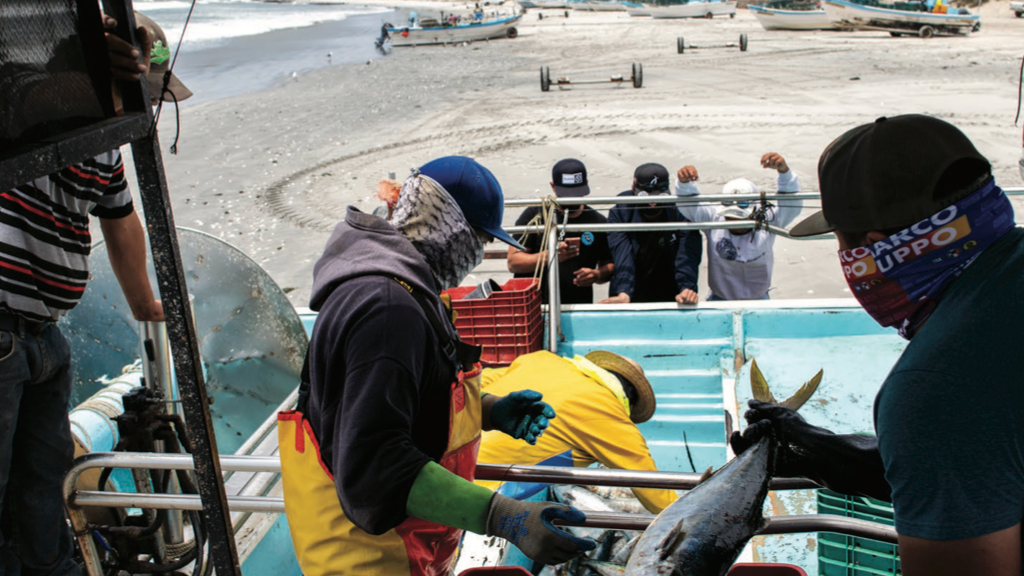
For Jesús García Salazar, photography has always been about more than capturing a moment. It’s about curiosity, connection, and the stories that emerge when you take the time to look closer. After years spent documenting the people, places, and waves of Baja California, the Mexican photographer is bringing those experiences together in “El Mar Nace en la Montaña” (“The Sea Is Born in the Mountain”), a photographic book exploring the rich cultural and natural history of Baja’s Desierto Central and the surrounding Pacific coastline.
The project is a love letter to a place that has shaped generations of surfers, fishermen, shapers, and coastal communities. Through portraits, landscapes, and moments of everyday life, García Salazar aims to preserve a deeper understanding of Baja, not simply as a destination for surf trips, but as a place with its own history, traditions, and enduring relationship with the sea. Now, he’s seeking support to bring the book to life via a GoFundMe fundraiser. We caught up with García Salazar to discuss his journey into photography, the stories that continue to inspire him, and why documenting Baja has become such a meaningful undertaking.
SURFER: How did you first get interested in surf photography?
García Salazar: Cameras have been around for as long as I can remember. I used to ask for cameras for my birthdays and Christmas, and I started playing with my dad’s VHS video camera when I was about five years old. I started filming skateboarding in my teens. Later, while on an academic exchange in Puerto Rico, I bought a camera to work on a conservation program. I had the honor of working alongside Alexis Massol, a Goldman Environmental Prize winner. I returned to Mexico with a new camera, and on my first day back, I went out to shoot surfing. I was totally hooked.
What was it about capturing Baja’s surf community and culture that first attracted you?
I feel blessed to work with a community with so much history and culture. For me, photography is a way to learn about the things I’m interested in: surfboard construction, shapers, surf legends, and the people who came before us. A lot of the people from where I’m from are pioneers in these areas, and that gets me excited. I like learning, connecting the dots, and understanding the timelines behind different subjects. That’s really where the book came from, too. After so many years photographing Baja, I realized I wasn’t just collecting surf images. I was collecting pieces of a place, its people, and its memory.
How have you developed your craft as a photographer?
Curiosity and a sense of wonder are my greatest tools for the type of work I do.
I study the greats, the legends who worked in the places where I work. There’s a lot of trial and error. Nowadays, it’s more about investigating a subject, reading about it, and trying to answer for myself the questions that come up through that investigation. For me, it’s also very much about books. I love the way a book can slow you down and let you spend more time with a story. That’s part of what I wanted to do with this project.
Which photographers inspire you?
I’m inspired by the work of Leo Hetzel, Jeff Divine, Ron Stoner, Chris Klopf, Leroy Grannis, and Larry Moore. On the skateboarding side, Atiba Jefferson has also been a big influence. On the documentary photography side, I love the work of Sebastião Salgado, Ansel Adams, Jorge Panchoaga, Musuk Nolte, Yael Martínez, and Lola Medel. Mostly, I’m drawn to photographers who use the power of photography to tell a story. I’m not as interested in beautiful images for the sake of beautiful images.
Who do you usually shoot with?
I shoot with people who inspire me, whose values resonate with mine, and whose stories resonate with me. Where have you been shooting lately, and what places are you hoping to explore next? I’ve spent a lot of time in Central Baja lately. I’ve been there twice this summer, working on the second episode of our ongoing surf film series, Baja Born and Raised. Basically, from Natividad and Punta Eugenia all the way to Abreojos, that’s my favorite stretch of coastline. It’s called the Pacífico Norte. It is my favorite.
I also have plans to shoot at my local break, San Miguel, this winter. This El Niño season promises a lot. And in general, I believe there is still so much of Baja left to document. It’s such a pristine place. There are still waves to discover and a lot more stories to tell. That’s also one of the reasons I wanted to make this book. I wanted to put some of these places and stories together in one object, before they disappear or change.
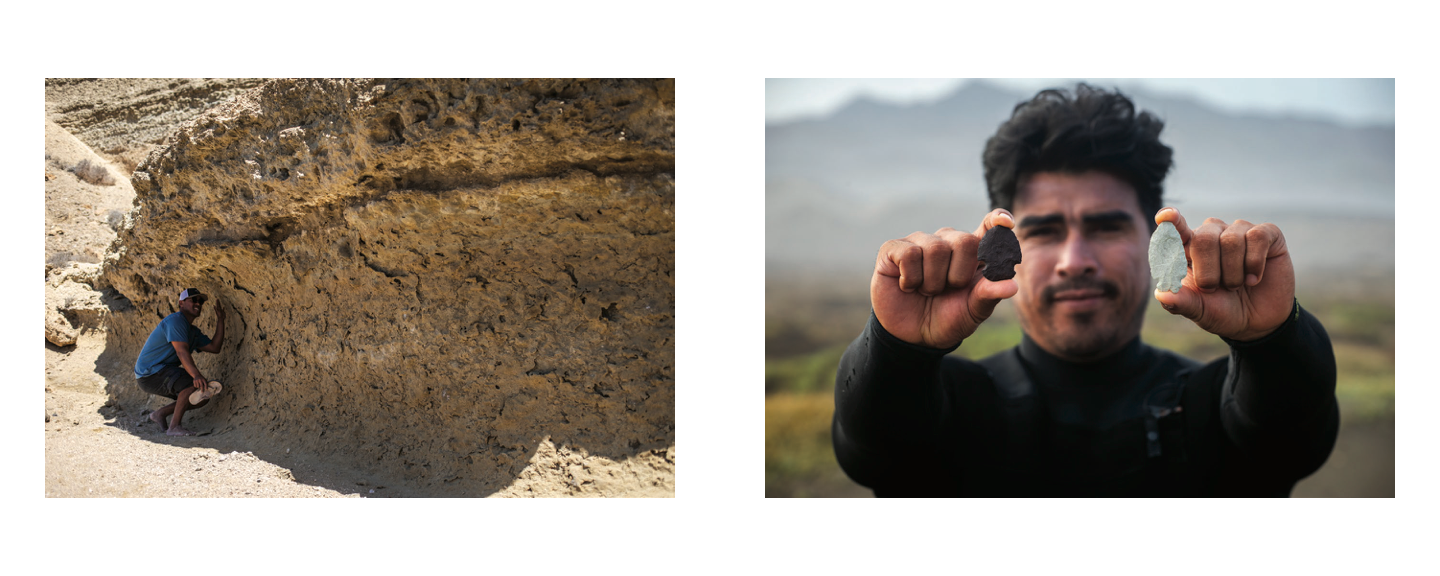
Jesús García Salazar
What makes shooting Baja surf different from other places in the world?
Baja resonates with me geographically and through my family. I have roots in this place, and Mexican surfing has roots here as well. So, for me, that’s enough. The book is really an attempt to make that connection visible, not just the surfing, but the desert, the mountains, the coast, and the people who have lived and surfed here.
What’s something people may not know about the Baja surf scene but should?
Baja is one of the pillars of surfing in Mexico. It’s one of the birthplaces of Mexican surfing, and it’s also where much of the Mexican surfboard industry is based. A lot of the surfboards people are riding in California are actually made here. There’s a lot of history that still isn’t widely known outside of Mexico. Part of the book is about putting some of that history into the hands of people who care about surfing.
It’s been a wild hurricane season in the Pacific. How’s Southern Baja holding up?
Southern Baja is known for its right-hand point breaks, but I’ve been shooting some high-quality lefts, which is new territory for me. You’ll get to see some of them in my next film. It’s a blessing that we’re all safe.
Do you have any thoughts on how this winter’s going to be in Baja?
I’m excited for this winter. I don’t know if we’re actually going to witness another run like this in my lifetime, especially one that I get to document. Perfect right-hand point breaks at the Sisters, big waves at Todos Santos Island, and some outer reefs to investigate. I just hope everything I have in my mind gets to become a reality. And if it does, hopefully some of those moments will find their way into the next chapter of the story.
And finally, where’s the best taco in Baja?
There’s a Baja California Sur saying: “Si son de harina, ni me las calientes,” which basically means, “If they’re flour tortillas, don’t even bother heating them.”
Help Jesús García Salazar bring El Mar Nace en la Montaña to life and preserve a piece of Baja’s surf history. Support the book on GoFundMe.
Related: A Deep Dive Into Mexican Surf History From The Source