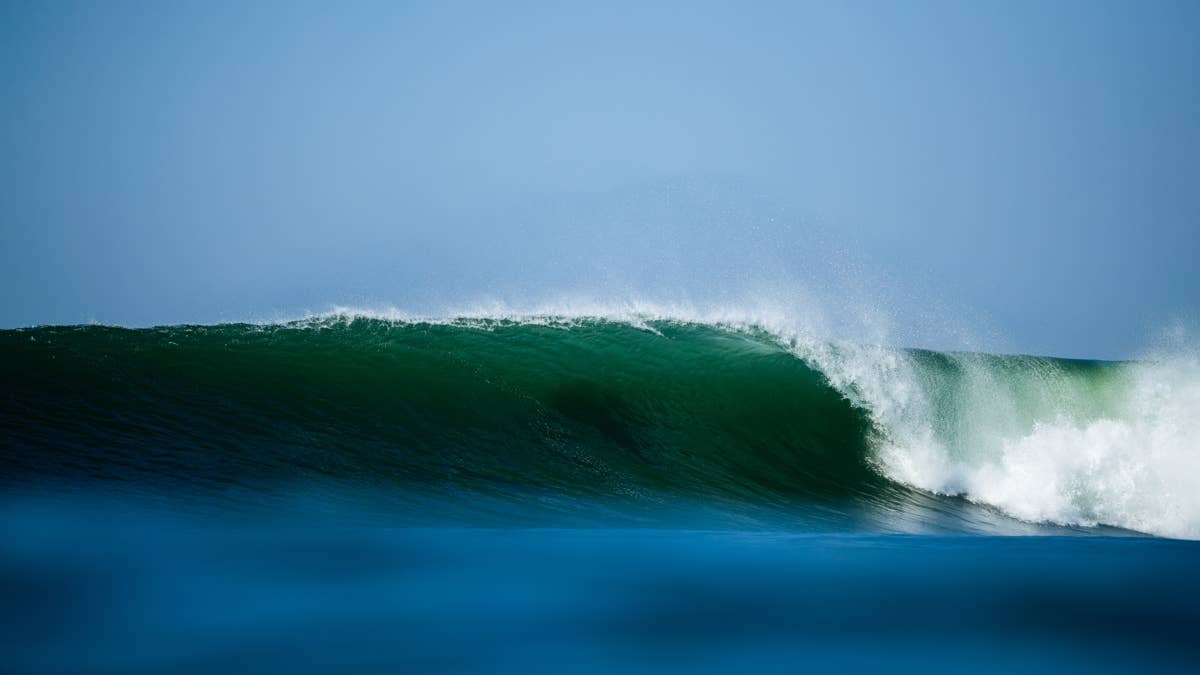
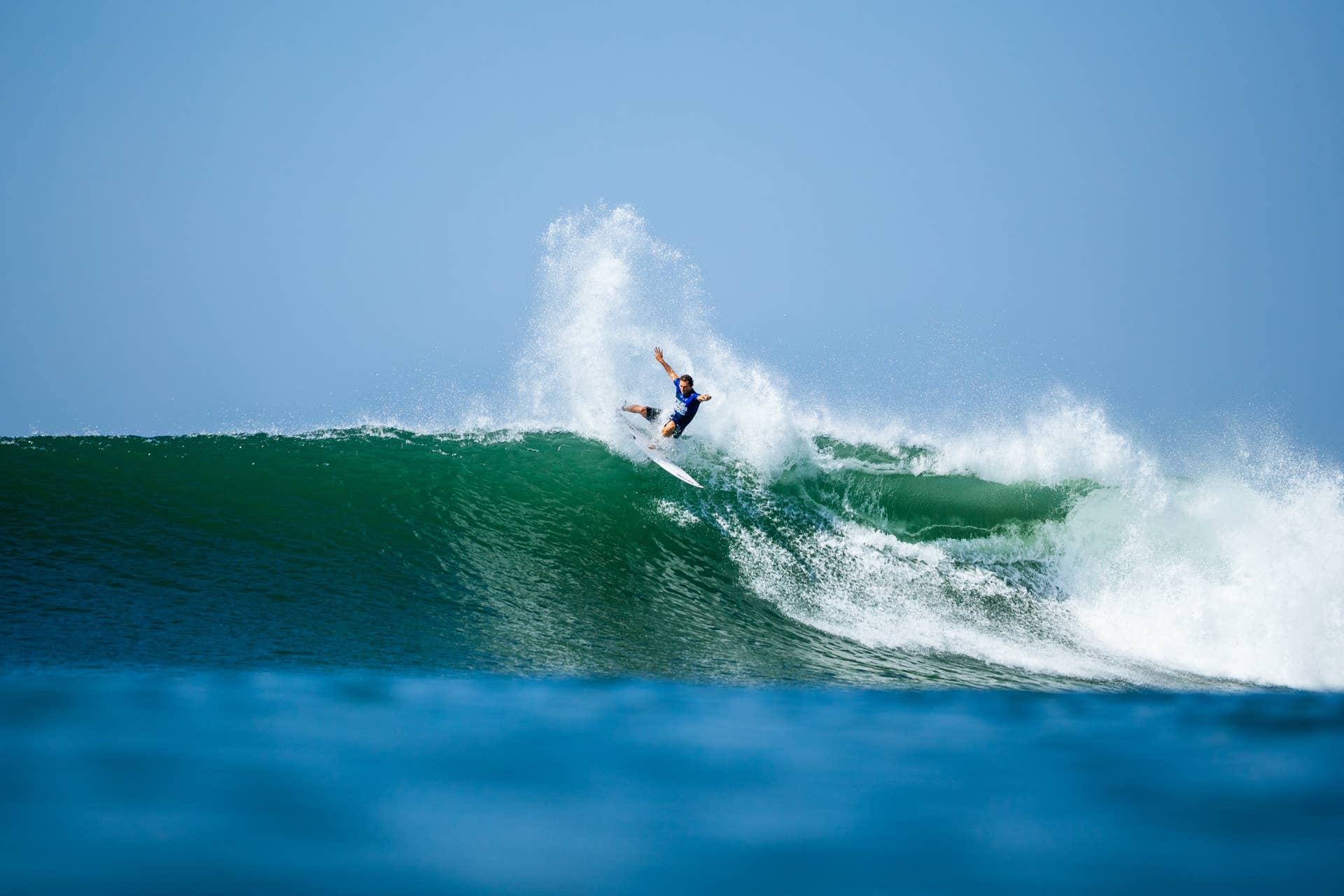
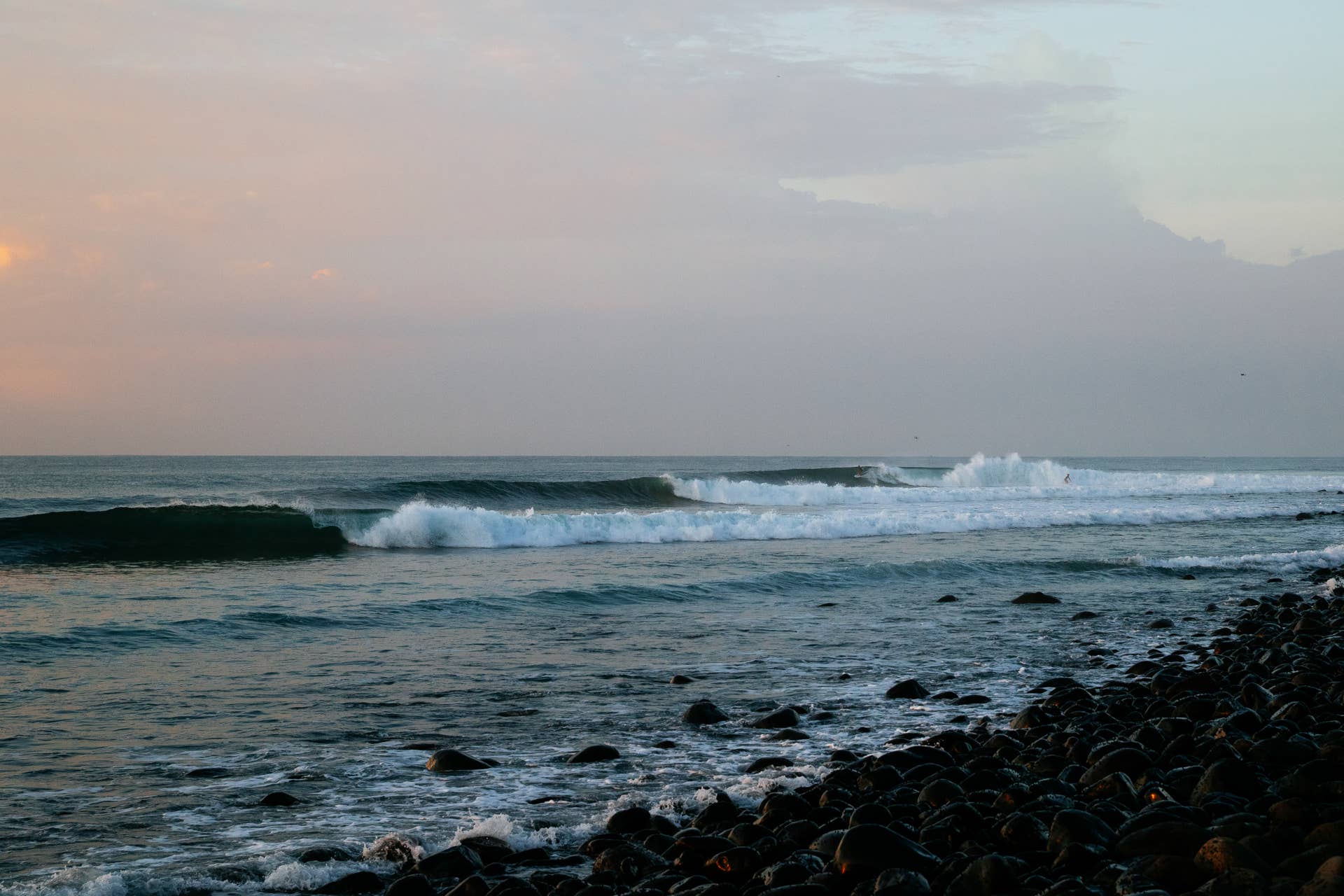
Often called the “J-Bay of Central America,” Punta Roca is widely regarded as one of the best right-hand point-breaks in the world when conditions align — and those conditions occur quite often. Perfectly positioned on the coast of El Salvador, this world-class cobblestone point break is ideally exposed to Southern Hemisphere swells that radiate northward from the South Pacific.
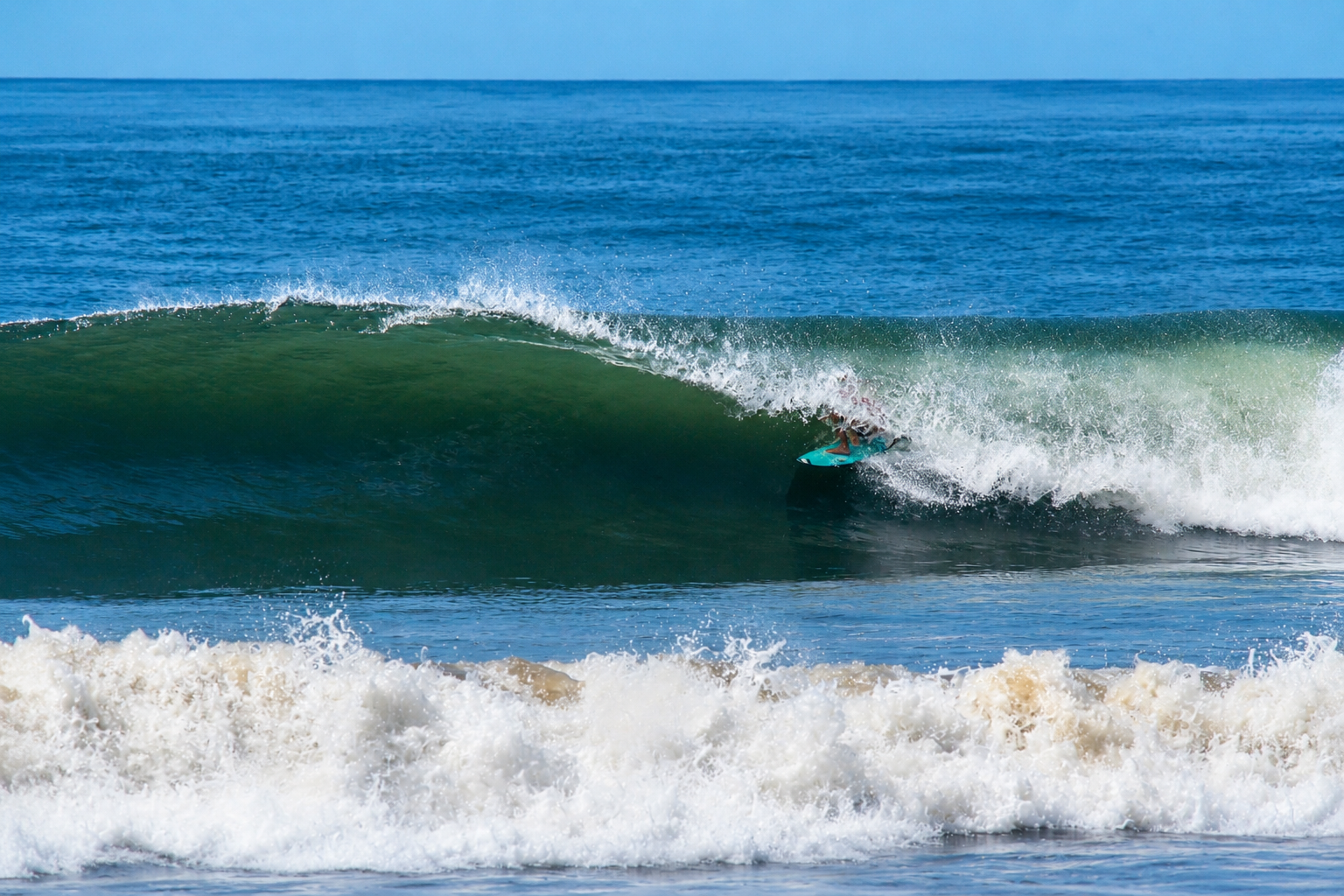
Thanks to its unique bathymetry and swell exposure, Punta Roca consistently delivers a variety of high-performance sections, including steep walls, carving pockets, and fast barrel sections along its extended ride. During major swell events, rides can stretch for nearly half a mile, making it one of the longest and most mechanically consistent waves in Central America.
Another factor that elevates Punta Roca into the elite tier of global surf breaks is its dependable local wind regime. Offshore and light wind conditions are common throughout much of the year, helping maintain clean wave faces and highly surfable conditions across a wide range of tides and swell sizes.
Read below to explore the different aspects that make Punta Roca tick…
Swell Source
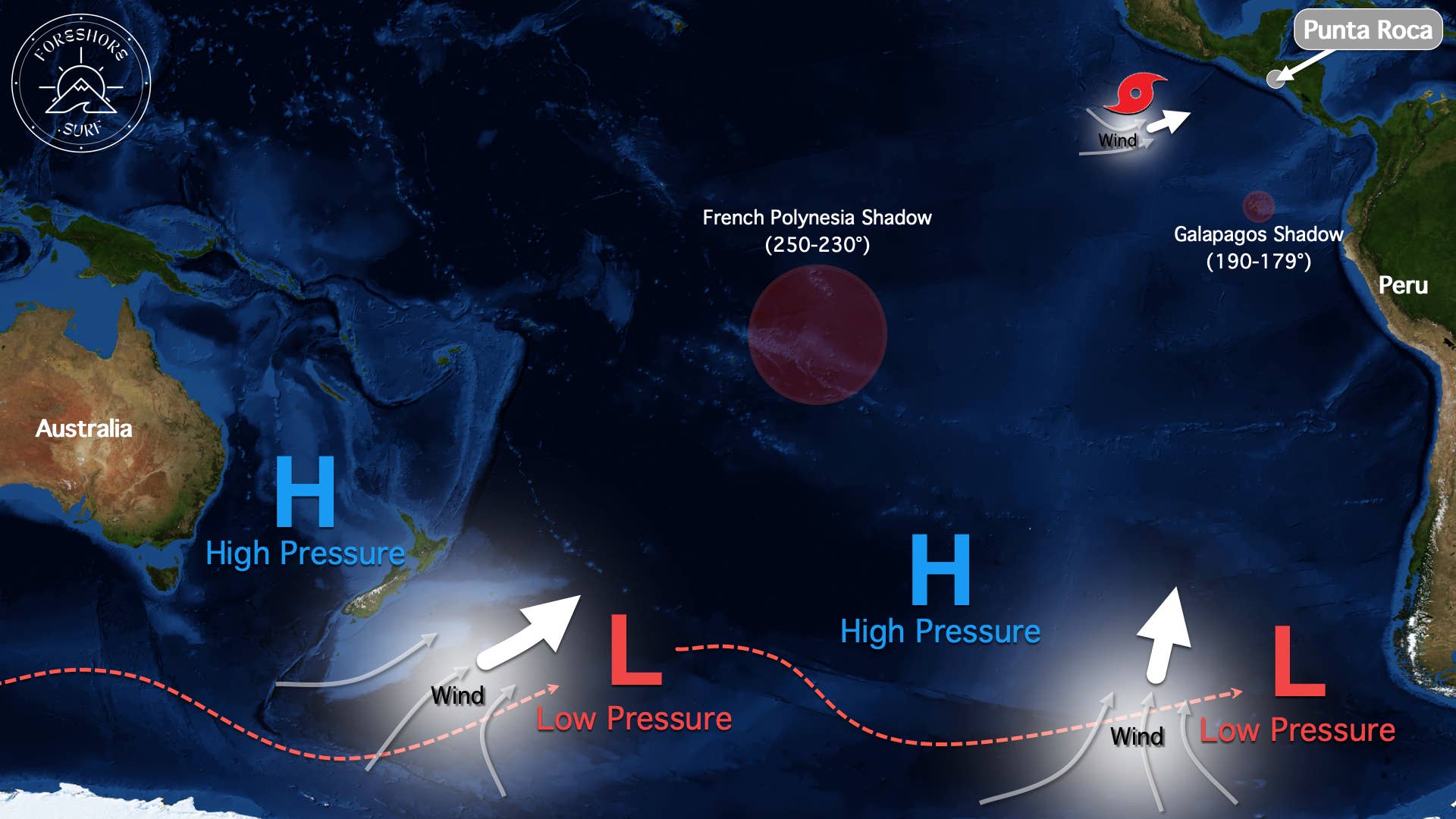
Due to Punta Roca’s geographic location and orientation — facing to the south and with Mexico shadowing it from the North Pacific — the South Pacific serves as its primary source for swell. The most consistent and powerful swell-producing storm activity in the South Pacific occurs between April and October, during the Southern Hemisphere’s winter season. As a result, Punta Roca typically sees its most frequent and strongest surf during these months. That said, the South Pacific remains active year-round, allowing quality swell to reach El Salvador in every season.
Additional surf can occasionally come from tropical cyclones developing near Central America or from locally generated windswell. However, these sources are typically unfavorable — less reliable, shorter-lived, composed of shorter-period bands and disorganized, and moving in from less favorable directions.
Swell Window
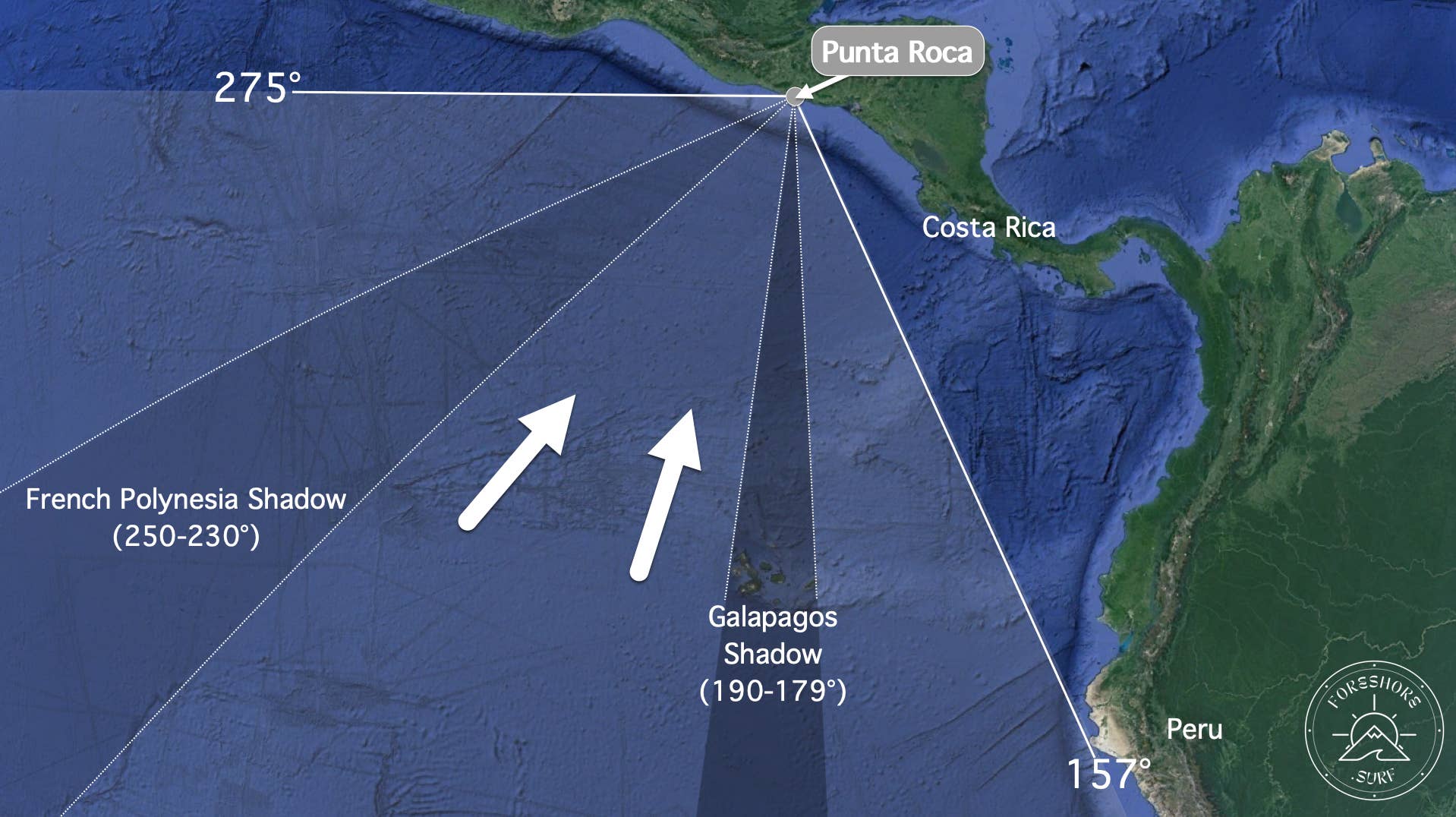
The most favorable swell direction for Punta Roca — and conveniently the most common — is SW to SSW swell (230–190°). These swells travel into the region largely unobstructed, delivering the best combination of size, consistency, and wave shape.
The French Polynesia shadow (250–230°) affects the more westerly, and more rare, SW swells generated near the northern Tasman Sea or around New Zealand’s North Island. Meanwhile, the Galápagos shadow (190–179°) plays a bigger role, frequently obstructing swell energy propagating northward from storms positioned directly south of Central America.
WSW to W swells (250–275°), although unobstructed, are usually unfavorable for Punta Roca. They tend to be too short of period and too west to wrap properly around the point.
SSE swells (179–157°), generated by powerful storms near Chile, will shoot the gap between the Galápagos Islands and Peru. While less common than SW swell, SSE energy can produce some of Punta Roca’s most challenging and perfectly squared-up barrels. However, these swells also create extremely fast-running sections that can outrun even experienced surfers.
Bathymetry
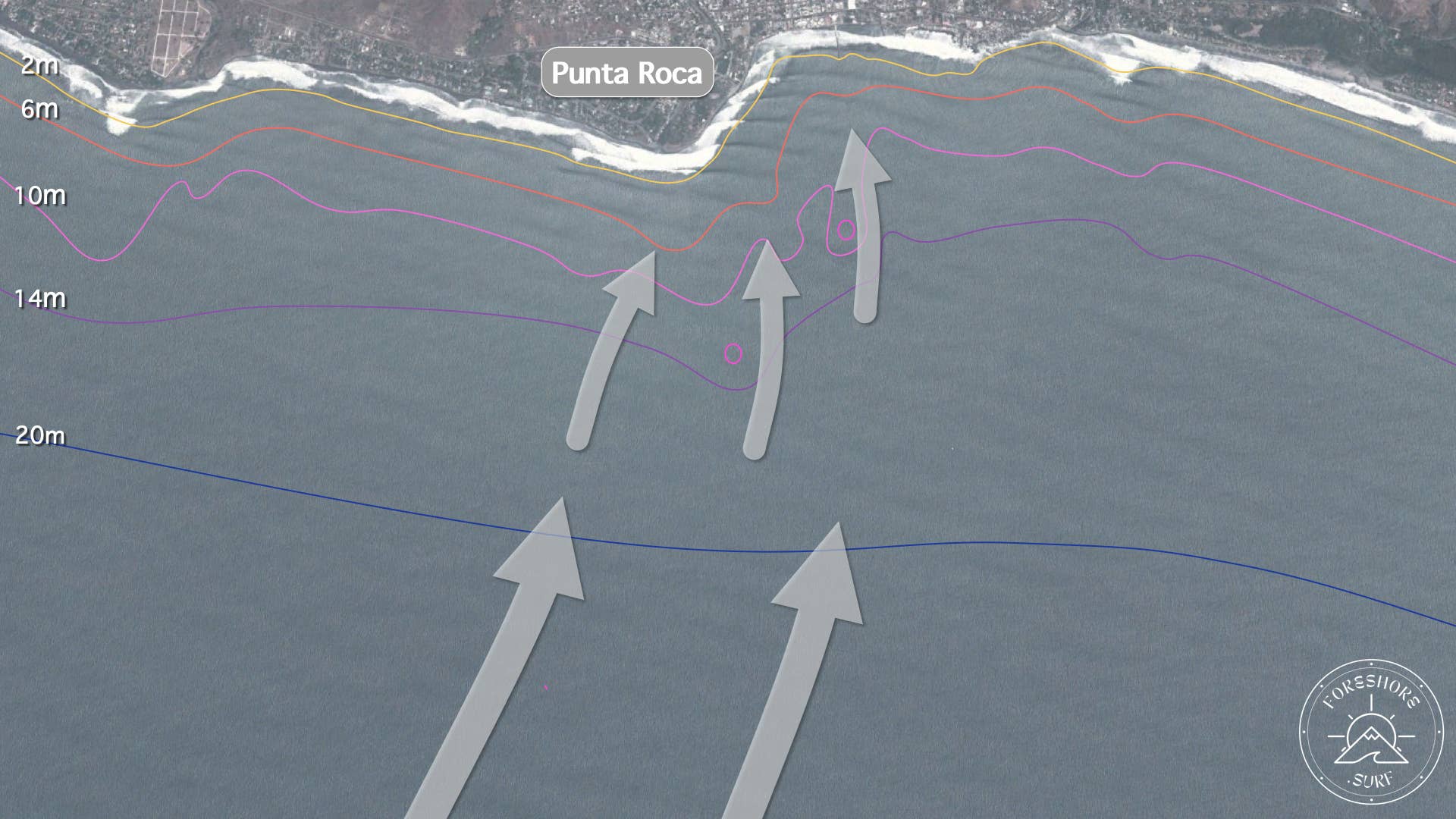
Like many elite point-breaks around the world, Punta Roca’s defining shape extends well offshore beneath the ocean surface. This underwater ridge extending southward from the point — combined with the deep curvature of the coastline and complex surf-zone bathymetry — are ideal for capturing the region’s dominant SW to S swell energy and transforming it into long, peeling surf.
The more westerly angled swells tend to push additional energy down the line and slightly away from shore, producing softer but highly ripable walls. In contrast, more southerly angled swells square up against the point more directly, generating steeper, faster, and more hollow barrel sections. Overall, you want a good SW to SSW balance to have it all.
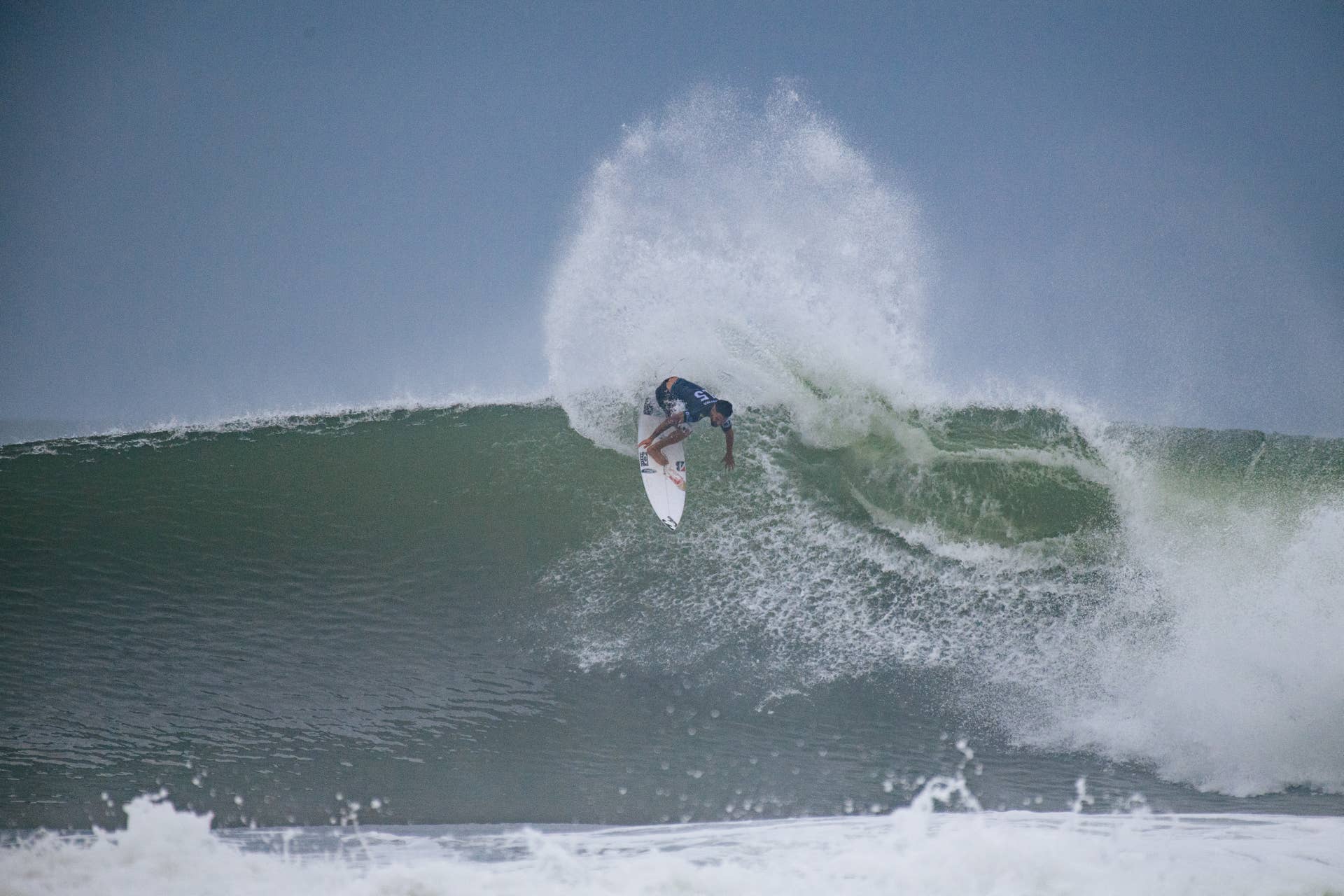
Like most world-class point-breaks, Punta Roca performs best under mid- to long-period swell. Longer-period energy interacts more efficiently with the underwater bathymetry, refracting and focusing into the point to produce larger, more powerful surf with cleaner, more organized lines. Occasionally, longer period waves wrapping wider around the point can even increase in size farther down the line as the energy continues to turn and bend back in.
Shorter-period swell, meanwhile, tends to arrive more fragmented and less organized, often producing uneven sections that make it difficult to connect the wave from top to bottom.
Wind
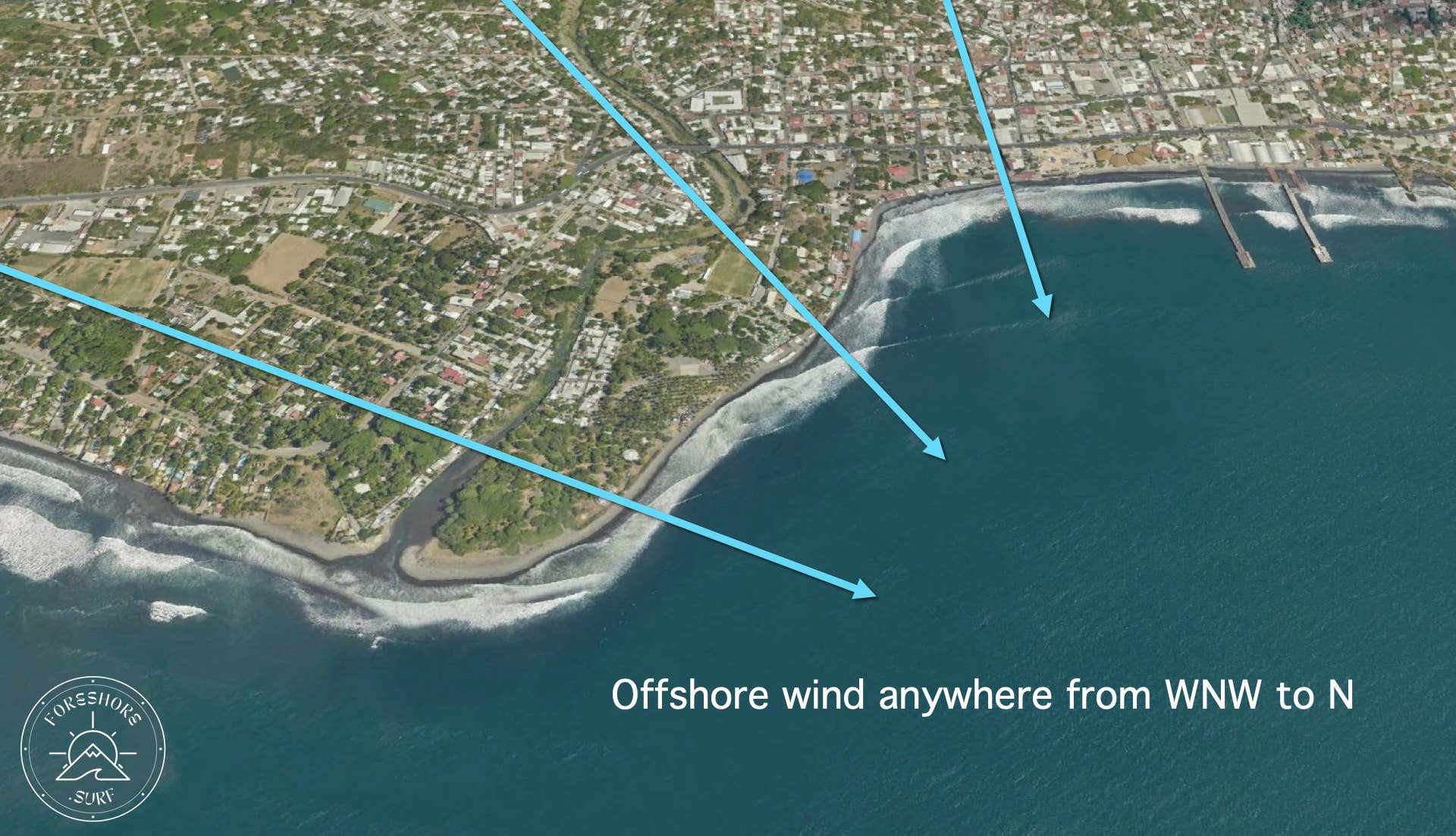
Like nearly every surf break worldwide, Punta Roca performs best under calm conditions or light to moderate offshore wind. Northwesterly flow is generally offshore for the entire point and best overall.
WNW wind is pretty good too, and even straight west is OK. If too strong, however, then a west wind can create some unfavorable bump at the top of the point. Look further inside the point for cleanest conditions.
Although a northeasterly wind is technically an offshore direction for El Salvador, it is an unfavorable “devil wind” at Punta Roca, along with many other right-points in the region. NE flow blows sideshore across the wrapping wave face, creating disruptive cross-ribs and texture throughout the lineup.
Best Specs
Swell Direction: SW to SSW (215-190°)
Swell Period: Mid to long-period (15 to 20+ seconds)
Surf Size: Head high to double overhead+
Wind: Calm or light to moderate offshore (between the WNW to N range)
Tide: Depends on size, but generally mid to high
Season: April through October