The ocean is packed with mysteries, some more horrifying than others. In recent times, a few nightmare-fuelled beasties have been found in our deep blue, mostly thanks to an Ocean Census that uncovered 1,100 new species.
That’s not to say the discoveries bring Jaws-esque levels of danger. It’s more – whatever is down there sure looks alien-like. And even some of the names are leaning into it. Would you like to encounter a Death Ball Sponge? No, us either.
As well as that, there’s also some striking critters that have been noted of late. Take the bright orange-banded shrimp, which was found seeking refuged in a dark, deep sea cave off the coast of France. Let’s take a look at some of the more interesting discoveries of the past few years.
Death Ball Sponge
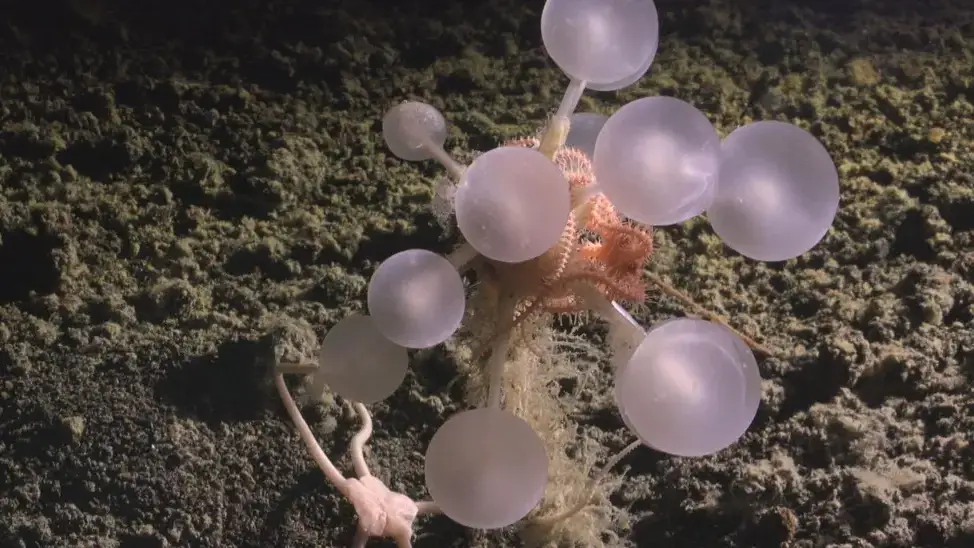
The clue’s in the title. The death ball sponge is a carnivorous sponge that was found 12,000 feet deep in the South Altantic’s North Trench. This odd looking bulbous plant-looking beast was uncovered by The Nippon Foundation-Nekton Ocean Census and the Schmidt Ocean Institute, who were on deep-sea research cruises in Antarctica. The death sponge was part of a haul of 30 new species and unlike regular sea sponges that act as passive filter-feeders, the death-ball sponge is an active carnivore. It has velcro-like skin, will instantly snare small animals like shrimp, engulfing them and digesting it over time – while they’re still alive.
Deep-Sea Ghost Shark
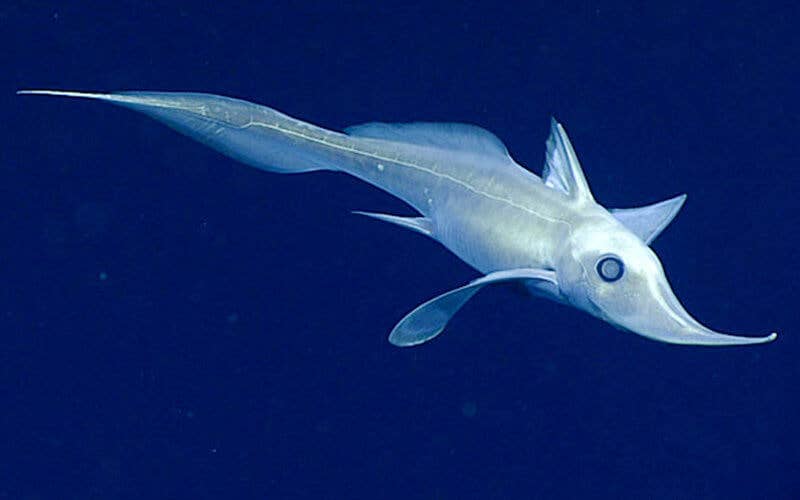
A shark encounter can be enough to end any session – let alone when that shark should belong in a Tim Burton film. The deep-sea ghost shark is incredibly elusive and has a soft cartilage skeleton. It has fins that resemble wings and a generally alien-look about it. Despite the name, its not actually a shark, but an ancient relative that split from sharks and rays nearly 400 million years ago. It looks more like a shark put a sheet over itself to get spooky for Halloween. It does, however, have a venomous barb on its dorsal fin as protection from larger predators as well as pits on their nose to detect electrical signals from prey hiding in mud.
Glass Castle Worm
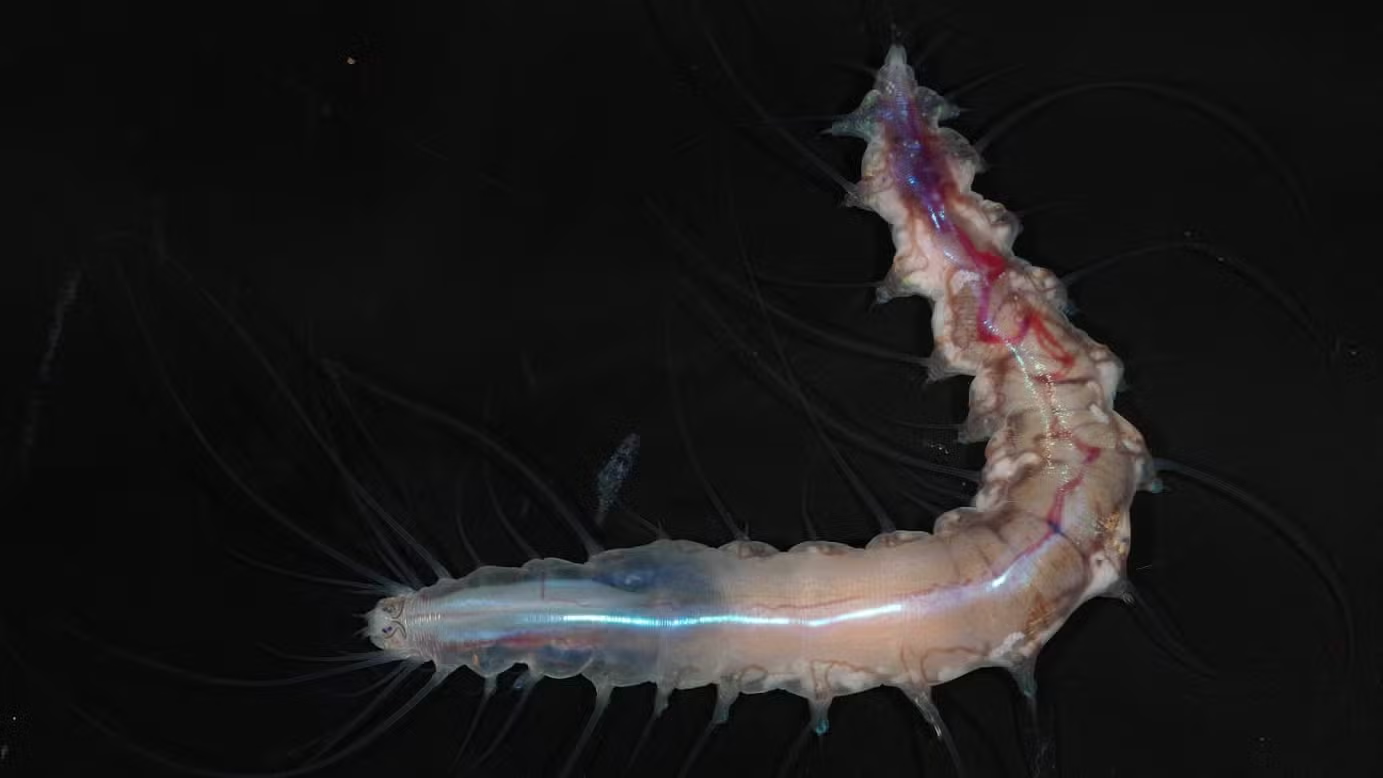
An eerie symbiotic bristle worm discovered living inside a translucent glass sponge – which scientists called a castle, off Japan. These worms lives roughly 800 meters below the ocean surface and can grow up to an inch in length. The symbiotic nature is the worm and the sponge. The worm benefits from some natural protection and the sponge gets to ear the worm’s excrement. The worms were discovered during the 2025 Nippon Foundation-Nekton Ocean Census.
Related: These 9 Island Surf Destinations Are Totally Worth the Trip
Gossamer Worms
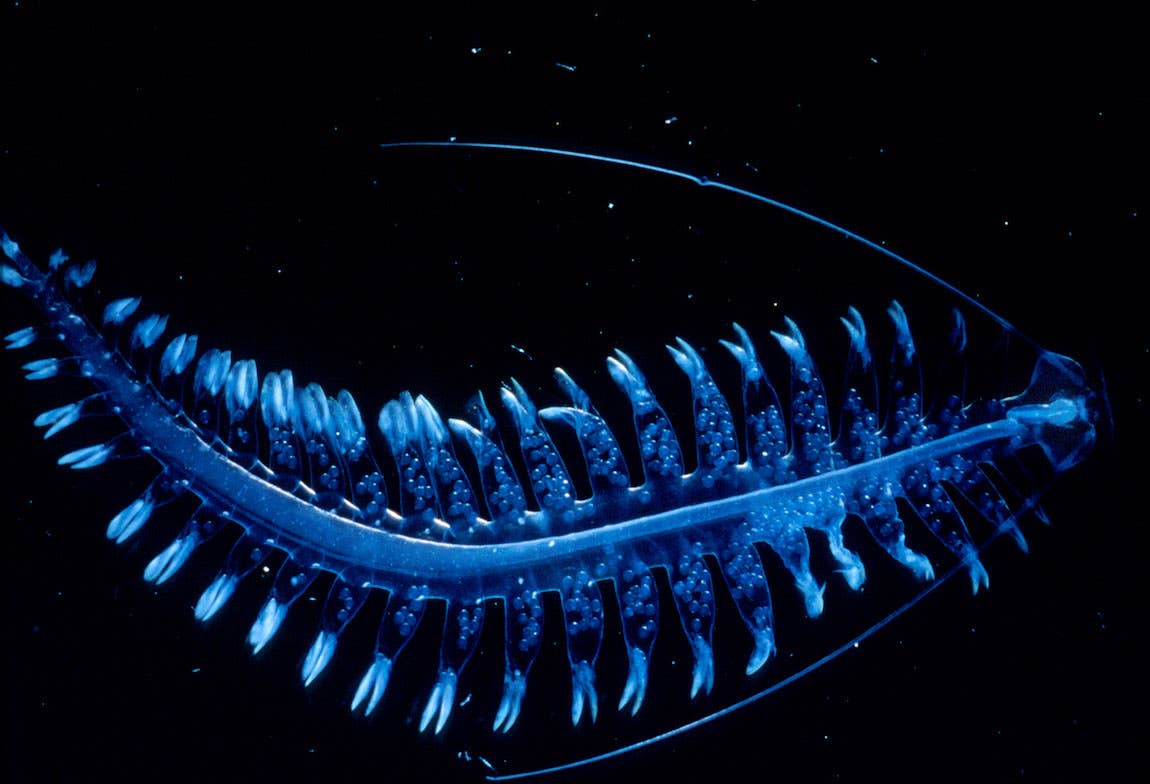
These are ghostly, translucent midwater worms featuring trailing, finger-like limbs, and were discovered off the coast of Brazil. They can grow up to 60 centimeters long and it uses those limbs as a sort of paddle to get around. More something you’d expect to see in the X Files than the middle of the ocean. Gossamer Worms can emit a unique yellow bioluminescence to get predators off their tail. They have a see through body and a bright red color across their stomach. Gossamer worms feed off small fish in the mid-depths of the ocean and are found all across the world’s waters inhabiting nearly every major marine region, with distinct species heavily documented from the North Atlantic, the Mediterranean Sea, Monterey Bay in the Pacific, and even in the waters of Antarctica’s Southern Ocean.
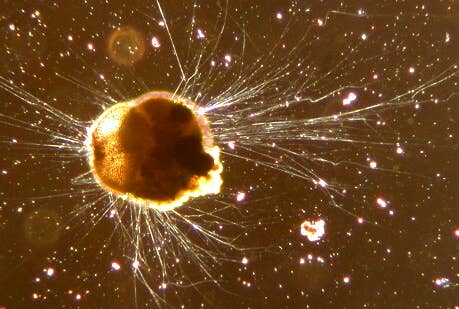
Giant Rhizarians
Giant Rhizarians are really interesting. They’re single-celled organisms large enough you can see with the naked eye. They form a major part of the marine ecosystem, making up a large share of open-ocean plankton biomass and playing a major role in the earth’s carbon and silicon cycles. They are predators, using sticky cell extensions to trap prey and consume them. At the moment, while scientists understand their role in the ecosystem, there’s not enough evidence to really know what these rhizarians are really up to. As noted in a paper by Science Direct on the limiting study factors: “Rhizaria also faces problem of a more technical nature: they are hard to cultivate, and until recently a relatively large scale cell culture was a prerequisite for launching major sequencing projects in order to meet the material (DNA or RNA) requirements.”
Related: El Niño Likely to Be Strongest Ever On Record: Here’s What It Means For Surfing