Deep-sea mining for critical metals and precious minerals has been a contentious topic, but with demand for deep-sea cobalt, copper, and nickel going through the roof and land-based deposits growing scarcer and scarcer, big mining companies are once again licking their chops and fixing their sights out to sea.
And so as the conversation of deep-sea mining continues to pick up at the suggestion of widespread deregulation per an April 2025 Executive Order from the U.S.’ Oval Office. The order directs agencies (i.e., NOAA, which issues these exploration licenses) to expedite the process in order to advance the U.S.’ position within the industry.
Fair enough. Everything from smartphones and laptops to car batteries and solar panels depends upon mining for metals and minerals. Together with lithium they make for a list of the most critical minerals of modernity. But the list goes on. And it’s a big, big ocean out there full of the gods only know how much good stuff.
Deep-sea mining has been a commercial ambition since the mid-19th century when scientists on the famed British mediocre-warfare-ship-turned-expedition-vessel, HMS Challenger. Deep-sea mining didn’t prove itself commercially viable until the mid-20th century. However, just as global companies began shifting gears and gearing up for undersea mining in the late 1970s and early 1980s, the U.S. (and other United Nations) scrambled to put up a lot of red tape, including the 1980 Deep Seabed Hard Mineral Resources Act (DSHMRA) interim law to control how, when, and where citizens and companies could probe the seafloor.
Conveniently right around that time, big-enough deposits were discovered (or opened) and secured ashore and they went back to ravaging our green Earth the best way they knew how. Maybe the Ocean gave a big sigh of relief, but surely she knew that wouldn’t quite be the end of all that.
But as those proverbial wells dry up, certain sovereign states may be licking their chops more than others, especially those with fewer industries and more anemic economies altogether. So perhaps it’s no surprise that Namibia has now issued a “key environmental clearance certificate for a marine phosphate mining operation,” writes Oceanographic magazine.
Related: Is a Secret Surf Spot Hiding on This Remote African Island? (Video)
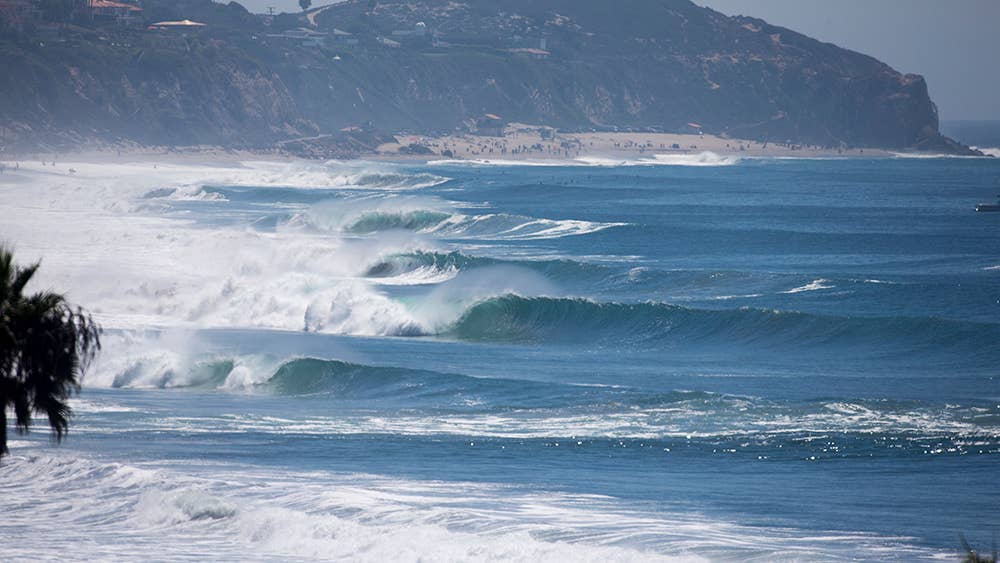
“The decision,” Oceanographic writes, “clears a path for Namibian Marine Phosphate (NMP) to advance their Sandpiper Project.” The Sandpiper project has designs on a stretch of seafloor about 75 miles off the coast of Walvis Bay, a hop, skip, and a jump down the coast from what, to date, may be the longest continuous barrel on the planet.
“The project would dredge the seafloor to produce three million tonnes [(3.3 million U.S. tons)] of phosphate concentrate over a 20-year period,” per Oceanographic. Something like 90% of the phosphate mined globally goes into agricultural use. It’s by no means a luxury or precious substance, but we are using it up and, according to the Massachusetts Institute of Technology (MIT), we’re currently sitting on a reserve of 80 to 300 years’ worth of the stuff at current mining rates.
So maybe it is high time, industrially speaking, that we start to pull these resources from more varied grounds, but, Oceanographic reports, “Scientists warn that seabed excavation carries severe environmental risks. Underwater dredging creates massive sediment plumes that can disperse heavy metals and buried toxins throughout the water column.”
The Namibian Marine Phosphate’s (NMP) Sandpiper Project, owned by an Oman-based mining company with perhaps some skin but no local concerns in the game, still needs to finish obtaining the additional necessary permitting. Phosphate mining permits have been requested and turned down by Mexico and New Zealand, citing potential ecological impacts.
But what does pulling this stuff from the seafloor really entail, and, to say nothing of countless marine critters and mammals, what will such large-scale mining do to one of the most precious, if far-flung, surf spots on earth? If Namibia is indeed willing to roll the dice, we shall soon see.
Related: 12 Surfers, 10 Days, South Africa: Natural Selection Surf’s 2026 Lineup Is Here