
Once you hear it, the sound of surf music is just about everywhere. That’s the premise of Matthew Shaw’s new book, “The Sea in Every Sound.” In an entertaining and well-researched narrative, Shaw explores how our favorite pastime has influenced popular music — and why the relationship between surfing and popular culture has remained so tight.
“People will often say that stuff sounds like surf rock, or I’ll see the word ‘surfy’ used a lot,” says Shaw, a long-time music writer. “What does that mean? It made me start to think about all these connections.”
Typically, surf music refers to the specific guitar-driven sound developed by Dick Dale in the early 1960s. “It’s instrumental music, has reverb, and a 4-4 beat that’s accented on the 2 and 4,” explains Shaw. At his live shows at the Rendezvous Ballroom, Dale blew up amplifiers and inspired the “Surfer Stomp” dance craze. Other bands such as the Chantays and the Surfaris helped popularize the new sound.
But the more Shaw listened, the more surf-sounding music he found that didn’t fit this narrow definition. In fact, the book started out as a story about a Slightly Stoopid and Sublime with Rome concert. “These bands have such big audiences in all these coastal towns with surf communities,” says Shaw. “It’s surfy — but it doesn’t have those surf rock elements to it.” Shaw realized he had a much bigger and more interesting story.
As a long-time surf and music journalist, Shaw has an eclectic and open-minded approach to music. There are few genres he can’t discuss in detail, and his surf writing has focused on art, music, and culture. Shaw also plays guitar and bass and toured with a psych-rock band called Kairos Creature Club. He describes the book as “a kind of Venn diagram” of his interests.
The narrative in “The Sea in Every Sound” casts a wide net. Shaw explores Hawaiian steel guitar and its influences on mainland blues and country music. He visits the famous Lighthouse jazz club in Manhattan Beach and finds surf films from the 1950s scored with jazz. He stumbles around the Warp Tour looking for the links between California punk and surfing. And that’s just the start.
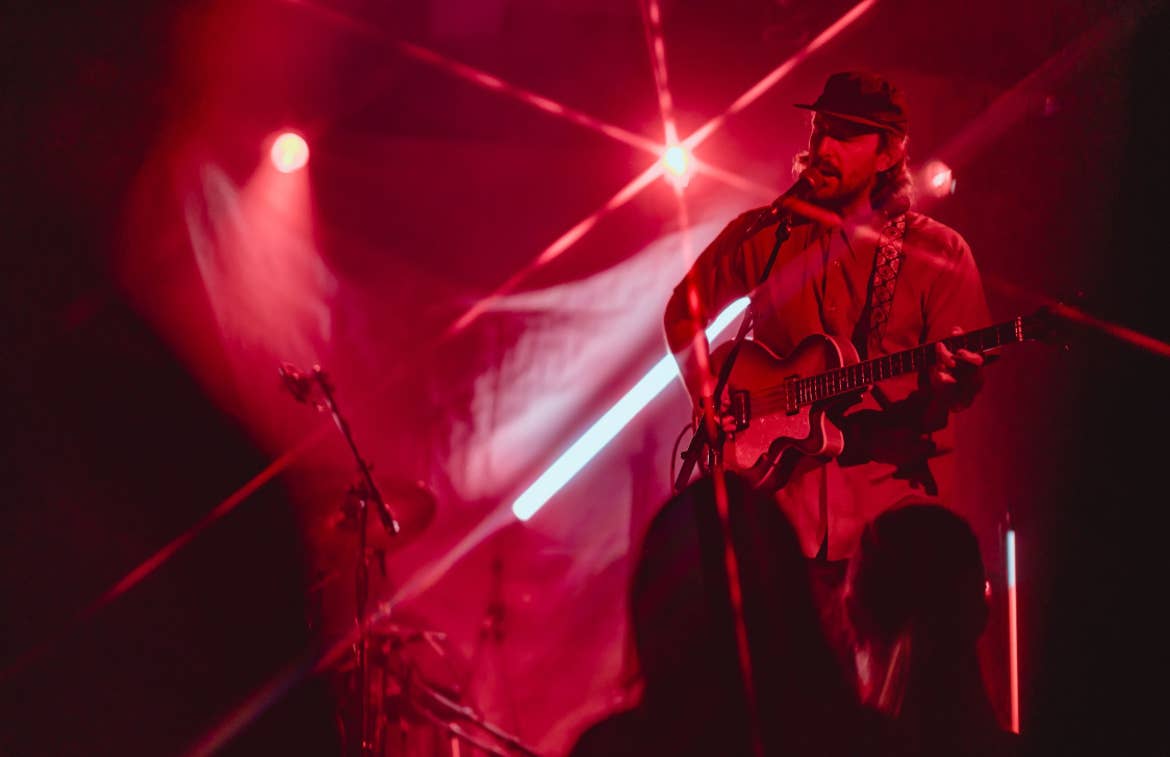
Courtesy Kairos Creature Club
One of the strengths of the book is the careful attention that Shaw devotes to the influence of Hawaiian music. The sounds of the islands readily evoke those warm, sunny, beach day feelings that we often associate with surfing. The Hawaiian word “Nahenahe” means sweet-sounding and is often used to describe music from the islands. Hapa haole music, which is Hawaiian-style music with English-language lyrics was wildly popular in mid-century California, too.
“Hawaiian music and surfing blew up on the mainland at the same time,” says Shaw. “I think those things are just glued to our ideas of what surfing means — and a connection to recreation and relaxation.”
It turns out that the Hawaiian influence extends much farther inland than Shaw expected. As he listened to country artists such as Patsy Cline and Hank Williams, he discerned echoes of Hawaiʻi. “You hear the slide guitar doing these swoops, and once you know it’s Hawaiian, it almost sounds like they don’t fit anymore.” For Shaw, the Hawaiian contribution of American music is undeniable. “You can’t unhear it.”
The book teems with examples of similarly unexpected connections. During the 1950s, for example, guitarist Duane Eddy provided the soundtrack for countless surf film nights. “It’s like a twangy guitar thing,” Shaw says of his style, and Eddy inspired some of the later instrumental surf bands. But Eddy is also the guitar hero of The Cramps guitarist Poison Ivy. Listen to her riffs and there’s a whisper of surf.
“I feel like you can take any kind of pop star or indie artist and you can pinpoint things that are taken from these different eras of surf music,” says Shaw. “There’s a kind of omniverous production of music, especially these days, and everything has a broad range of influences.”
Throughout, Shaw is an amiable and knowledgeable narrator, a quality that make his trip to the Warp Tour a highlight. As he wanders dazedly among the multiple stages and brand activations, he brings us right along with him. The book is a treasure hunt of details that begs for playlists. By the end, I wanted to track down all of the music in the book and discover the connections that Shaw makes.
That’s exactly what inspired Shaw to write the book. “I hope people will make their own playlists or go out and buy music that they’re curious about,” he says. Growing up, Shaw often received a book or an album as a gift during the holidays and he’d love to see that tradition continue. “I want to buy everyone an album,” he says. “Physical music used to be such a thoughtful gift — and it’s a great thing to share.”
Related: Queen Guitarist Brian May Makes Plea To Save The Oceans