
Standing on the ledge at Waco Surf during the beautifully chaotic Swatch Nines event, I watched something pretty remarkable unfold amidst the madness.
Tyler Turner, a double amputee, was kneeling on his surfboard as some of the best, craziest, and most creative surfers in the world — Mason Ho, Dylan Graves, Balaram Stack, and others — pushed him down a rail and into the manmade wave. It was a wild scene, and one of the highlights of an already unforgettable event.
But Turner’s story goes far beyond surfing.
In 2017, a horrific skydiving accident changed his life forever. Turner lost both legs below the knee, spent four days in a coma, and endured years of physical and emotional turmoil. Depression, addiction, and the loss of his identity as an action sports athlete pushed him into some severely dark places.
But Turner fought his way back.
Today, he’s a Paralympic gold medalist in snowboarding, an accomplished surfer, a motivational speaker, and the first double amputee to fly a wingsuit. He’s not just returned to the sports he loves — he’s redefined what’s possible.
Watching him at Waco, surrounded by some of surfing’s biggest names, it was clear that Turner hadn’t lost his appetite for adventure. If anything, he’d found a whole new way to embrace it.
I caught up with Turner to talk about his remarkable journey, the darkness he overcame, and what keeps him pushing forward.
Let’s start at the beginning. Take me back to the day of your skydiving accident. What do you remember about that day, and what happened?
The day of my accident is like any other day working at the drop zone. It was a long weekend – Monday, September 4th, 2017 – and I was just gonna rip another day of filming people doing tandem dives. Unfortunately, on the first jump of the day I made a mistake on my landing doing a high-performance maneuver and hit the ground going very fast.
I don’t remember the accident, and there were very few people that saw it, so I don’t know exactly what happened. From about 60 seconds before my accident until a couple weeks after I have no memory. The next month or so is a bit blurry. However, I do remember that I had very little desire to live as someone with such life altering injuries.
It took months, and actually years, before I found out my final fate. But what will affect me for the rest of my life is a serious traumatic brain injury, a back injury seriously effecting the right side of my lower body, and two legs amputated elbow the knee.
Related: Beautiful Chaos: Surfing and Skating’s Wildest Weekend at Swatch Nines (Photos)
Before the accident, your life revolved around adventure sports. Was losing your legs the hardest part, or was it the possibility of losing the lifestyle and identity you’d built around those sports?
100% losing my entire identity, community and dreams was the hardest part. I had the best life, not only pushing myself and my abilities, but also making a living providing those opportunities to others in the guiding world of a bunch of different sports, working towards higher certifications. Coming back from this physically seemed doable, coming back mentally seemed impossible.
You’ve spoken openly about the depression, addiction, and mental struggles that followed your accident. What was the darkest period of your recovery like?
It’s indescribable what the darkest periods looked like. Also, there were so many of them. Let’s put it this way, I knew wholeheartedly that I wanted to skydive again, there was just a big internal debate whether I wanted to wear a parachute or not.
And painkillers are the most dangerous game I’ve ever played.
I knew wholeheartedly that I wanted to skydive again, there was just a big internal debate whether I wanted to wear a parachute or not.
Was there one defining moment when you decided you weren’t going to let the accident dictate the rest of your life? Or was it more of a gradual process?
There were obviously many, however the biggest one was when I had my second leg amputated. I actually only had one leg amputated immediately following my accident. The other foot had many surgeries over the coming year and they tried hard to salvage it. There was a point where the foot was so bad and so painful and not getting any better that I started to consider amputation. I had a great reference of how good a prosthetic could be and my right leg was ready to go.
My left leg on the other hand was holding me back and had me confined to my wheelchair 95% of the time. It was obvious that I could have so much more potential to do what I love again if I was a double amputee. I don’t think the nurses have ever seen anyone so excited to get a leg cut off when I was rolled into that surgery room! That was the first time I had a positive outlook, and it was what pushed me to get off painkillers. I knew if I could get rid of both those things there was potential to get back in the sky, the water, and the mountains!
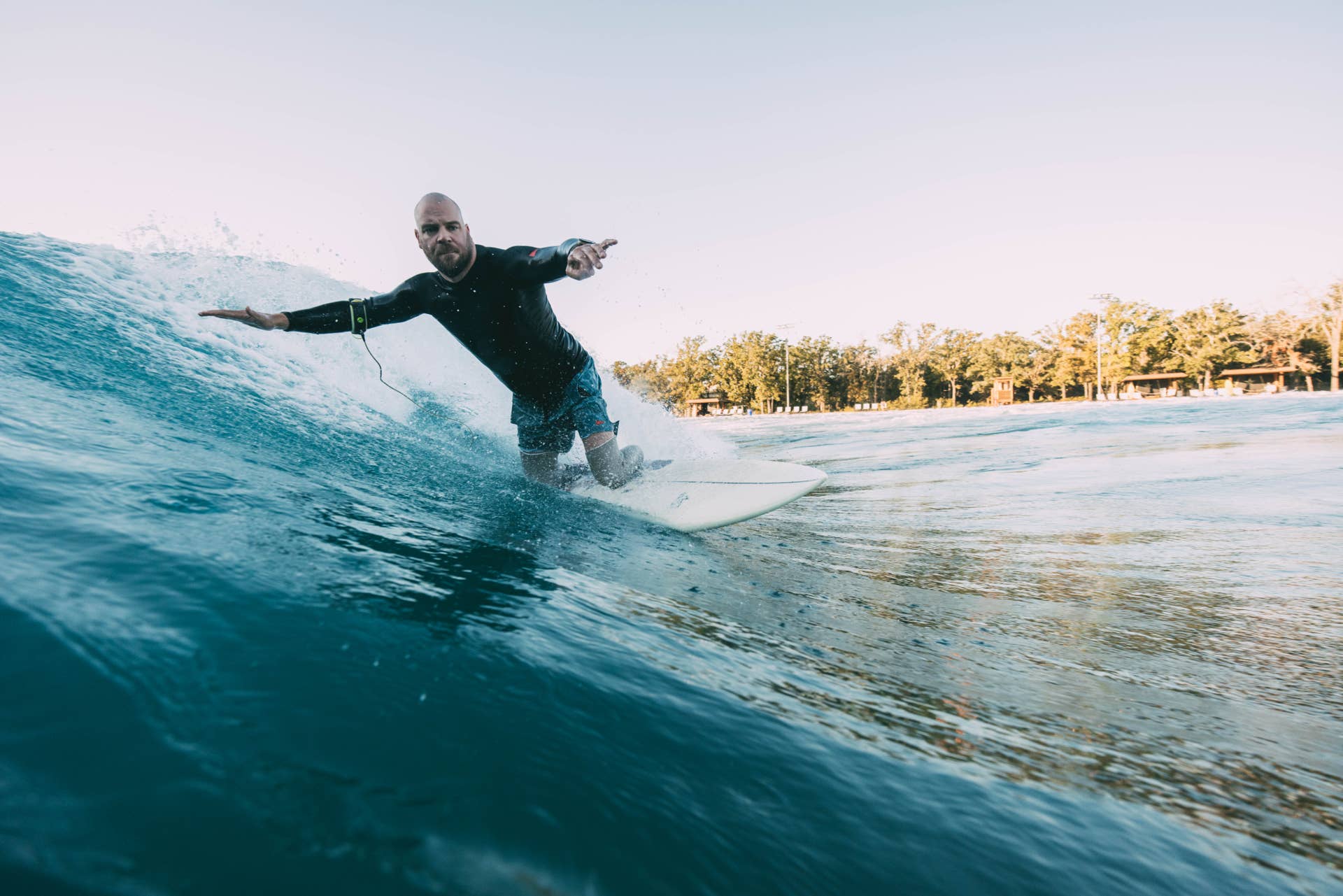
Justin Jenny
How much of your recovery was physical, and how much was mental? Which was harder?
I would say 50/50. Although, the mental part was 1,000x harder and still has to be addressed daily.
Let’s talk about Swatch Nines in Waco. How did the invitation come about, and what was your initial reaction to being included in an event with some of the world’s best surfers?
I am so grateful for the invite from Swatch to get to attend Swatch Nines! Swatch has been an amazing sponsor of mine for about five years. They are generally supporting me as a snowboarder, racing on the national team in Snowboard Cross. I also spend my time when I’m not competing or training for snowboarding, surfing, skydiving, BASE jumping, mountain biking and any other action sport I can access.
When you first saw that rail setup in person, what was your immediate thought? Was it something along the lines of, “Hell yeah, let’s do this,” or “What the hell have I gotten myself into?”
I was kinda bummed because a decade ago, when I had my legs, I think I could have pulled that off. Now, once again, I have to go to sleep at night thinking “what if?” That kinda thing frustrates me a lot. I was mostly jealous that I couldn’t do it cause it looked so rad.
I sat there and watched the first session on it day one and Dylan [Graves] was the first person I said something to about it. I think I just mentioned that I thought it might be possible for me to try it and he was so fired up that it motivated me to figure out the logistics. For me to hit that rail, the easy part is hitting it. The tricky part is getting out, getting back around, having a leg runner, getting my board back, all these things that don’t have to be considered with an able body. Once I started to think it was possible, I rallied a bit of a crew to help make it happen. It was sick how stoked people were to help make it happen!
What was the reaction from the other surfers? Were there any particularly memorable interactions, conversations, or moments of encouragement?
So many that I wouldn’t know where to start. I couldn’t really believe it all. I would have tried that rail all day, any day on my own but to have really that whole crew up there on the wall stoked to help make it happen was insane. For surfers that I look up to and watch daily to be stoked on and supporting something I’m doing was surreal!
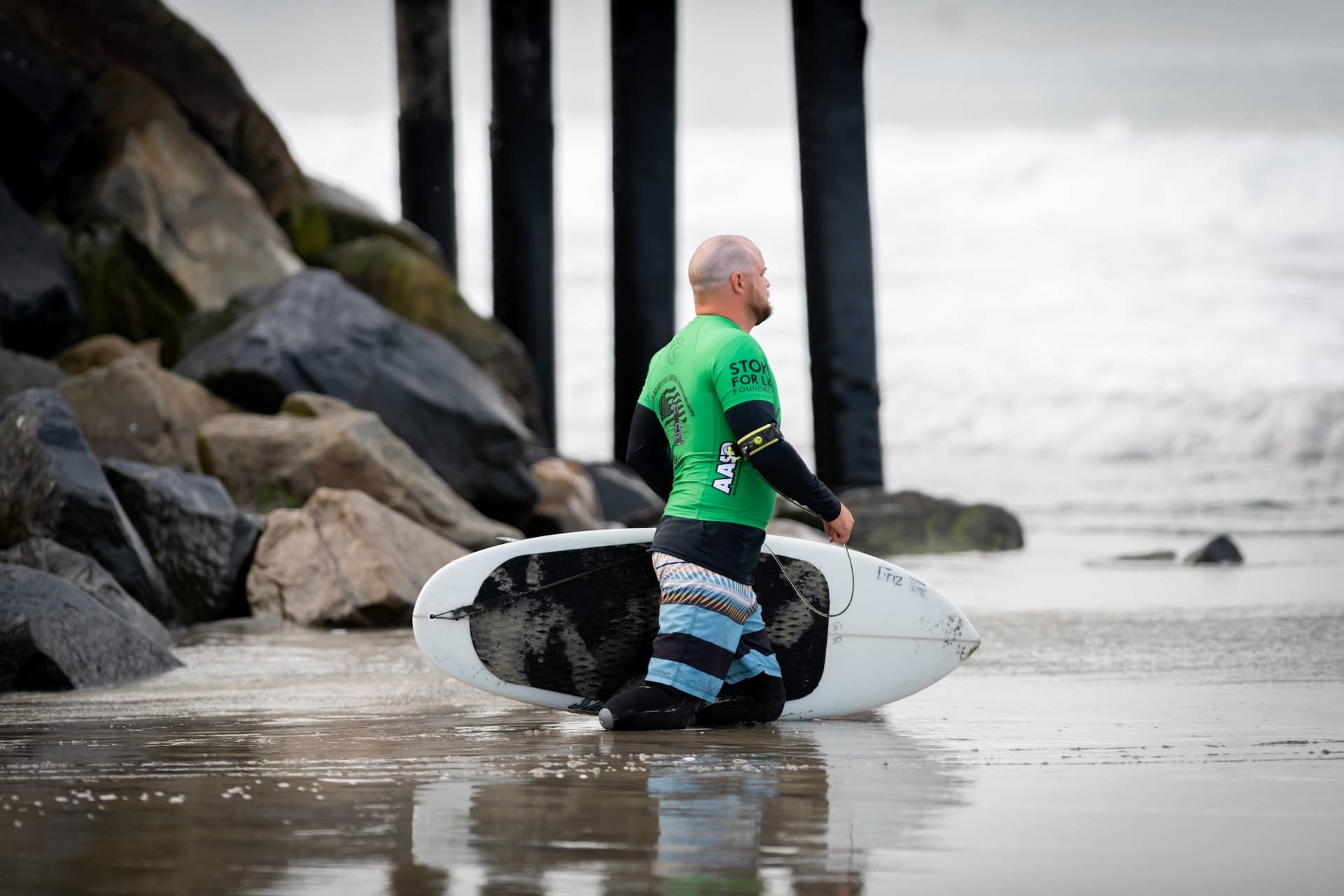
Kate Abraham
You’ve become a source of inspiration for a lot of people, both with and without disabilities. Is that something you consciously think about, or is it more of a byproduct of doing what you love?
You nailed it. I always say that inspiration should be a byproduct of doing what you love. That’s super cool if this motivated someone in some way, but that’s not what I do it for. I do these things because they bring me so much joy in my life. I will never stop chasing the feeling of pushing myself and my skills. The fact that it inspires and motivates others to do the same is such a massive bonus and I’m so stoked when people reach out to share stories of how it helped them!
I do these things because they bring me so much joy in my life. I will never stop chasing the feeling of pushing myself and my skills.
If there’s one thing you hope people take away from your story, what is it?
I hope they are motivated to find joy. We don’t all have to jump out of planes, surf the gnarliest wave, or push ourselves to the extreme. But if you can find something you are passionate about it will give you more than you even know. If you have an activity that brings you a ton of joy, make sure you make time for it. If you don’t have one, go searching. And if you’ve lost one, be stubborn enough to get it back!
Related: Pure Chaos at Waco Surf: Watch the Insane Highlights From Swatch Nines 2026