We’re about halfway through the Atlantic Hurricane season – and while the ocean’s been pretty quiet the past few months, the swell season is about to launch.
The Atlantic hurricane season, when hurricanes are most likely to form in the ocean, runs from June 1st to November 30th. Back in May, NOAA predicted a below-normal hurricane season due to a few competing factors. Firstly, El Niño in the South Pacific is due to intensify, which may have an impact on the Atlantic Ocean. El Niño shifts atmospheric patterns, so much so, it increases wind shear over the tropical Atlantic and Caribbean. Hurricanes need a stable, unsheared atmosphere to organize and intensify. Strong wind shear tears apart a storm’s structure. And this wind is likely to travel into the Gulf of Mexico from the Pacific, interfering with Atlantic hurricanes. So even if ocean temperatures in the Atlantic are warm enough to fuel a storm, El Niño’s winds can prevent storms from forming at all, or weaken ones that do form.
However, NOAA has noted there is still some remaining factors around the hurricane season. “Although El Niño’s impact in the Atlantic Basin can often suppress hurricane development, there is still uncertainty in how each season will unfold,” said NOAA’s National Weather Service Director Ken Graham. “That is why it’s essential to review your hurricane preparedness plan now. It only takes one storm to make for a very bad season.”
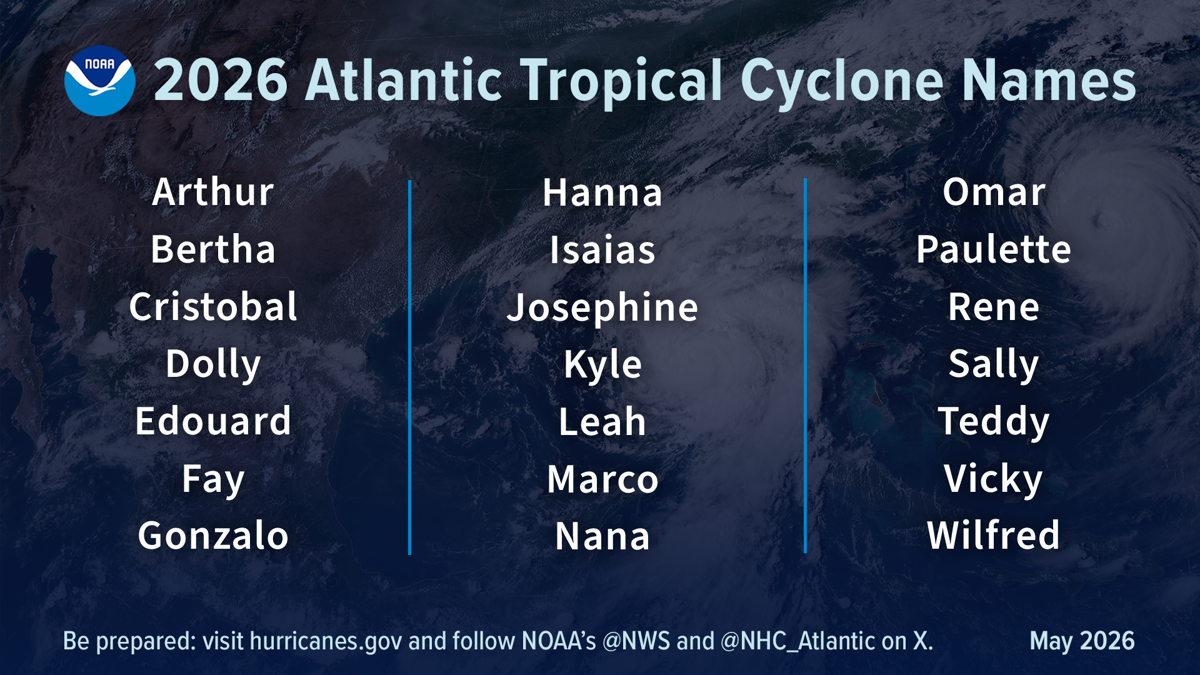
So far, NOAA’s forecast has held true, this season has been notably slow – with a couple of weak storms such as Tropical Storm Arthur and Tropical Storm Bertha. We are well behind schedule on where the season should be up to. There’s so much going on under the hood here, let’s take a look.
How Are Atlantic Hurricanes Formed?
Hurricanes form when warm ocean water evaporates. The rising warm air builds a low-pressure center and the Earth’s rotation spins this into a storm when wind shear is low. In order for a hurricane to form, ocean temperatures must reach 80F, to a depth of about 150 feet. This is what drives the hurricane and acts as its starting point. There also has to be high humidity in the lowest part of the earth’s atmosphere, which helps form thunder storms. The Coriolis effect, aka the rotation of the earth, helps with the spinning nature of the storm, which is why the strongest storms form away from the equator.
Related: El Niño 2026 Watch: Latest Updates As Historic Pacific Weather Event Ignites
How Do Hurricanes Create Waves?
The wind from a hurricane rips across the water’s surface across hundreds of miles. This energy then radiates outwards and by the time it reaches the coast, is organized into sets of waves. It may sound simple, but this is why proximity to storms and hurricanes are crucial – you do not want to be right in the path of a hurricane if it makes landfall. Ideally, you’d want a hurricane to form hundreds of miles away and the resulting energy travel hundreds of miles to reach your coastline. Sometimes, those waves reach land before the storm, known as the forerunners. And sometimes, after a hurricane has moved through, it can deliver swell again.
What Are There Different Stages of Hurricanes?
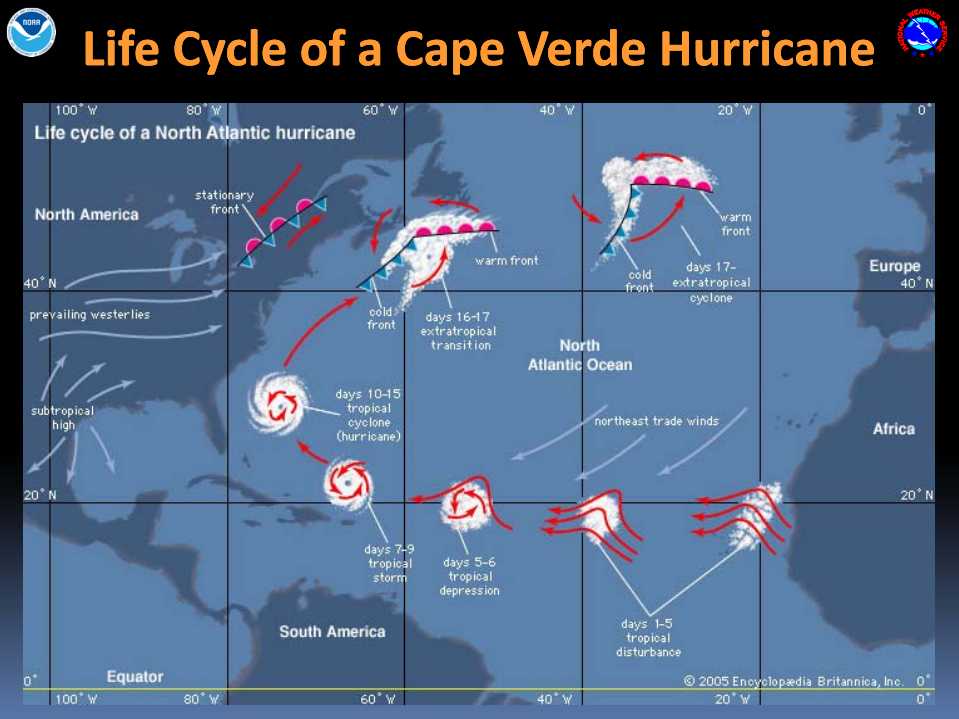
Before a storm to be classified as a hurricane, wind speed must exceed 74mph. But there are stages before a storm reaches hurricane strength. First, is a Tropical Wave, which is a band of thunderstorms that drift loosely together. Next, is a Tropical Depression, where warm rising air creates a low pressure center – wind speeds here remain under 39mph. Then, there’s Tropical Storms, which is when most surfers will start taking notice, wind speed is higher than 39mph and the storm is given a name. These can intensity and develop into hurricanes, of which there are five different classifications.
Atlantic Hurricanes Span Continents
The usual track for an Atlantic hurricane starts off the coast of Cabo Verde, near Africa. These then move westwards, until reaching the Caribbean. The hurricane can then intensity, spin up the east coast, reintensify under Greenland and then fan out over the North Atlantic, delivering swell to Ireland, the UK, into the Arctic and beyond. Atlantic hurricanes are extreme weather events, with the opportunity for thousands of surfers to score waves from the same system.

What Was The Biggest Atlantic Hurricane Ever?
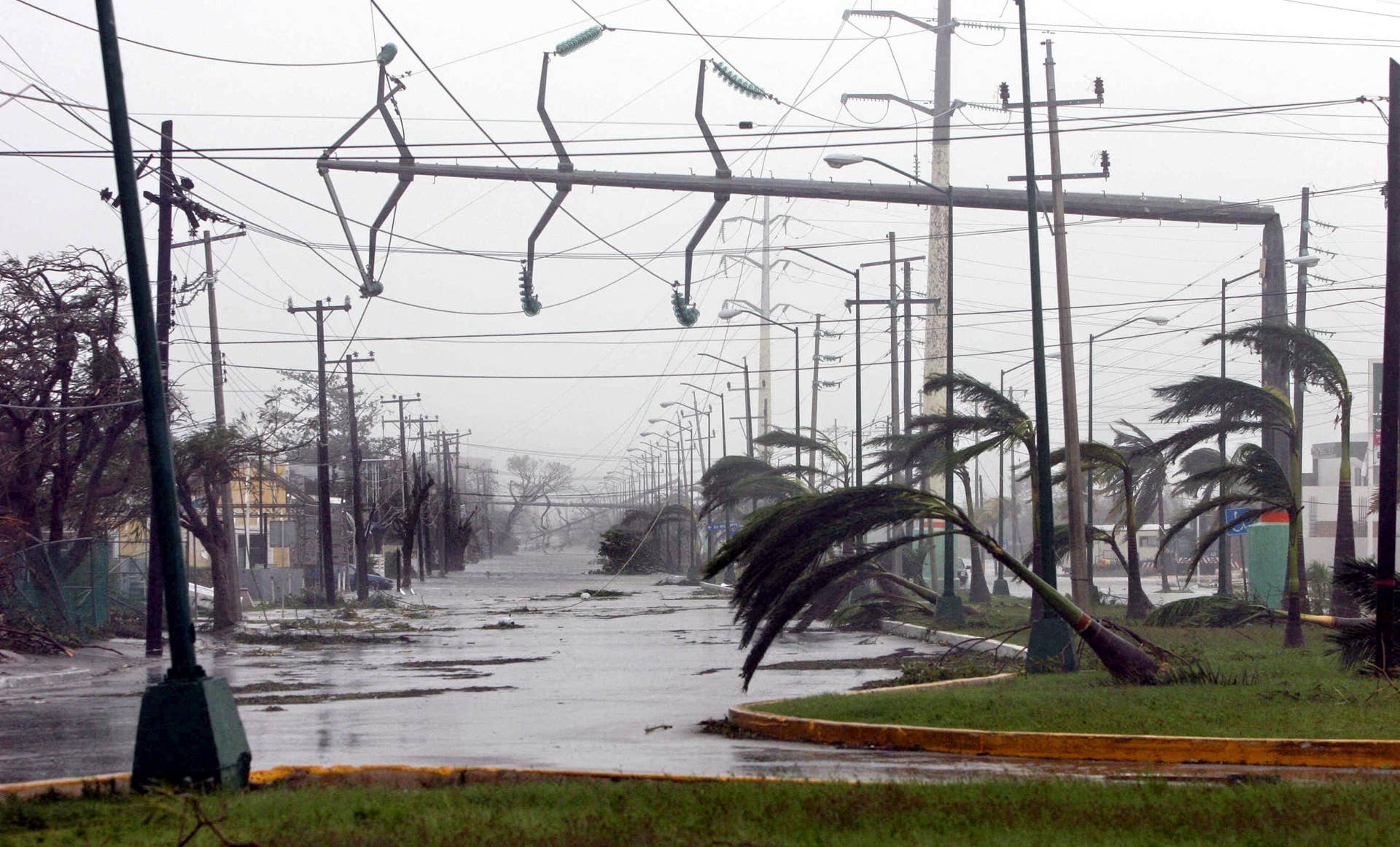
Hurricane Wilma was the strongest Atlantic Hurricane on record, with wind speeds reaching 185mph. Wilma caused absolutely catastrophic damage across Mexico after it formed in 2005, costing around $20 billion in damages and dozens of fatalities. After setting record rainfall in Mexico, Wilma made landfall in Florida, as a Category 3 hurricane, causing the largest power outage in Florida’s history. More than 20 years later since Wilma, it still stands as one of the most destructive weather events in history.
Where To Surf During Atlantic Hurricane Season?
Cape Hatteras in the Outer Banks sticks out into the Atlantic and is a great place to lap up those hurricane swells. New Jersey and New England can pick up that same swell as the storm moves northwards. Florida can also cop the brunt of a gigantic hurricane, as they track through the Caribbean, which can also come to life under a hurricane, as well as cause intense flooding, damage and huge amounts of destruction. Perhaps lesser-known, is swell from a hurricane does make its way over to the other side of the Atlantic too. Some of the best sessions out of Ireland, the UK and beyond have been down to long period energy from hurricanes that started off the coast of Africa and boomeranged back toward the top half of the Atlantic after the US. The travelphilic surfer could, theoretically, surf the same storm in Cabo Verde, the Caribbean, US east coast, Canada, Ireland, UK and potentially over to areas like Norway too, if the storm is big enough. Has it been done before? Not to my knowledge.
When Were The Best Atlantic Hurricane Sessions?
Remember the Quiksilver Pro in New York, back in 2011? The first east coast CT event in 22 years was also powered by Hurricane Katia. Thanks to the hurricane, it was also the biggest payout, not to mention in historical context, as Quick ponied up the first $1 million purse ever for a single event.
Related: El Niño vs La Niña: How Pacific Mood Swings Reshape Surf Seasons