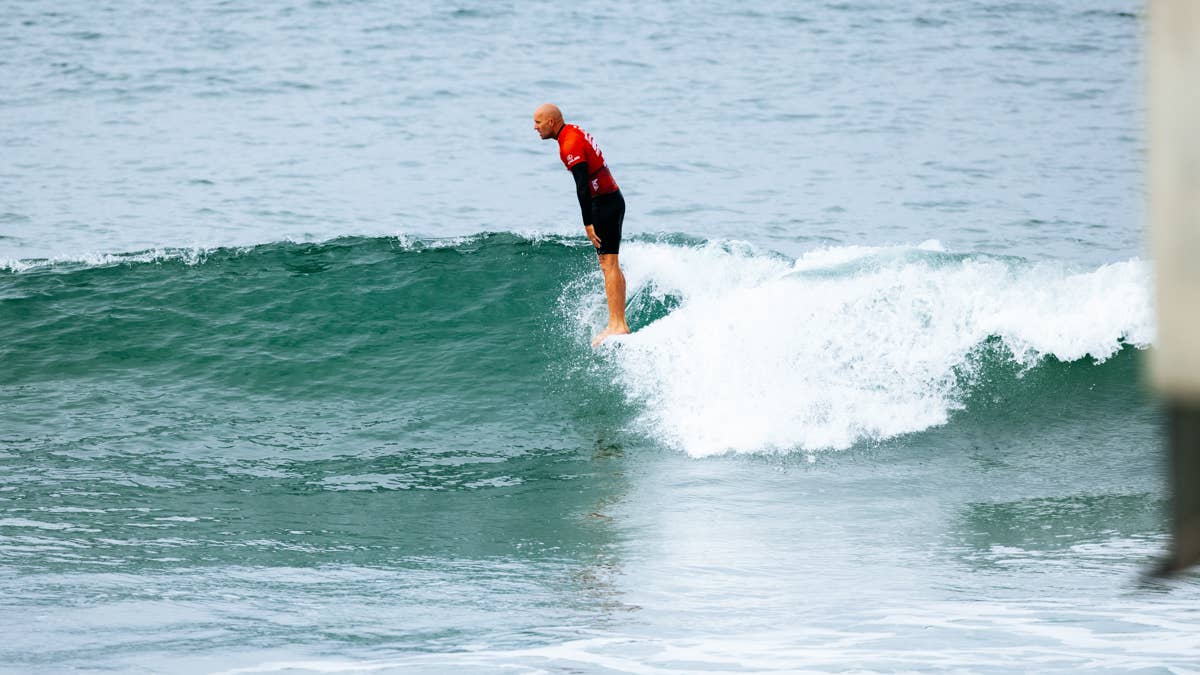
Who are the reigning World Longboard Champions? Could you name them if someone paddled up to you and asked while you’re out for your morning splash? Do you know how the World Longboard Tour (WLT) works? Its locations, how you qualify, and who the big names are? The 2026 WLT season kicks off this week in Huntington Beach as part of the US Open, but unlike its shortboard counterpart, the fact that it’s the top flight of professional longboarding is kept pretty low key.
From any busy lineup on the planet, you wouldn’t know that longboarding was shortboarding’s poorer cousin. The most crowded lineups in the world are packed with longboarders – the Pass, Biarritz, Imsouane, and so on. Longboarding is the more accessible form of the sport, yet its popularity doesn’t seem to have translated into big hype and big dollars in the competitive world. When you open the WSL app or scroll their Instagram page, longboarding only appears occasionally. Sometimes during WLT events, news of the event doesn’t even make it onto the WSL landing page.
It doesn’t mean professional longboarding isn’t popular – but maybe the way it’s sold doesn’t speak to the masses who are partial to hanging five on a perfect pointbreak. We’ve seen big hype around other events like the Vans Duct Tape, so is there an opportunity being missed here by the WSL to promote the longboard tour not just as pure sport, but as a cultural event, a celebration of surfing’s heritage?
The conundrum that the tour finds itself in now, despite it being in a much healthier place than it has been in the past, is similar to that of the Challenger Series. For surfers, it’s not sustainable. With four events and a prize money structure that barely covers costs, even if you’re winning events, only surfers with decent sponsorship, well-paid jobs or families who can fund their travels and training are in a position to chase the tour. In 2026,, at least two surfers who qualified for the men’s tour were unable to travel for financial reasons. One of them was France’s Martin Coret: “I finished third in Europe and qualified for the World Longboard Tour,” he wrote on Instagram. “But I’ve decided not to participate. It’s too big of a budget not to make much money in the end. Surfing costs more than it brings,” he added. South Africa’s Sam Christianson is also absent from this draw this year.
So if the money was better, would the tour look a little different? Regular season event winners take home just USD$5,000 and Finals winners will collect just USD$10,000. Yet, the tour travels from Huntington to Bells Beach, to the Philippines and El Salvador – not exactly a cheap global traverse. This means we have seen some of the world’s best come and go – Justin Quintal, one of the highest-profile longboarders globally, joined the tour in 2019, won his World Title, and never appeared again. Similarly, Harrison Roach surfed the tour until he got his title and then vanished from the scene. Would these surfers stick around if the money was better?
The smaller the hype, the smaller the audience, the less valuable the sponsorship deals are and thus, the lower the prize money. It’s an economic issue. So can the WSL find a way to break the impasse? Does big money bring big hype, or is it the other way around?
Related: Meet the Father-Son Duo Putting England on the Global Surf Map