
“I looked at a new bikini today. It wasn’t a top and a bottom. It was two thoughts and a prayer.” And so comedian Phyllis Diller succinctly summed up swimwear’s minimalist movement over the last decade.
However, on a warm evening in late May, models walked the runway at the Kimpton Surfcomber Hotel for RISE by Paraiso Miami Swim Week, and for once, the story wasn’t how little the surfwear covered — it was how much. Vampire Surf Club, a Venice Beach label barely off the ground, presented 20 looks spanning its Spring/Summer 2026 collection with a first glimpse of Fall 2026: long-sleeved swimsuits, hooded rashguards, and a full-length bodysuit with a plunging neckline. It was a striking debut for a company whose founder had, until recently, no fashion label of her own — just a sunburn, a surf habit, and years of couture experience spent working for other people.
The timing isn’t coincidental. According to Fortune Business Insights, the global UV protection clothing market was valued at $2.62 billion in 2025, projected to reach $4.45 billion by 2034, a steady 6% compound annual growth rate. UPF 50+ garments are both the largest UPF segment and the fastest-growing one, expanding at 6.37% a year. Women’s apparel leads end-user segments at just over 44% share — a detail that matters more than it might first appear.
Probably the best-known in that category is Florence Marine X. When Nathan and John John Florence started wearing hooded rashies and full-length lycra suits about six years ago, in the tropics, the initial reaction from the surf world was subtle scorn. And while the 3X World Champion and Ultimate Slab Tour Winner could paddle out wearing a mankini and gimp mask and still maintain credibility, surely it wouldn’t catch on.
Since then, the UPF 50+ garment with a three-panel hood, Sleeve Hooded Rashguard has become the label’s most known-for piece of gear. Sun protection isn’t a niche add-on for Florence Marine X; rashguards, sun hoodies and UPF layers sit prominently across its Best Sellers and New Arrivals pages, standing alongside its wetsuits and boardshorts as core to the line. In fact, getting your hands on one before they sell out is now the major issue.
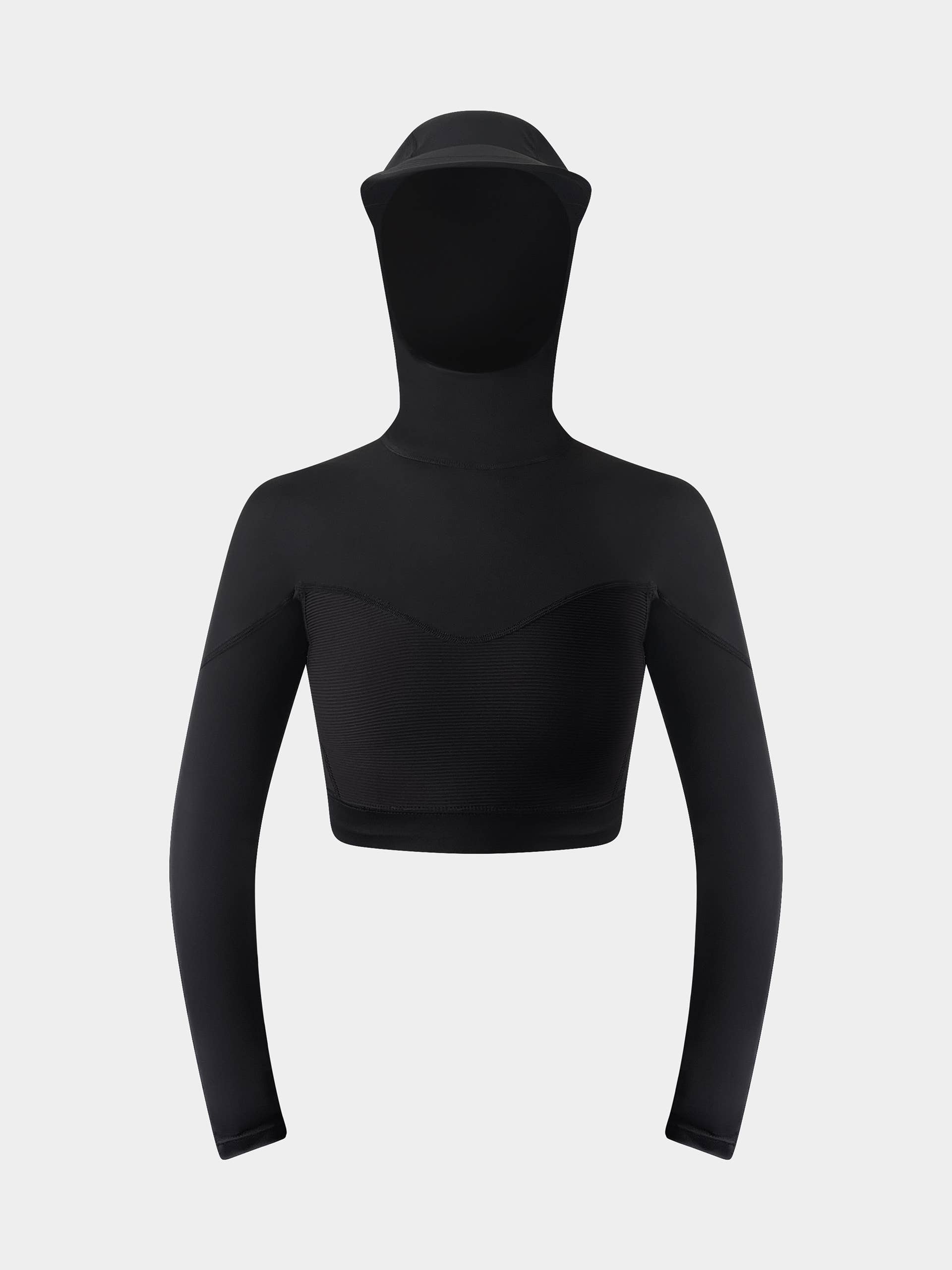
Vampire Surf Club
Founder Nicola Morgan is candid about what that success has and hasn’t meant for her own brand. “They’ve normalised the hood and full coverage for men, and I think that’s great for everyone, including us,” Morgan told SURFER. “Having a pro surfer advocate for sun protection just by wearing it goes a long way.” But she’s quick to separate the two stories: “I wasn’t aware of Florence when we started working on this. At the time, the hooded rash guards I’d seen were all men’s, from brands like Hurley and Dakine, and I couldn’t find anything comparable for women. That’s what lit the fire in me to start this brand in the first place.”
That gap, not Florence’s success, is the real origin story. “This whole thing started with a sunburn,” Morgan says. “A few years ago I was surfing Honolua Bay and got burnt badly enough that I had to get out while the waves were still really good, and I was so frustrated about it. I went looking for something I could surf in that would protect me from the sun and couldn’t find anything I wanted to wear, so I decided to make it myself.” Her background made that possible: years designing for Givenchy, Lanvin and The Row shape how the brand approaches fit and fabric. “The cut, the proportions and the materials matter a lot to me,” she says. Vampire Surf Club uses Italian fabric made with ECONYL regenerated nylon and Japanese closed-cell, limestone-based neoprene, developed slowly and made in small runs.
Ask Morgan whether women face more resistance to full coverage and she pushes back on the framing. “Not really, and I’m not sure it’s a gender thing. Men resist it too. The biggest barrier, for everyone, is that historically it looked bad.” Where the conversation does diverge by gender, she says, is bigger than sun protection: “What women should and shouldn’t wear still seems to be a subject of public discussion. The most empowering thing is that a woman gets to decide for herself, and our job is to give her the options.”
Being small and self-funded though, has its own cost. “In the very beginning we’d get emails from women who had found us on Google and said things like, ‘I’ve searched everywhere for this product, why are you on the last page?’” Morgan says. Gear-review roundups, dominated by the same big brands, mostly ignored her outreach or asked for paid placement. “For a small independent brand, that’s very hard.” Support has come instead from the ground up, including the Venice Surfing Association and an early conversation with surf-industry veteran Randy Hild that convinced her the idea had legs.
The ambitions ahead are concrete: expanding the men’s range, adding styles and colours, and pushing into Japan, Australia and Europe. But Morgan frames success in narrower terms too. “If someone books a skin check because of something we posted, that’s a win I’ll take over a sale.” It all comes back to one idea, she says: more time in the water.
She’s betting that the same instincts that made Florence Marine X’s rashguard sell out; a real problem, solved with real design, can work just as well filtered through a couture eye, for a segment of the sport that’s been underserved for too long.