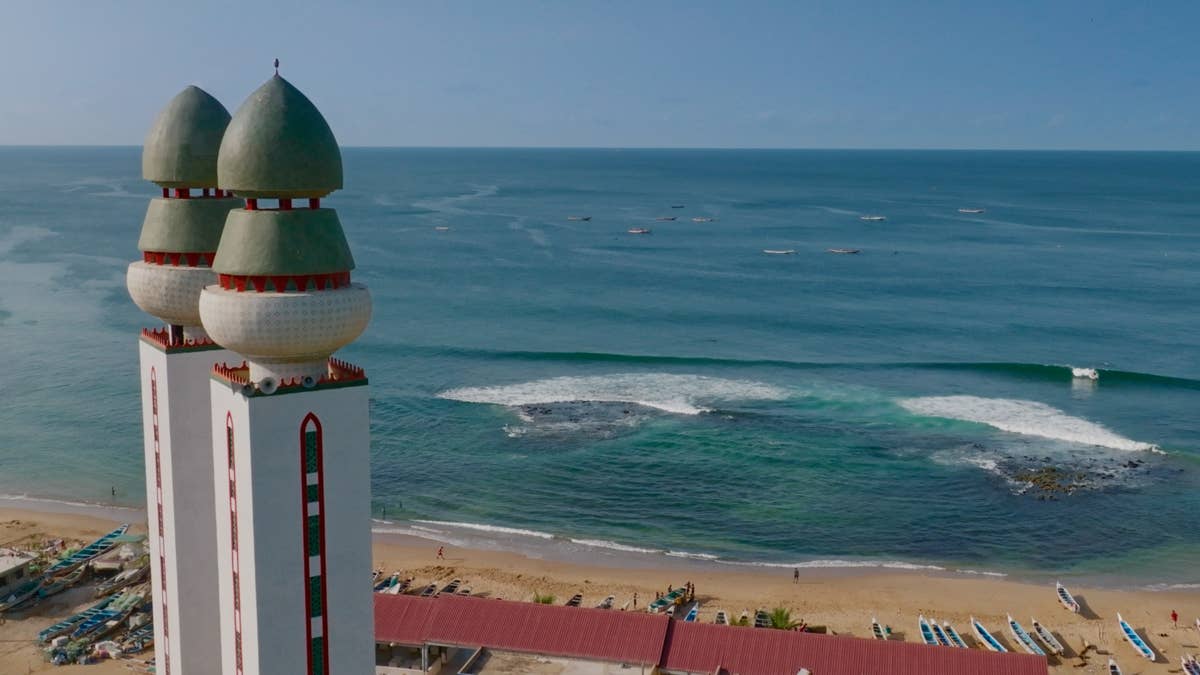
SURFER is an executive producer and release partner on Dakar Dream.
Surfing is on the rise in a big way in Africa, and nowhere is that more evident than Dakar, Senegal. The surf scene runs four generations deep, and the kids ripping right now are already thinking about supporting the fifth. For most of that time, not much attention has been given and, when it has, it has typically been from an outside lens. Thankfully, that’s starting to change with a new film called Dakar Dream.
If you’ve been paying attention for a while, you’ve already heard some of these stories. Our 2024 guide to Dakar, and Aloha Award coverage, pointed you to Babacar “Babs” Thiaw at Copacabana Surf Village and told you to go rip with an up-and-coming local named Fallou Bousso. Déguène Thioune surfed in the Mami Wata x Billabong campaign we covered last year. Cherif Fall needs no introduction as he’s been blowing up on the international scene for years.
Senegal was first put on the map thanks to the wave off Ngor Island as seen in the The Endless Summer, released sixty years ago. Nowadays, there is a thriving scene. One that has been protrayed many times but Dakar Dream is that scene speaking for itself.
The result is a 77-minute documentary shot over a few years in Dakar by director Alexander Volberding and Belgian cinematographer Jules Emile, with footage from nine local surfers with a focus on three of them: Dame Samb, Déguène Thioune, and Fallou Bousso. The striking thing about it is that there are none of the hallmarks of traditional surf documentaries, no sit down interviews, no staged scenes, no rehearsed lines. The surfers narrate their own lives in WhatsApp voice notes, in Wolof with English subtitles, and the effect is less like watching a documentary and more like being added to a living group chat.
“There’s a name for this film’s opposite, ‘parachute journalism’,” Alexander says. “Somebody drops into a place with a camera for a few weeks and leaves thinking they can tell the story better than the people who live it. I didn’t want to make that film. So the surfers narrate it themselves, and a lot of the footage is theirs. That’s why we call it a POVdoc (pronounced PAHV-doc), it’s their point of view, and that’s the way it should be.”
It took a year to shoot and three more to edit, and the process included a hard drive holding 13,000 clips and no story.
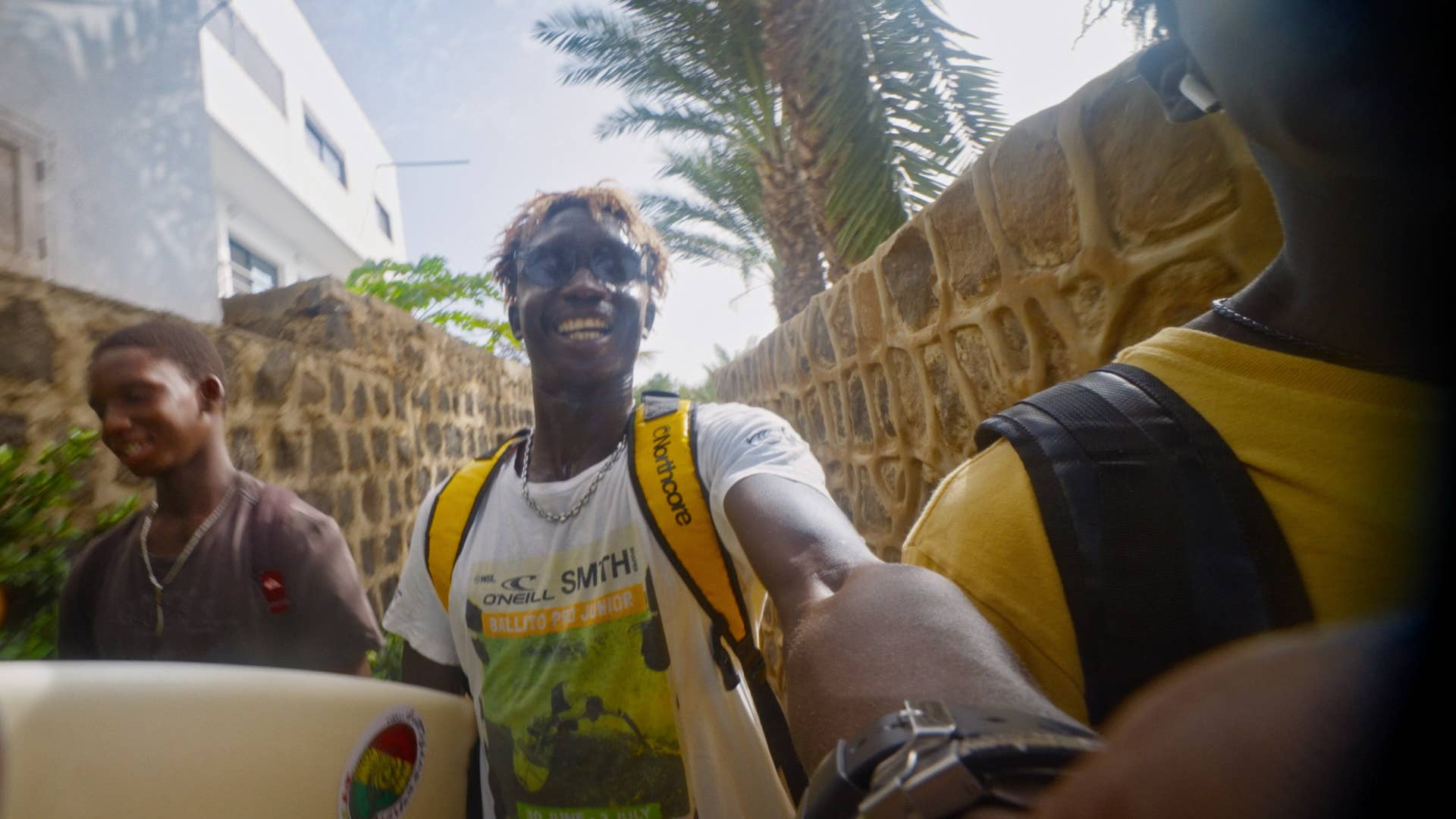
Dame Samb
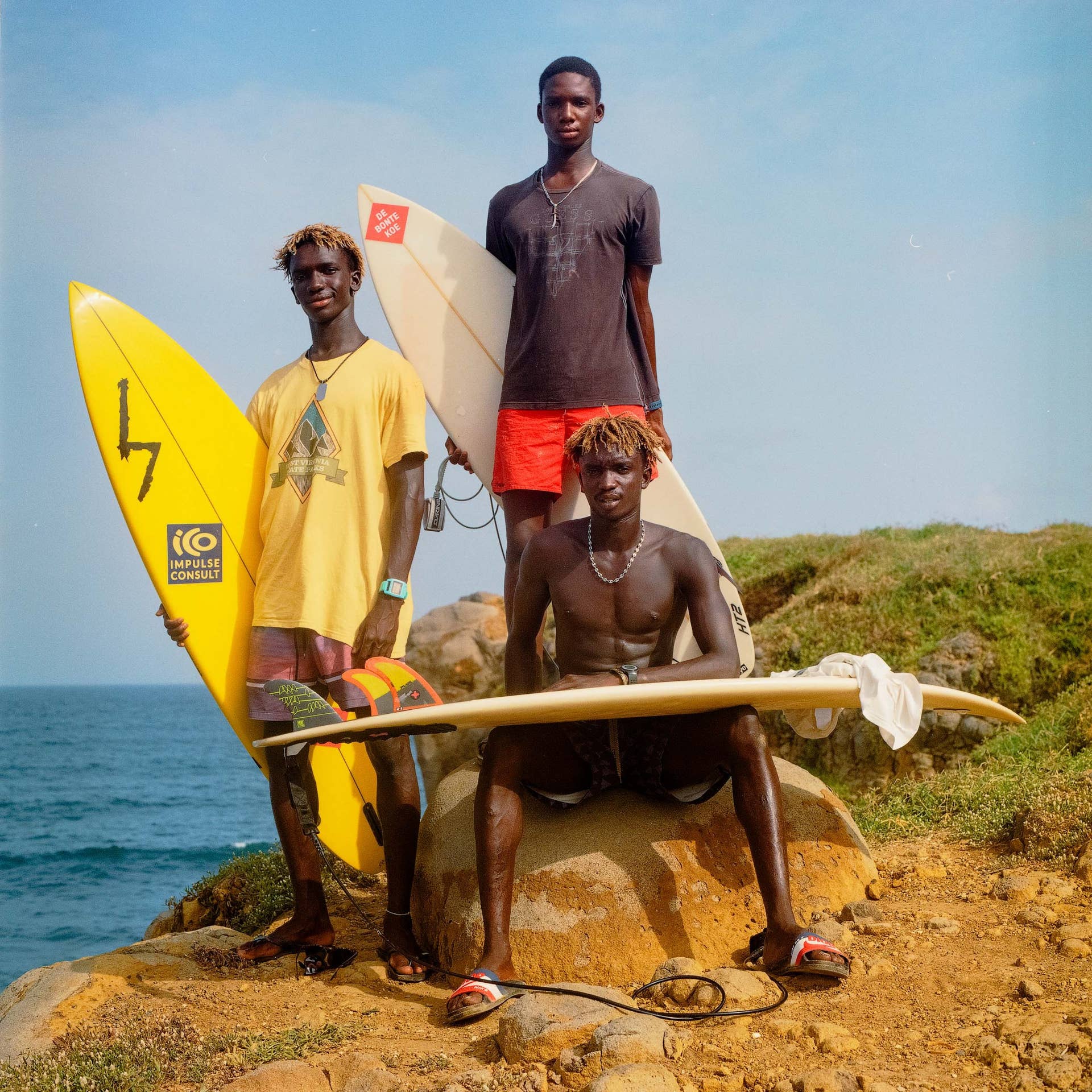
Jules Emile
Ask any of the three about their first board and you get the same shape of story with different details. “I saved for five months so I could buy my first surfboard,” Dame says. “It wasn’t something I could get easily, so I had to be patient, disciplined, and determined.”
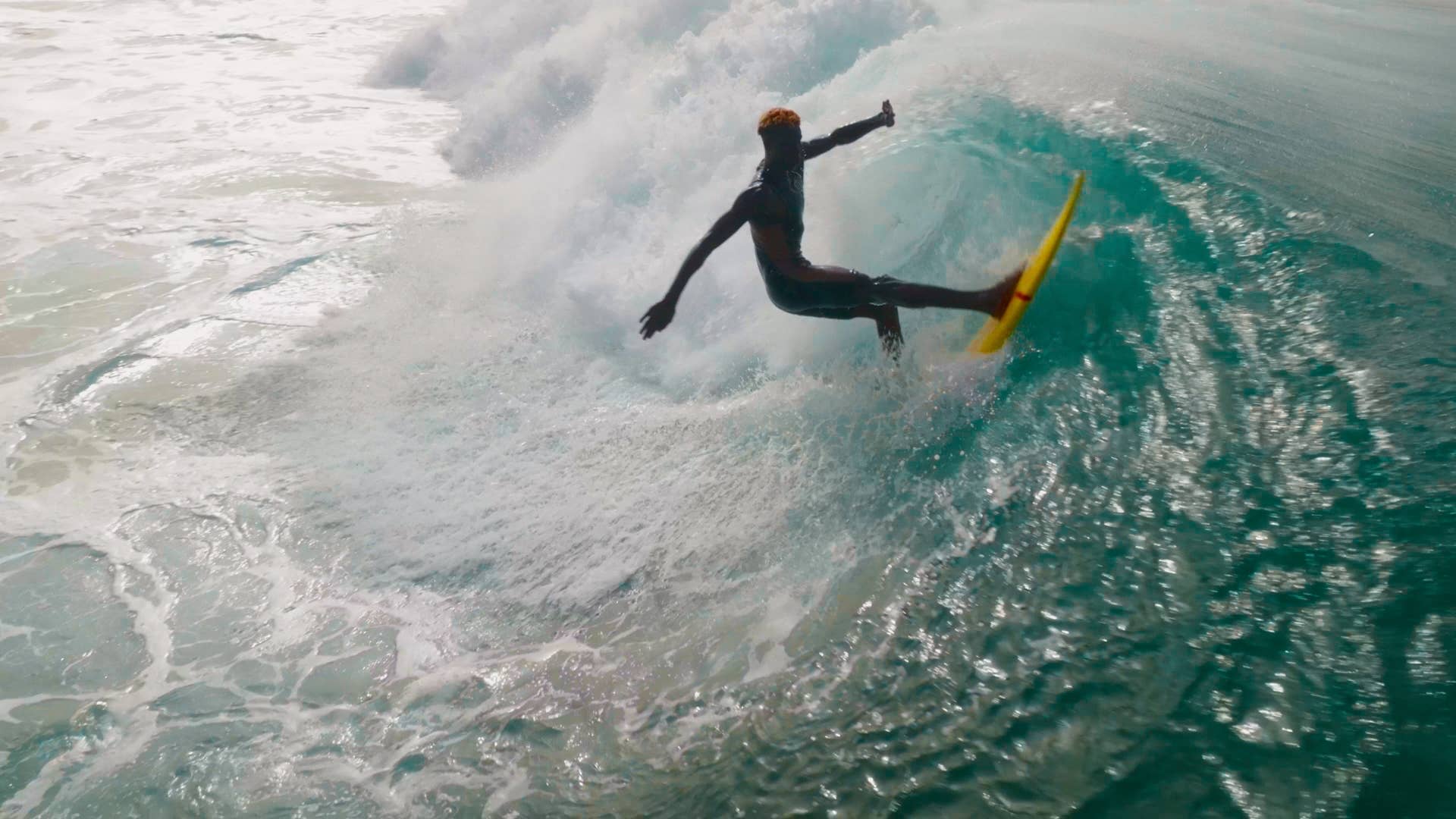
Dakar Dream
Fallou’s was a JS 5′10″. “That’s the board where my surfing really started,” he says. Déguène got hers in 2022, through Surfkids Shredding Senegal and Malika Surf Camp.
Three surfers, three dreams. In the film, Déguène chases the WSL, Fallou the Olympics, and Dame a surf school to raise the next generation.
Alexander Volberding
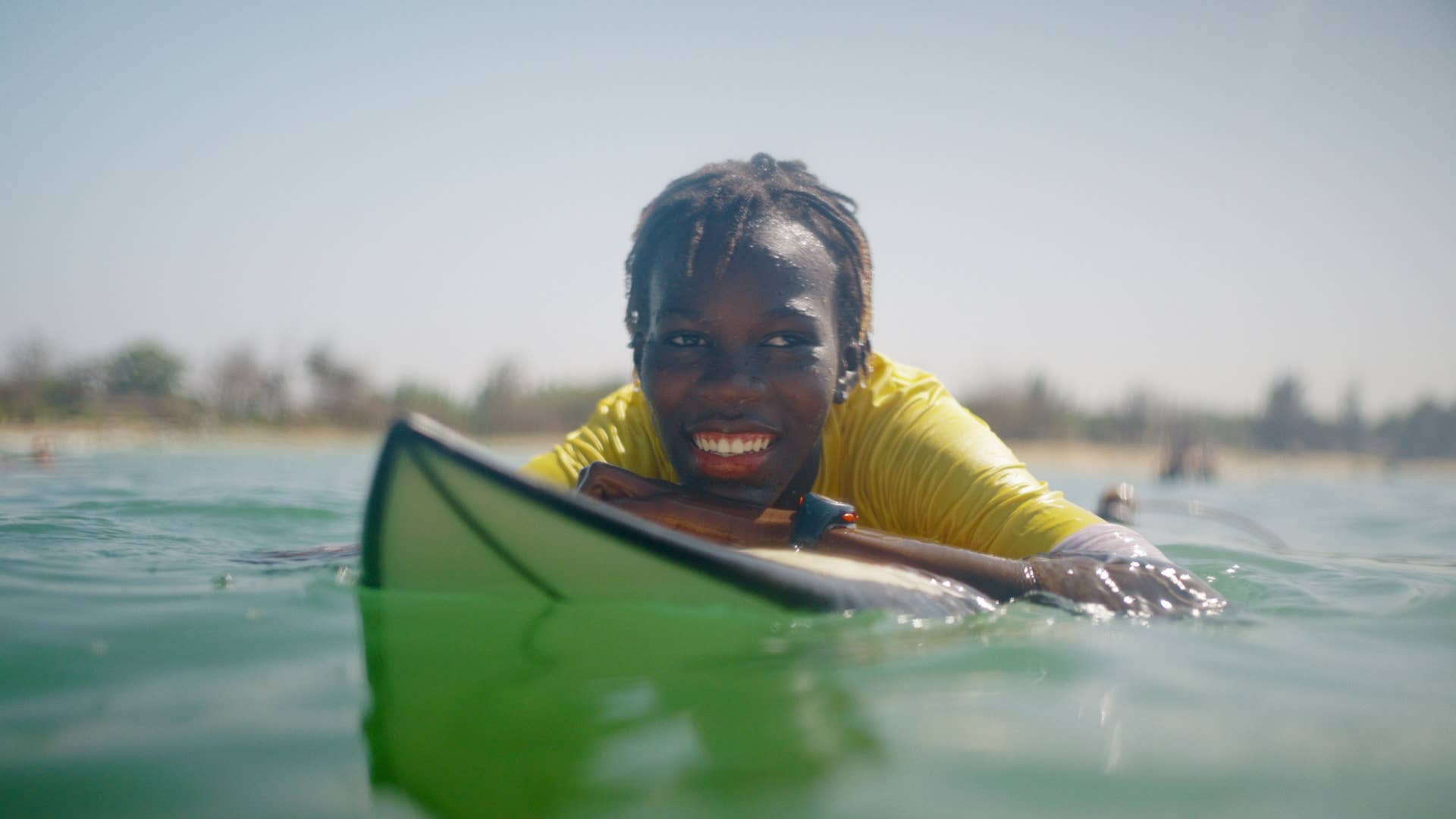
Déguène’s dream starts with the WSL and doesn’t stop there. “My dream is to see more young Senegalese get into surfing, especially girls,” she says. “To have sponsors who pay for my travel and my gear, so I can compete in contests like the WSL. To stay a role model for young people. And to break into modeling.” She also wants to change how people see girls in the water: “Girls belong in the ocean as much as boys do. We have dreams, ambitions, and the ability to go far.”
Fallou is still competing for Senegal abroad, and he knows what that takes from Dakar: “good boards, equipment, travel, and a lot of funding,” he says. “A kid in California or Australia has much easier access to all of that.”
Alexander Volberding
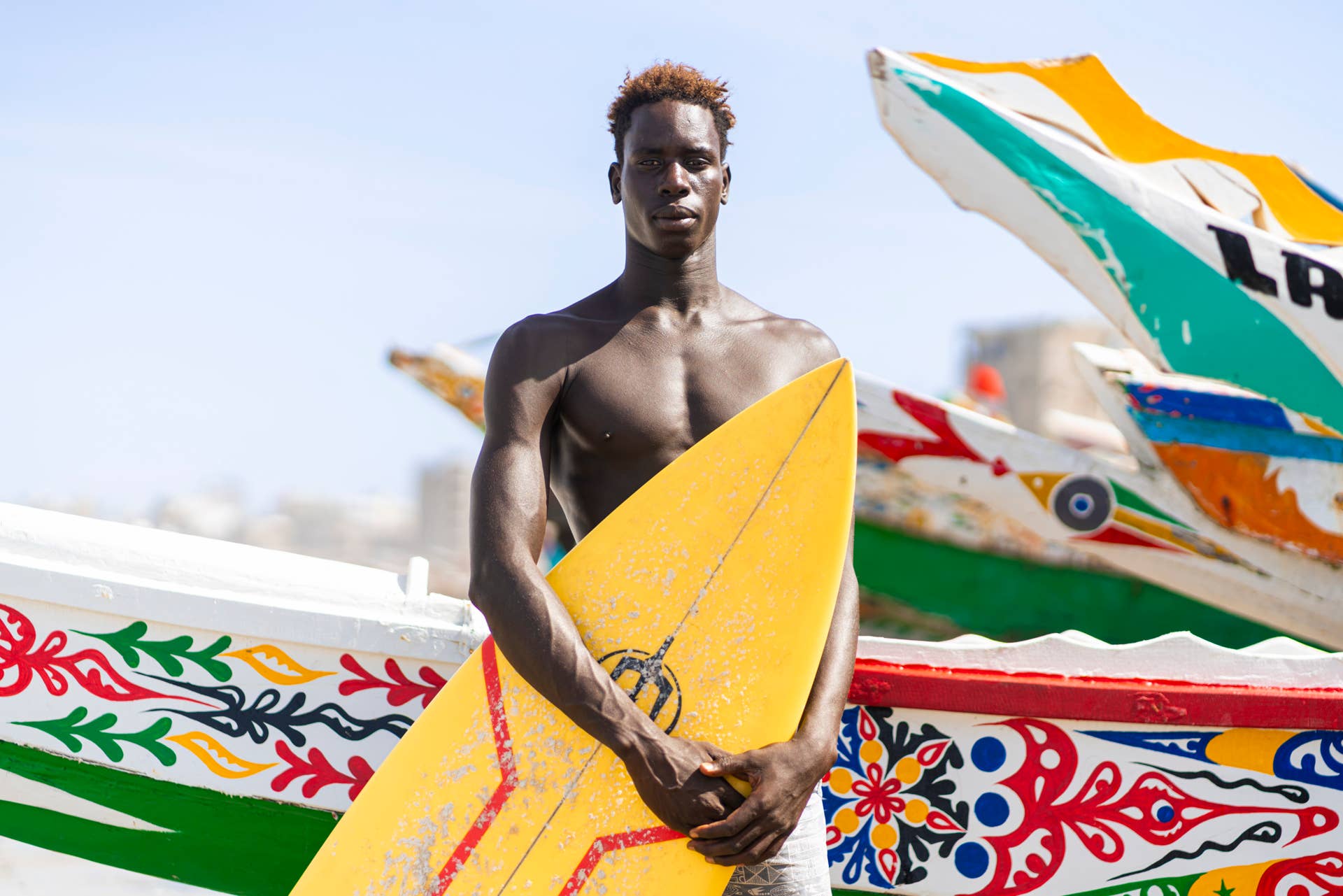
Ask him about his dream today, and he talks about a school. “My dream is to create a surf school in Dakar, to give kids the chance to learn and, above all, to progress in good conditions,” he says. “Right now the project is still in my head, and I’m trying to move it forward little by little.”
Dame is already working on his. “My dream is to build a real surf school in Senegal, with sponsors and partners who believe in the potential of Senegalese surfing,” he says. “A place where kids can learn to surf, develop their talent, and get access to equipment, even when they can’t afford to buy their own.”
Given that two share the same dream, it’s clear to see the importance of giving back. They want to continue opening the door for the kids behind them.
Jules Emile
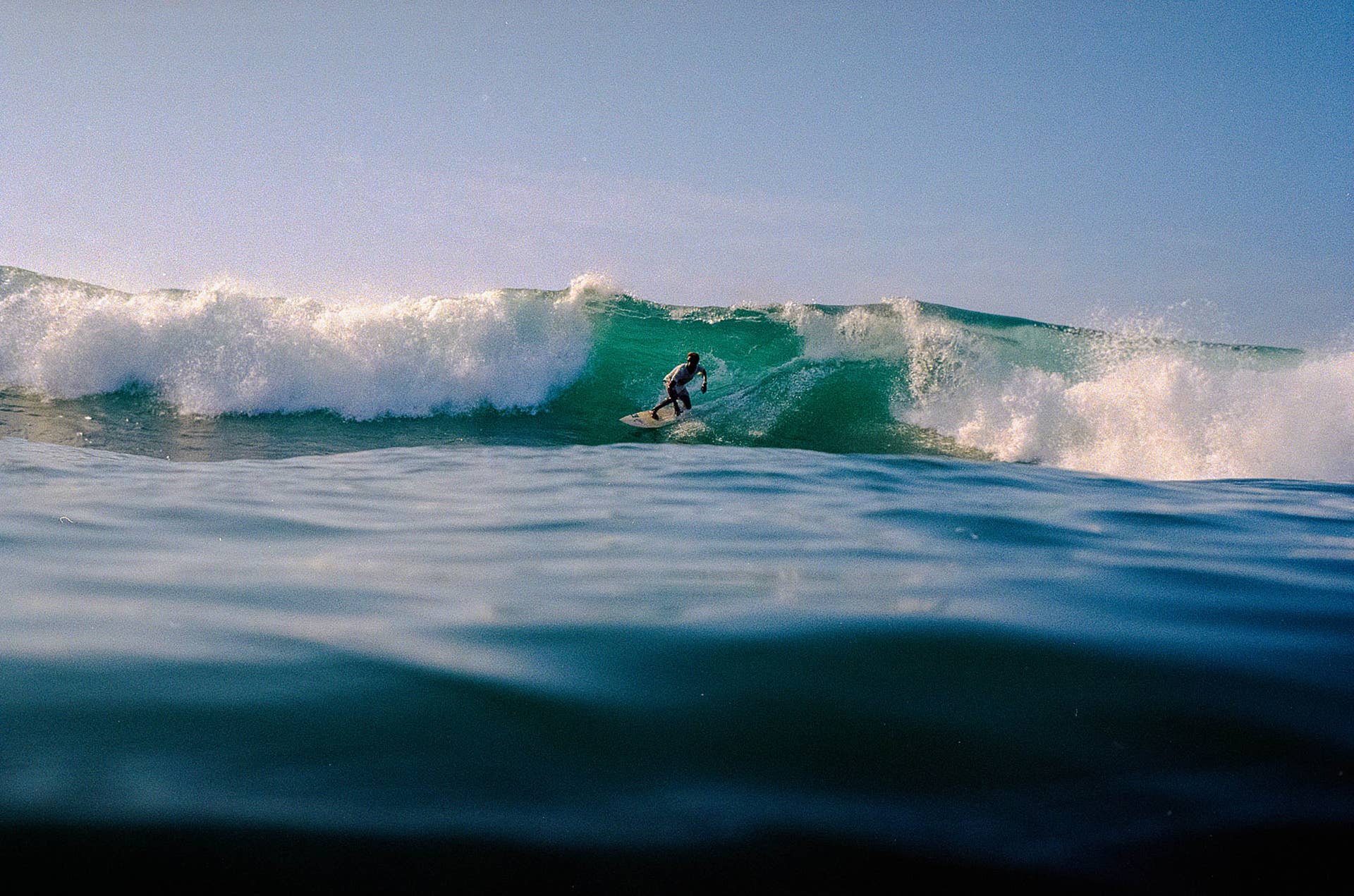
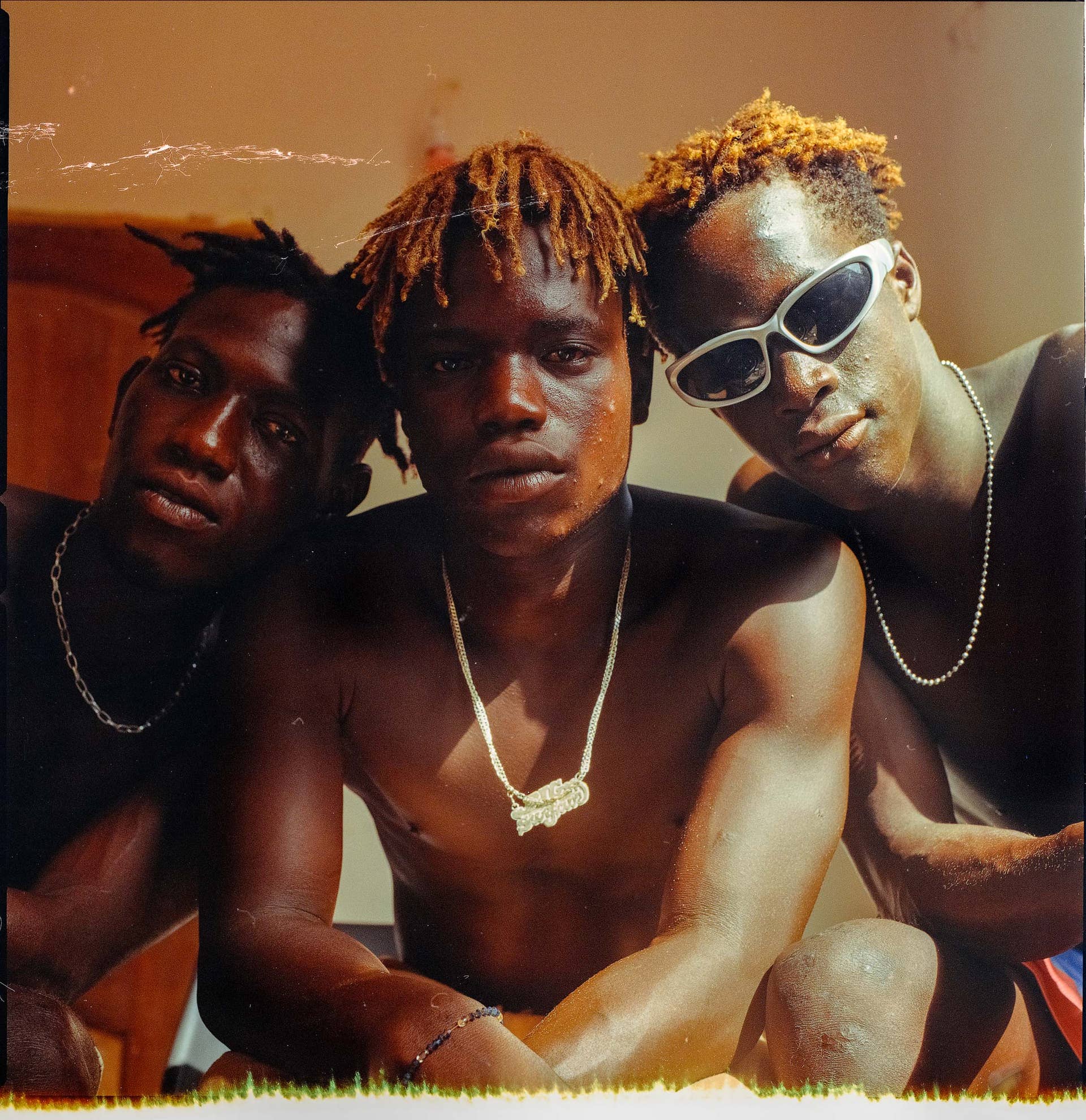
Déguène wanted the film to show “Senegalese surfing from the inside, through our own stories, our emotions, and our daily lives.” Dame shot some of that footage himself, and he knew exactly where to point the camera. On the way out to Ngor Island, he filmed his brothers. “We’re three brothers, same father and same mother, and all three of us share the same passion for surfing,” he says. “People might see three surfers going surfing. Behind those images, there are three brothers growing up with the same passion.”
Jules Emile
When we asked who to watch, one of those brothers kept coming up. Ismaila Samb, Dame’s little brother, made Fallou’s list of current rippers. Babs says he’s “definitely on it.” Kelly Slater’s Outerknown even picked him as an ambassador. “As his big brother, I’m proud of his journey, and I believe he can go even further,” Dame says.
Jules Emile, who shot much of the film alongside Alexander, spent his first month in Dakar barely filming. “Most of the time we were just hanging out, surfing together, sharing meals, talking,” he says. “You can’t expect to arrive somewhere, point a camera at people, and immediately capture something genuine.” Dakar’s surf community, he points out, “has seen plenty of people and brands come through, take photographs, shoot footage, and disappear again.” “I never wanted our relationship to feel transactional,” he says.
Jules Emile
He’s still close with the crew. He and some of the surfers have spent the past few years developing a narrative film inspired by their real experiences growing up and surfing in Yoff, and they hope to bring it into production next year.
We asked all three what it’ll be like to hear their own voice notes on a big screen, in front of their friends. They all gave us some version of the same answer, and Dame put it best: “I’ll definitely be proud, moved, and maybe a little embarrassed hearing my own voice in front of everyone!”
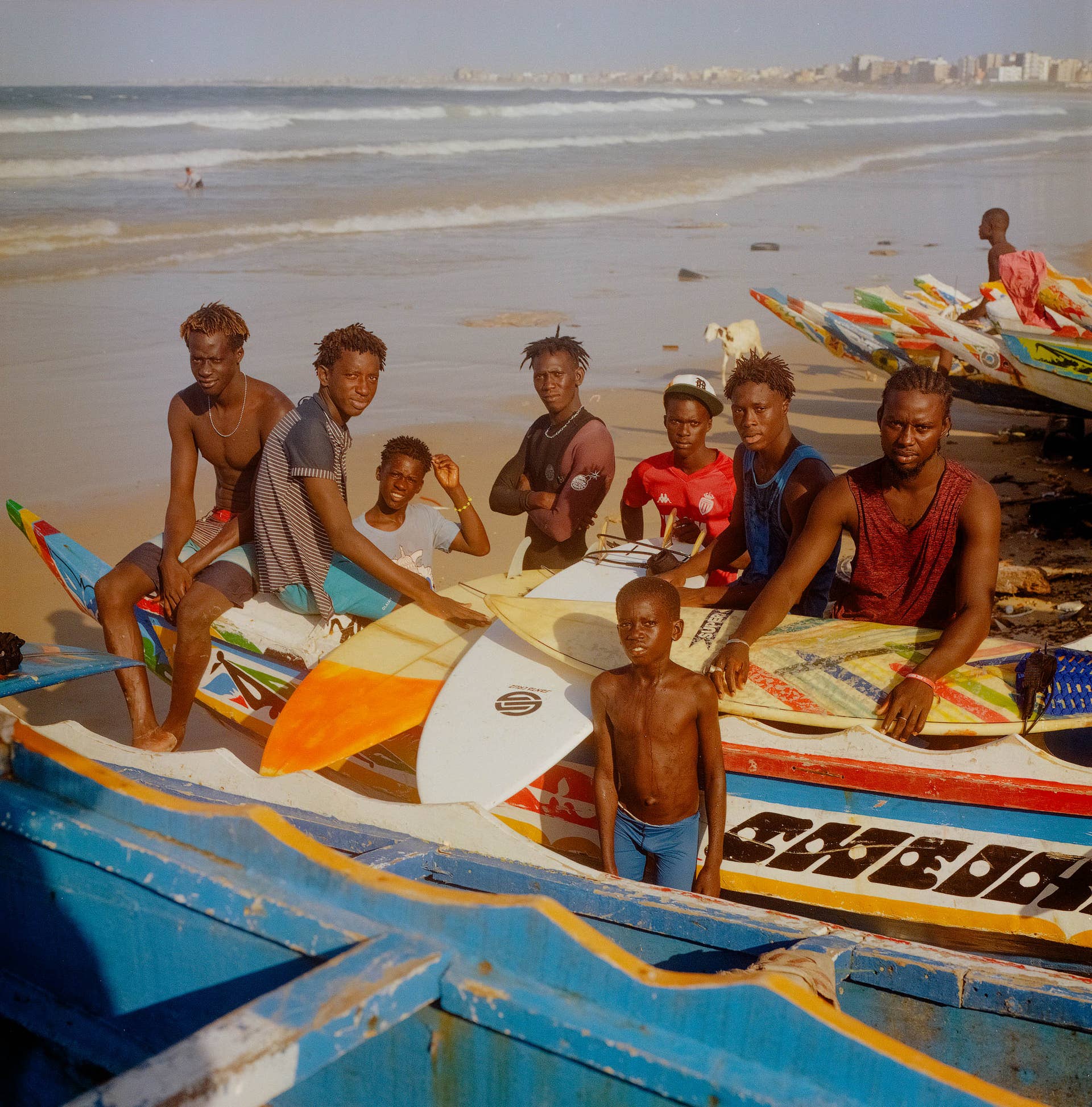
To understand how deep this goes, talk to Babs. In Yoff, where he grew up, nobody called it surfing; he told us last year they called it sarane, to slide. He started at six, on a bodyboard, because he couldn’t afford a surfboard. The boards came from Europe, mostly polyester or wooden ones, and nobody had a wetsuit. “After surfing in the winter, we were burying ourselves in the hot sand to heat up,” he says. “Those memories are very engraved in my mind. It’s priceless.”
Back then, he knew everyone in the lineup. “It was literally my community,” he says. “There was nothing around us.” He misses that.
Related: SURFER Guide to Dakar, Senegal
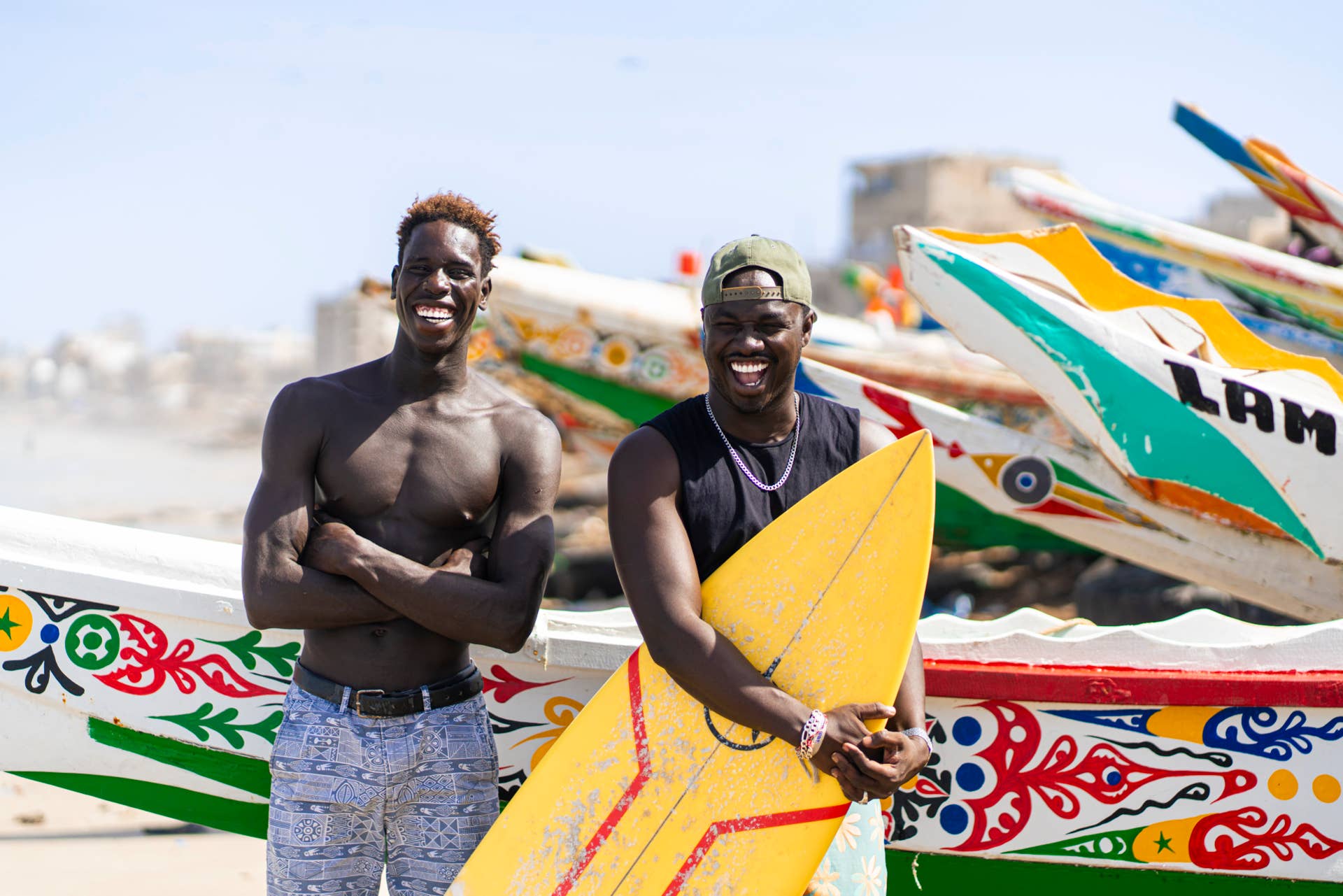
Babs is president of Surfrider Foundation Senegal, which monitors water quality at six surf spots. He still runs Copacabana Surf Village, and Fallou still teaches there. So our guide’s advice stands: find Babs, and he’ll get you in the water with Fallou, who wants every visitor to “feel like family, not just a tourist.”
Alexander Volberding
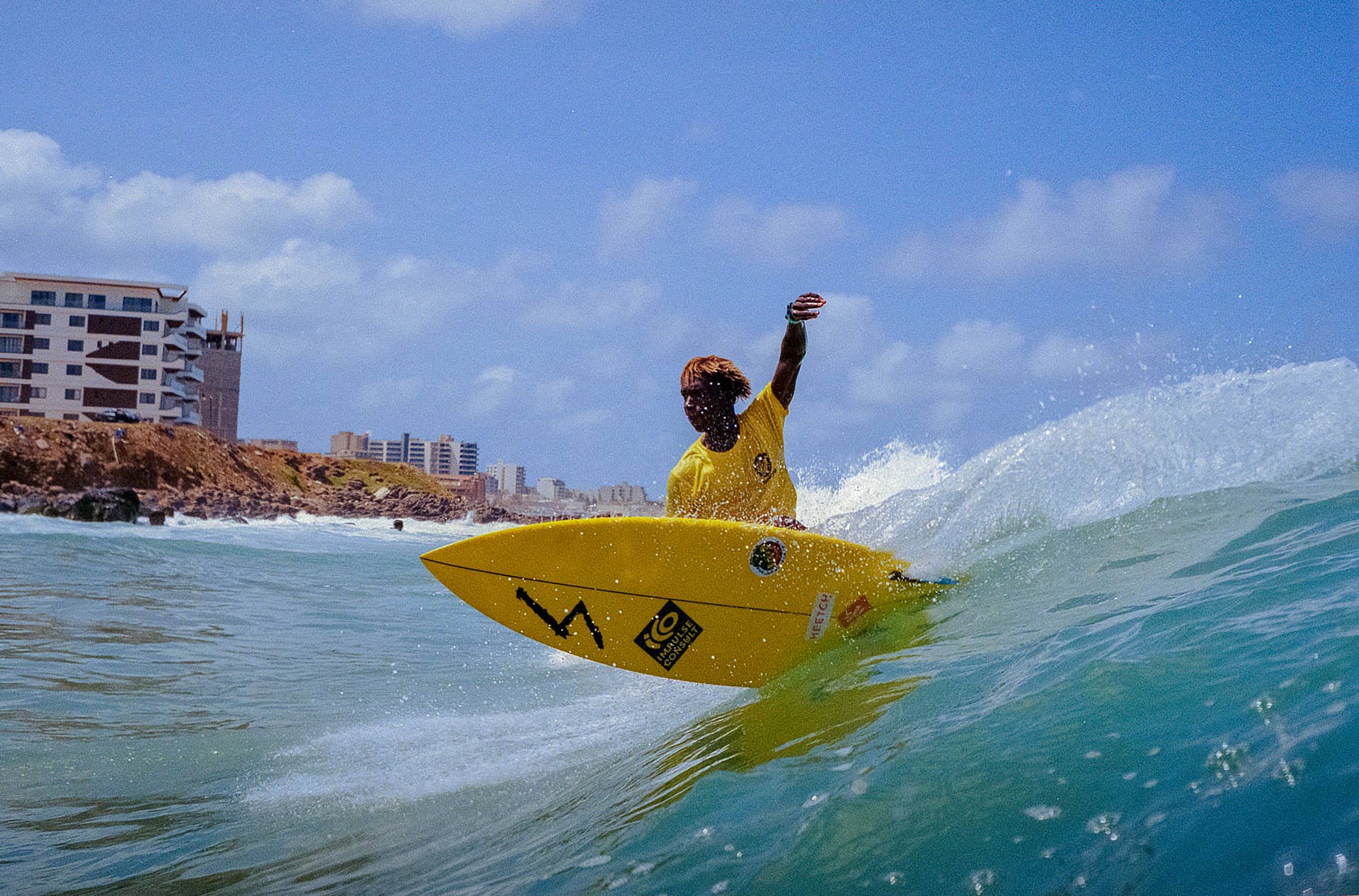
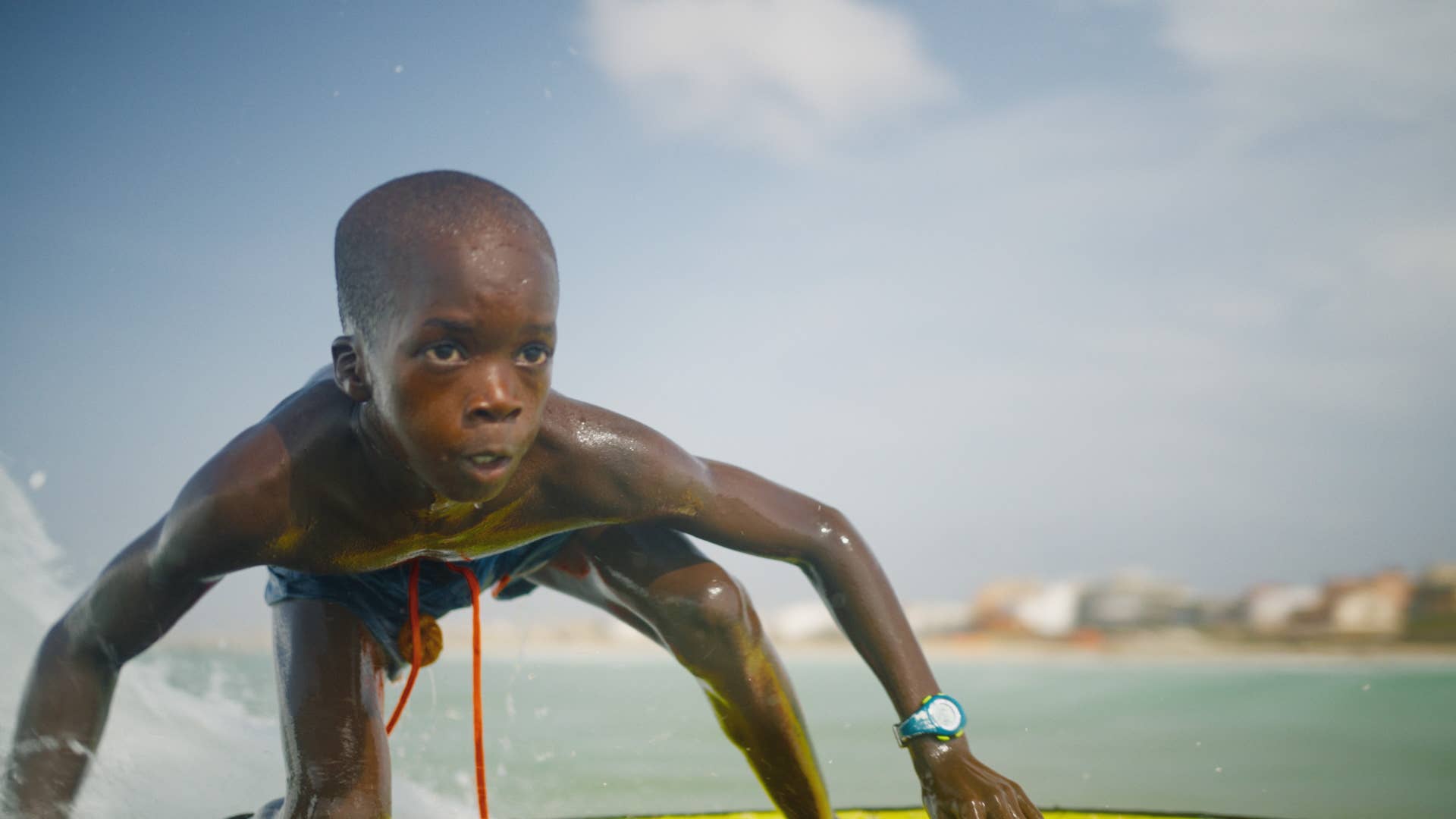
Babs has his own picks. “Fallou Bousso, that kid has it all and just needs support. Ismaila, definitely on it. And Niello, one of the youngest ones: for me he is really the future face of Senegal surf. Trust me, I bet on that boy.”
Jules Emile
Alexander Volberding
We asked everyone to do what we always ask: name the OGs, the current rippers, and the groms. Between them, the list came out like this. Consider it a who’s who of Senegalese surfing.
OGs: Oumar Sèye, Patina Ndiaye, Pape Samba Ndiaye, Cherif Fall
Current rippers: Fallou Bousso, Ismaila Samb, Sidy Camara
Groms: Awa Seck, Aita Diop, Adama Samb (the youngest Samb brother), Niello
“We have the waves, we have the passion, and we have the talent,” Dame says. “What we’re missing, mostly, is the means and the opportunities. With the right support, Senegalese surfing can go very far.”
Follow Dame, Déguène, and Fallou at @dame_s97, @deguene.surfergirl, and @boussomame_fallou. Dame is looking for sponsors for his school, and Instagram is the best way to reach him. Find their surf schools at dakardream.tv.
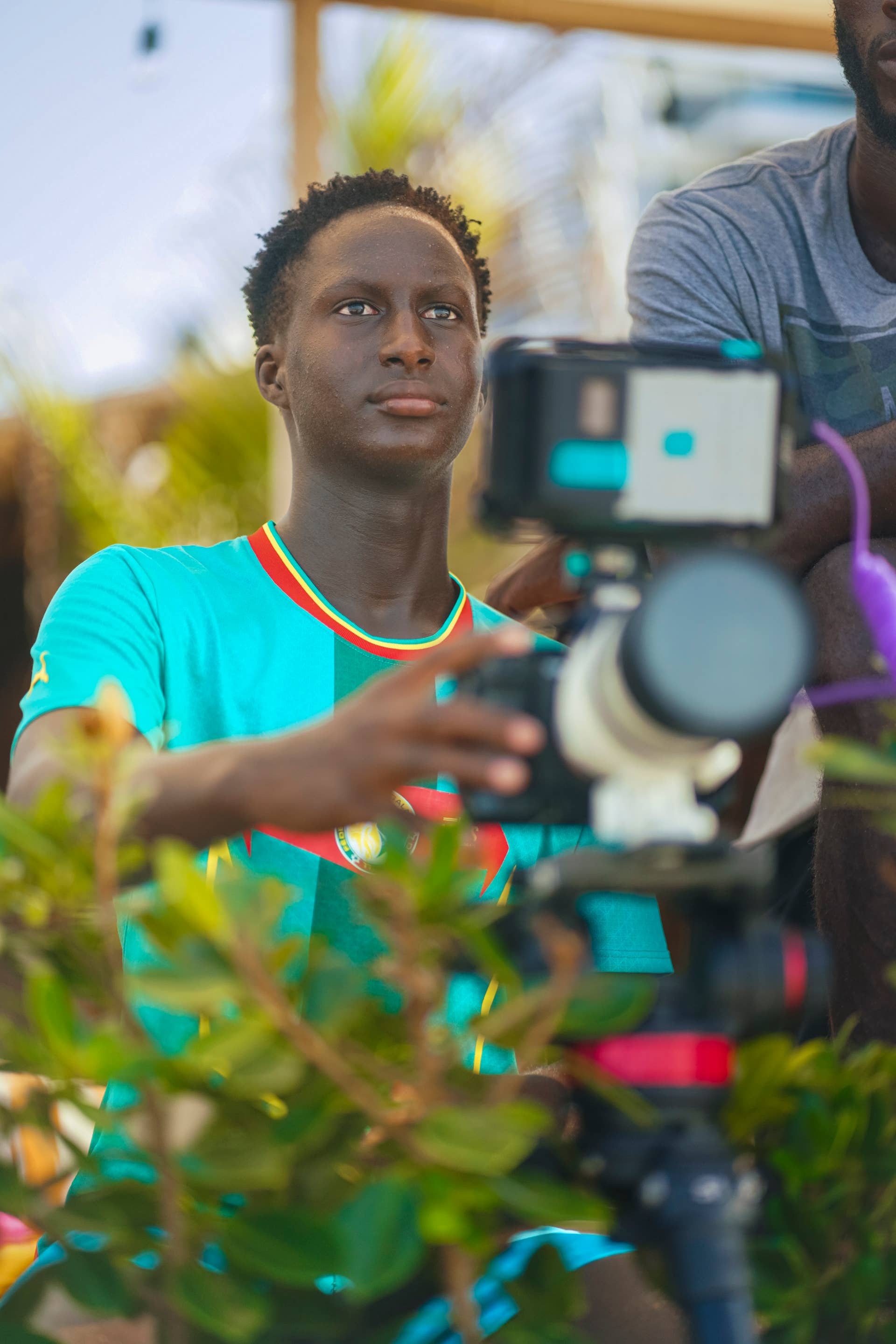
Alexander Volberding
Interviews with Dame, Déguène, and Fallou were conducted in French and translated. All interviews have been edited for length and clarity.
Related: Beyond Cloudbreak: How Hanua Is Flipping the Script on Fijian Surfing