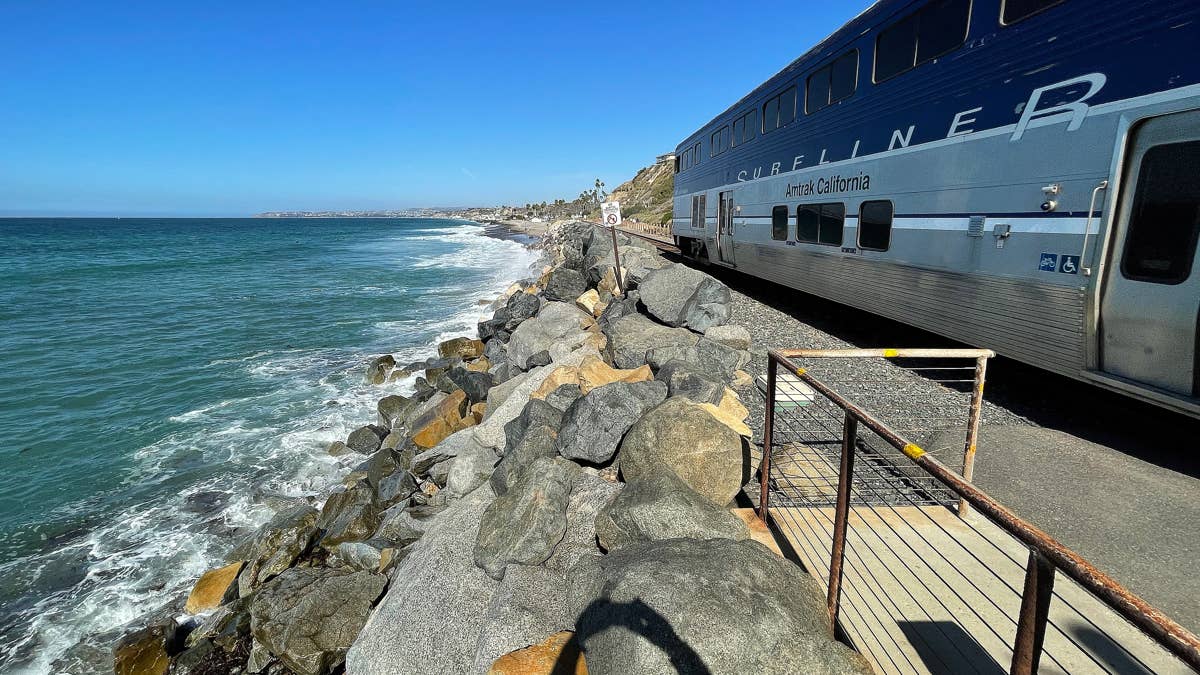
Surveys of SURFER readers show they are statistically more intelligent than other surf fans. That’s why they know canaries, the birds, not the Atlantic slab magnet, are biologically sensitive. A high metabolic rate and rapid respiratory system mean they are far more sensitive to toxic and odorless gases than humans.
That’s why, in the late 19th and 20th centuries, coal miners carried caged live canaries down into underground shafts. If the birds collapsed, it was time to evacuate. Surprisingly, the practice was used in the UK up until as recent at 1986. Until a far more toxic threat, called Maggie Thatcher, shut down all the mines.
What’s this got to do with surfing? Well, a new scientific paper, published in the journal Climate Change, has found that of 57 internationally significant surf breaks, most face real risk from climate change. “We learned directly from the local surfers how they are seeing their waves change,” said one of the paper’s authors, Trent Hodges, senior programs manager, Save the Waves Coalition. “It’s a canary in the coal mine too; when a wave changes, that often means the beach is changing, and that affects everybody.”
The paper’s results were stark. Across 57 breaks studied, 89% face medium or high risk from limited shoreline resilience. 79% face medium or high risk from rising sea levels. 75% face medium or high risk from changing seafloor composition and sediment shifts.
These are alarming enough, but gets worse when all the waves that were assessed by more than 200 local surfers were in all but two of the 13 World Surfing Reserves (WSRs), spread across eight countries. If these iconic waves that are often protected under government legislation are under threat, what about all the rest all over the world?
“Surf breaks are incredibly unique oceanographic phenomena. A confluence of many factors that fit together just right to make the wave happen, and so those processes are really sensitive,” said Dan Reineman, an associate professor at California State University Channel Islands and a study coauthor.
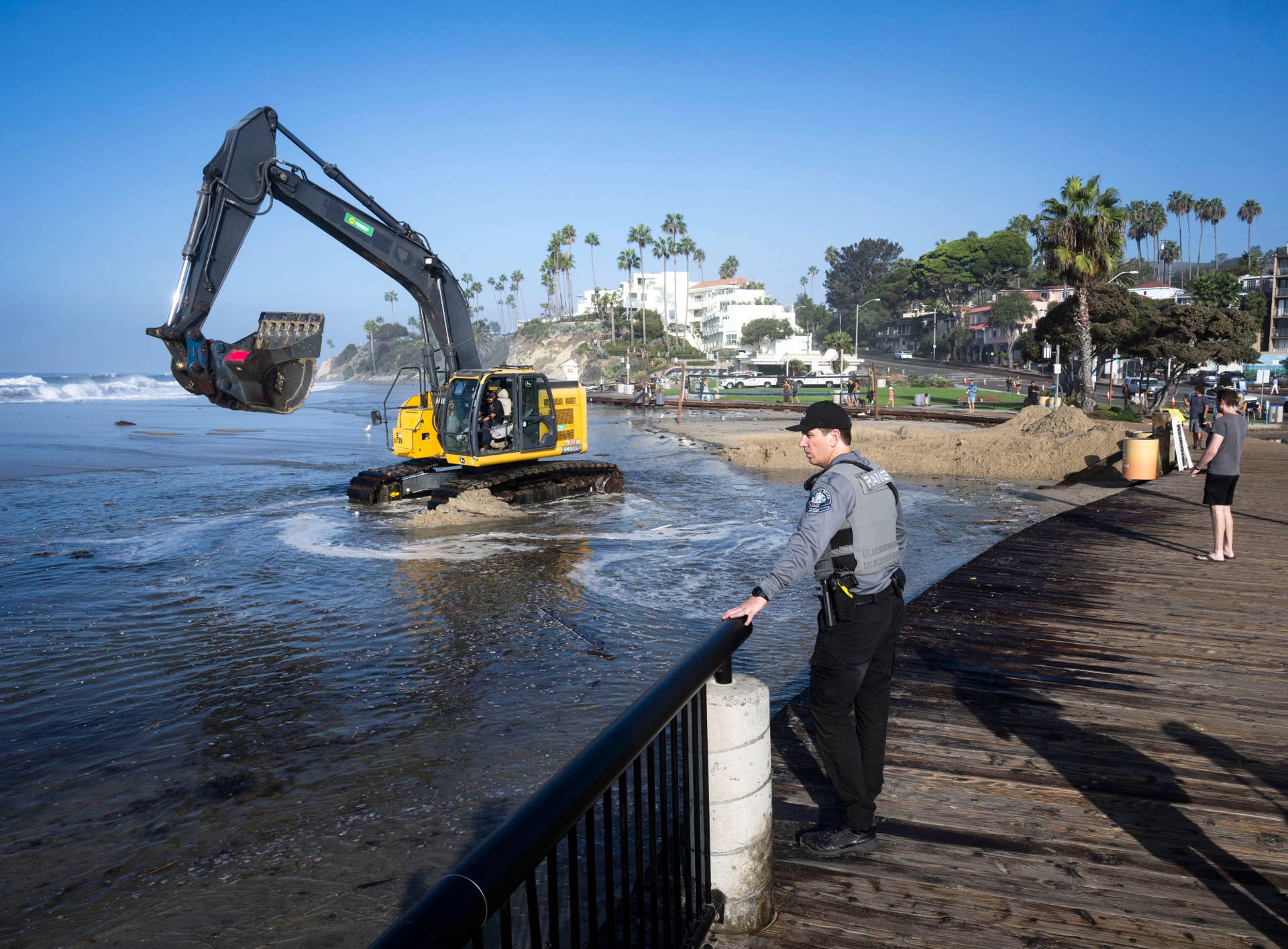
MediaNews Group/Orange County Register via Getty Images / Getty Images
“Climate change and coastal management both have significant negative implications for the future viability of multiple surf breaks of global significance and, therefore, the myriad distinct local communities, cultures and economies they support.”
The waves rated at greatest risk include the beachbreak peaks of Croyde in the UK, the point breaks at Noosa in Australia and Oriente Salvaje in El Salvador, and the California reefs of Sewer Peak and Windansea.
The impacts could be severe, and far more than just waves losing an end section, or turning into a closeout or a fat burger. The paper found that in Santa Cruz, for example, surfing brings in about $200m a year. And that doesn’t include the drugs. And in some other places under threat, the dependence is close to total.
“In the east of El Salvador, you have some of the most perfect point break waves you will find, and the entire economy there is pretty much dependent on surfing,” said Reineman.
Yet, this paper isn’t all doom and gloom. If surfers are the canaries in this overblown analogy, we are, for now, still singing. One of the key findings was that where coastlines were more natural, they adapted better to the changes the climate crisis brings, by shifting inland and relocating sediment. That opens up solutions.
The researchers’ own initial ask is simple: more local surfers should use the assessment tools, known as SurfCAT, developed for the study to evaluate their own breaks, and work with local authorities and other groups to protect waves from coastal development and climate change. Any changes in sand movement, tide windows shifting, or waves that no longer work as they did are valuable data. And no one had a better instinct for those than surfers. We just have to log them.
Surfers should also push for soft defences. Restoring dunes, mangroves and coastal wetlands can buffer rising seas without the wave-reflecting effect of concrete walls. Development works the other way. Reineman said sea walls, jetties and groynes made beaches, and the waves breaking off them, less resilient. We need to press for runoff and sewage controls, and for limits on development that alters local wind or blocks the swell window.
Surfers will be the first to know in real time what’s coming. That means we will have the first chance to do something about it.