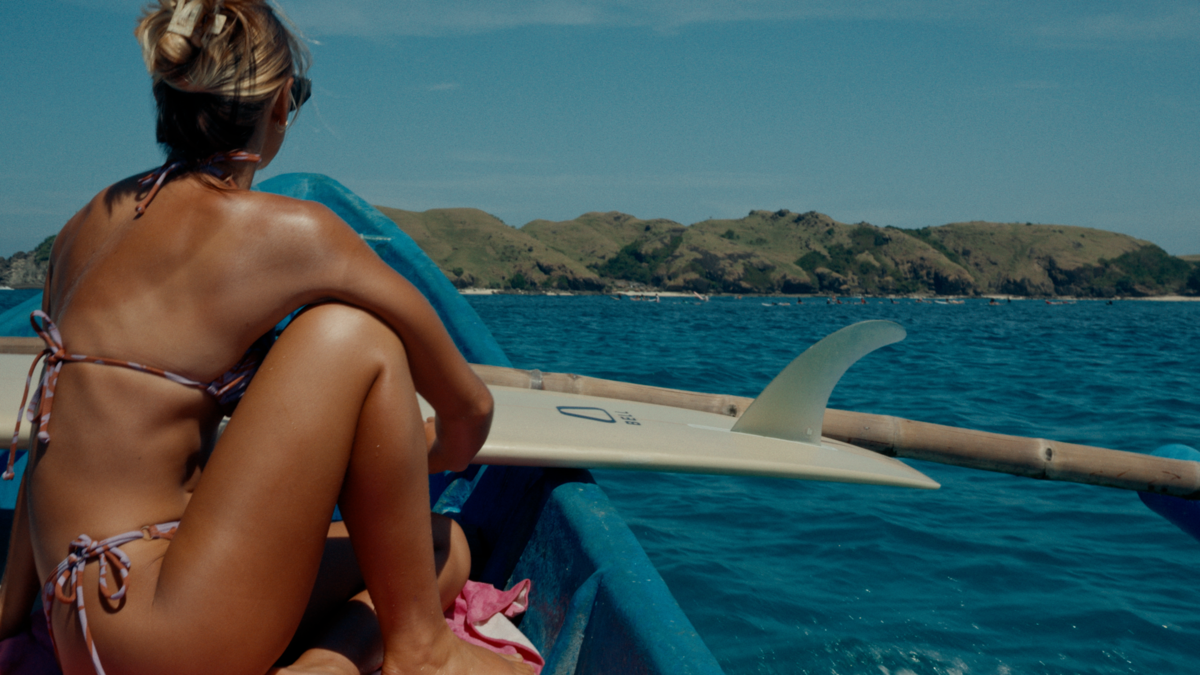
When French longboarder Zoe Grospiron had her best year on tour in 2024, she felt nothing. She won her first Longboard Qualifying Series event and made her first World Longboard Tour final, finishing sixth in the world. But when she knew she should have been the happiest she’d ever been, the high just didn’t come.
So in 2025, instead of returning to tour, she took a pause to recalibrate her relationship to surfing. Grospiron grew up in the French Alps, becoming a competitive skier from as young as seven. After she moved to Biarritz as a teenager and started to surf, within a few years she was competing in that too. Now in her mid-20s, Grospiron is finally taking the time to figure out who she is and finding her love of surfing in its purest sense, outside of the competitive format.
Zoe’s new short film “Unfolding”, that she created with filmmaker Thibault Montoni, shares some of her time off tour, exploring Indo, surfing different boards and learning how to just be: to surf for the joy of it, express herself in the waves, take more creative lines and get to know and connect with the communities she’s visiting beyond the traveling circus of the World Tour.
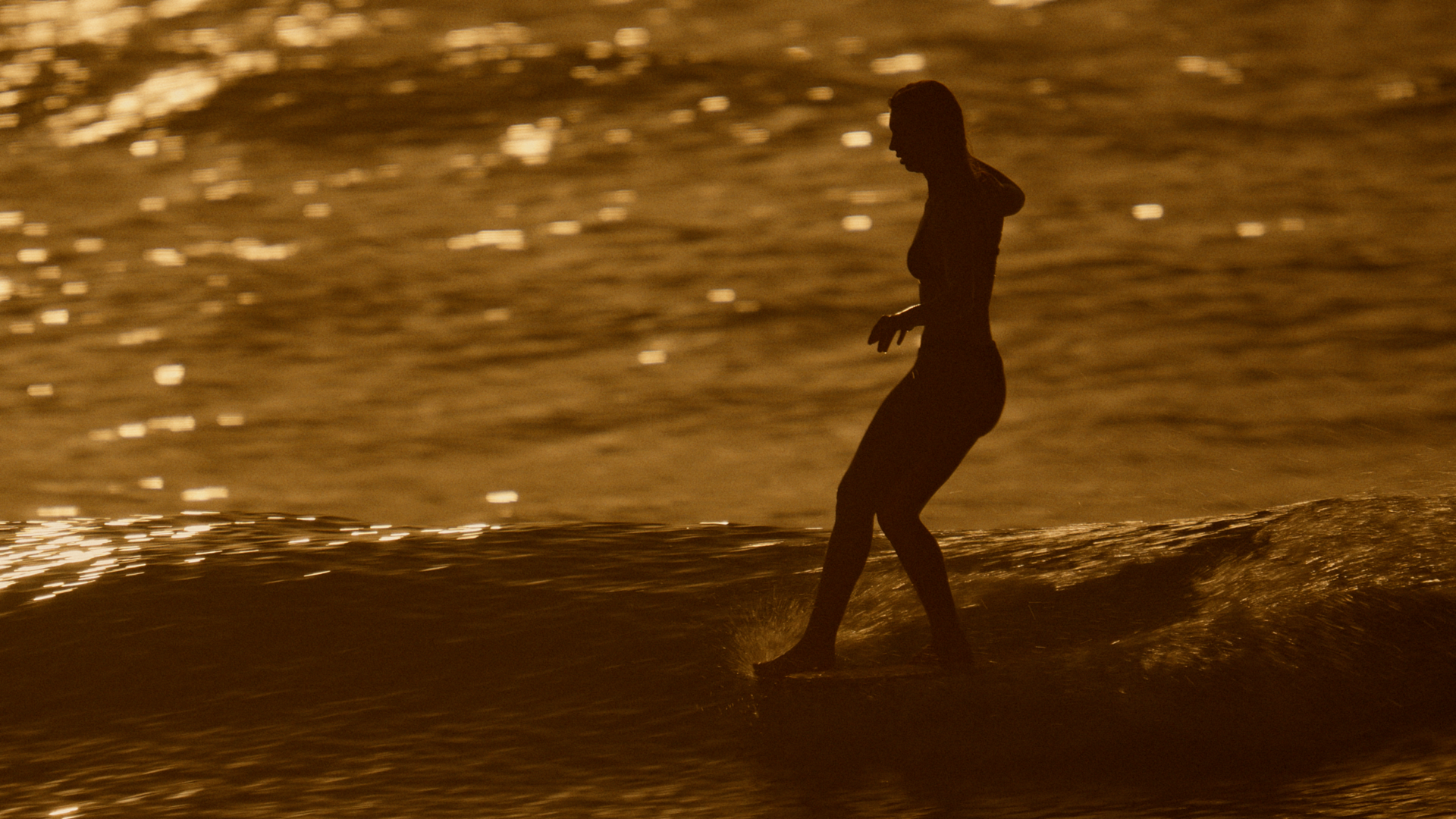
“I was constantly pushing my limits, and eventually I lost the love of surfing,” Zoe recalled. “So I stopped surfing for a little while. When I realised that surfing was something I really loved and wanted to return to, I wanted to approach it with a different mindset. Instead of thinking about what I should have done on a wave, I wanted to dance with the wave,” she said.
While professional surfing orients around travel, moving from place to place across the globe, the opportunities to understand the people and the cultures we encounter can sometimes be limited, or curated. When a World Tour event is happening, surfers travel back and forth from their accommodation to the event site, train on the contest wave, surf their heats, maybe hit the local gym a few times, but largely spend time with other competitors and event organizers before heading home or on to the next location. Rarely is there time to explore, connect, share with local people and explore the region beyond the bubble of competition.
“You travel to amazing places, but you’re only there for five days,” Zoe reflected. “You surf the same spot at different times, but you never connect with the locals or explore because you want to spend as much time as possible getting to know the wave. You’re not open-minded in the same way. I’ve been to so many places where I don’t know the locals, culture, food or people.”
“I felt I was missing something: discovering new places, people and cultures. That’s part of surfing. The surfing community is so good, beautiful and rich because we’re all over the world. Sometimes, when you’re competing, you’re so focused, which is good, but you can lose sight of the purpose of surfing: gathering, sharing and connecting,” Zoe said.
Zoe’s gap years, which have taken her across Indonesia, Australia and New Zealand, have been a journey not just to connect with people and places, but also for introspection, to understand who she is without the rhythm of the competitive circuit and her self-worth tied to heat results. After so many years of seeing herself through the lens of competition, stretching back to when she was just a kid competing in the mountains, the last two years have been an opportunity to learn who she really is underneath all that: “I lost my creativity, and I didn’t know who I was without competing. I used to compete in skiing and then went straight into surfing, so when I stopped, I felt lost, I wondered who I was,” Zoe said.
Thibault Montoni
“I thought I would be loved because of my results, and that people would care about me because of them. I thought that if I didn’t get results, no one would be there for me. But that’s not really how it is,” Zoe reflected.
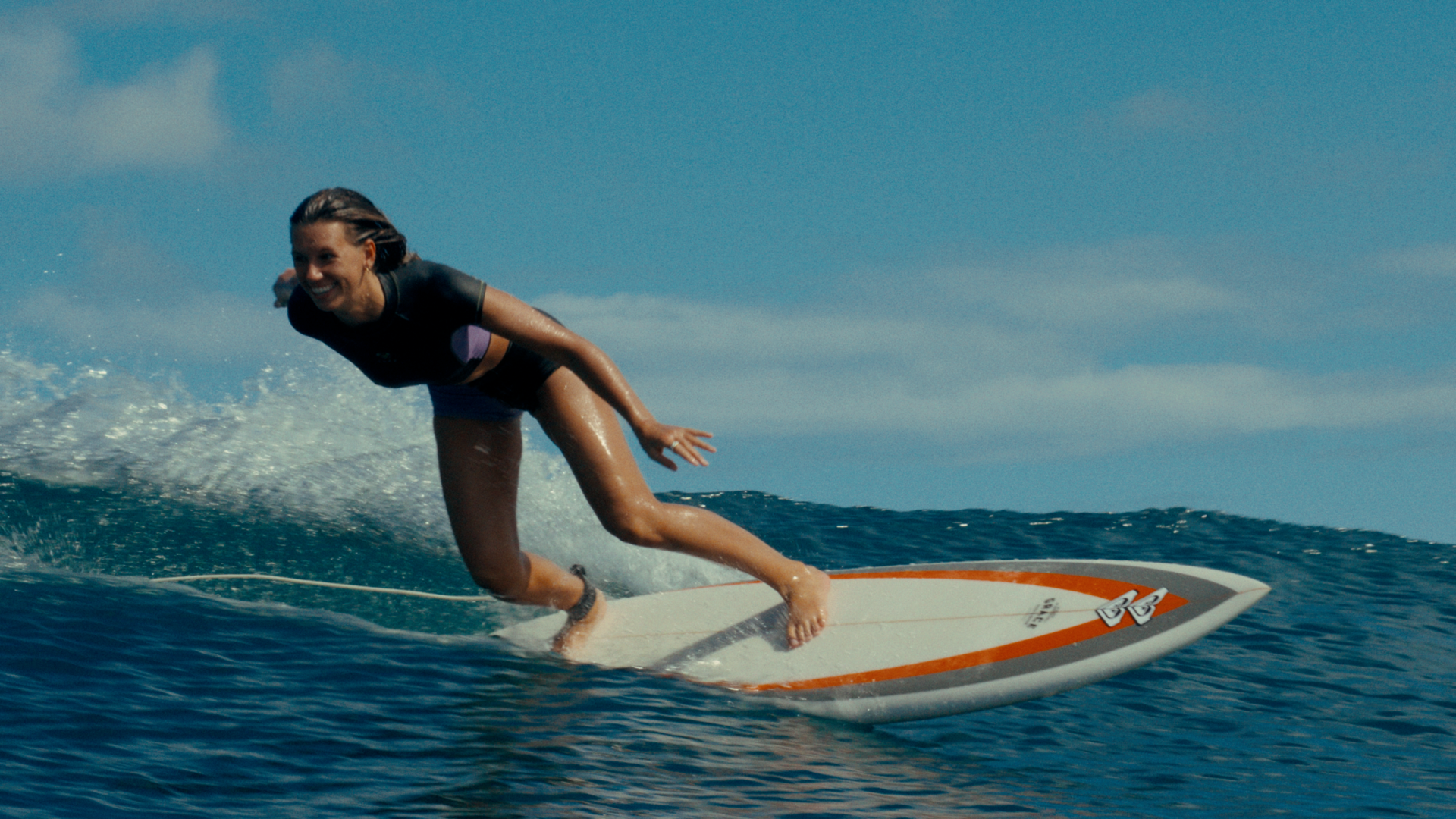
“I’m starting to understand who I am and what I want, and to feel more confident in myself. It’s a new energy. I discovered a new side of myself, or maybe I just rediscovered myself. It wasn’t a new me; it was another layer that I took off. I found the little Zoé who was still there, loving nature, the ocean and surfing,” she added.
Thibault Montoni
So does she have plans to return to the world of competitive surfing? The door isn’t completely closed, and that’s the positive thing about longboarding: people win World Titles in their 40s, so a return is possible at any time: “I feel exhausted at the thought of putting on a jersey and getting back into the tour mindset,” Zoe elaborated. “If I put the jersey on, it’s to have fun, smile, share waves and enjoy myself. If I get a score, then we can dance together. If not, that’s okay.”
“I’ve already lost so much, and I really don’t want to go through that again. If I do return to competing at the highest level, I definitely won’t go back to the way I was before. I’d train with a different mindset and have different expectations. I’d surf differently, too,” Zoe added.