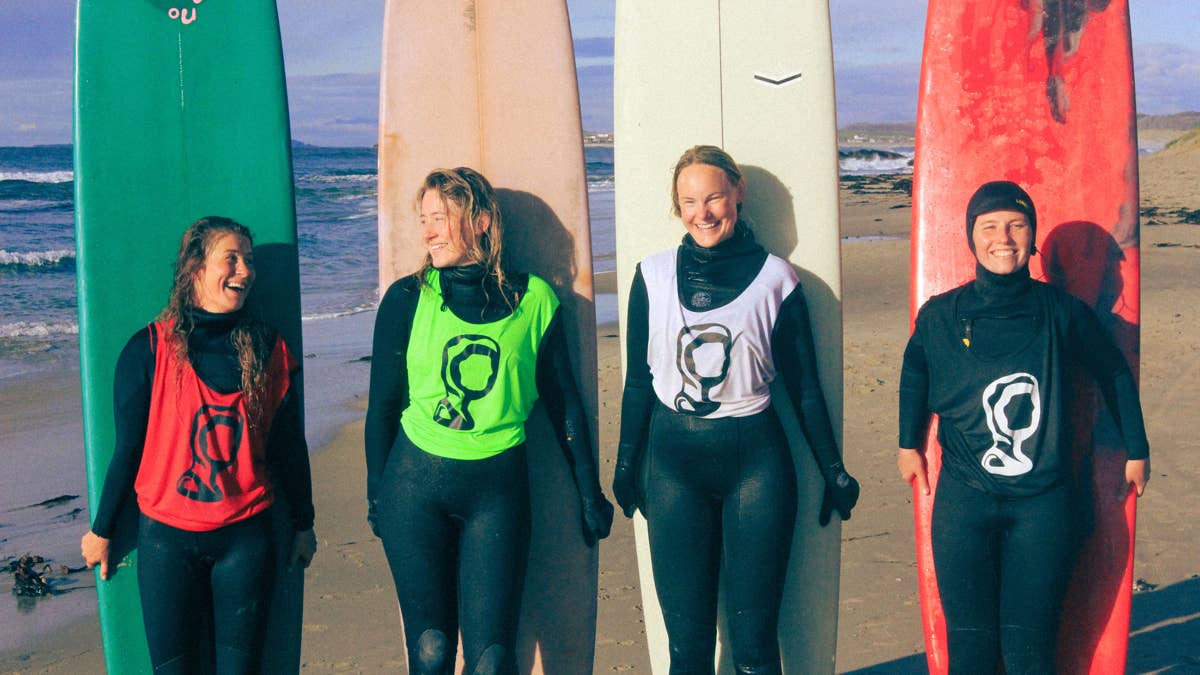
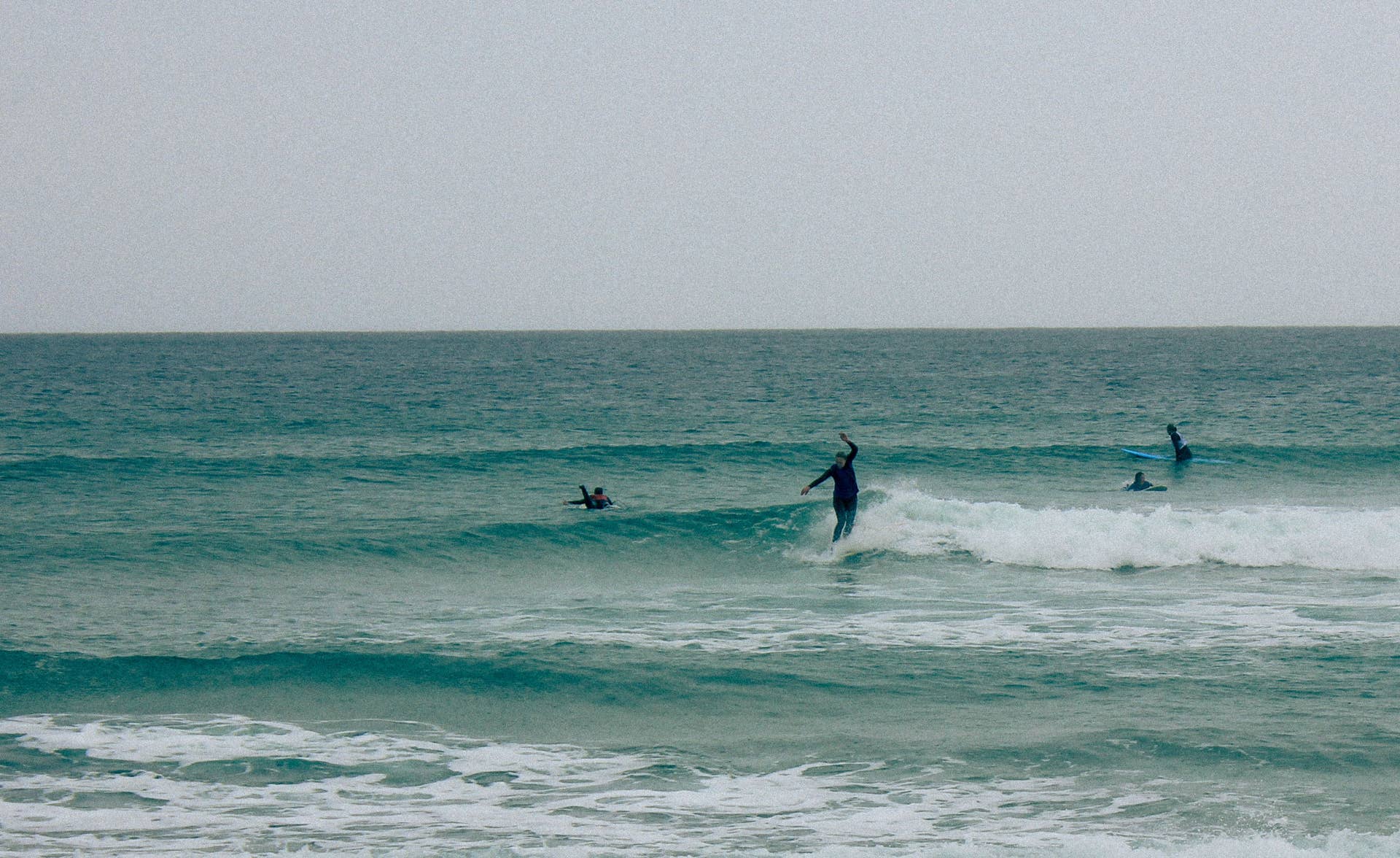
As we peer out towards the ocean, the glistening sun sparkles over the glassy water. It’s a rare occasion for an October day in Norway, with blue skies and longboarders dancing across the waves, their silhouettes framed by the golden light of the setting sun. But something else catches my eye. Something else out of the ordinary, this time in the lineup. Of the 10 or so people out here freesurfing, the majority are women.
It’s the last day of the annual Surf Fest Scandinavia festival in Stavanger, Norway. Every year, Nordic surfers from across Scandinavia heed the call of Stavanger’s waters for this uniquely intimate weekend of surfing, music, festivities, and community.
This year, I returned to the festival with a specific question in mind. In a region famous across the globe for its gender equality, does this kind of representation translate to surfing?
The Women Are Showing Up
The weekend started off strong with an informational skippers’ meeting, where competitors and judges alike discussed wave-scoring criteria. After a lively conversation, we gathered around the projector to watch a few films, share some beers, and get to know one another ahead of the weekend.
Filmmakers Jonis Strömberg from Sweden and Felix Golden from Norway screened their films, Two Days Before the Mingle and Nordic Rippers 2, to a frothy crew of surfers, who were now even more eager to get in the water after watching the incredible waves captured in these stunning films. I even screened our new film Ayo!, directed by Maddie Meddings and Marsela Arnanda, which showcases a community of women in Indonesia who are breaking barriers of their own by learning to swim and surf with my nonprofit, OceanFolx.
On the drive home after a cosy evening, I caught a ride with Strömberg and Sara Bjurbäck, another Swedish musician and surfer, both competing in the upcoming competition, and asked them what they thought about the community of female surfers here in Scandinavia.
These two have been coming to Surf Fest year after year and have become as integral to the festival as Lové Berggren, the festival founder himself.
Bjurbäck shared, “The women’s division filled up right away this year and last, while the men’s didn’t. [Surf Fest, which hosts its competition in traditional longboarding], actually drew more female surfers competing than males.”
Bjurbäck explained: “Longboarding has definitely been becoming more of a trend with the girls here… Maybe it’s because men and women split childcare here, so both dads and moms take turns watching kids on the beach, allowing both men and women to have the time to progress with their surfing.”
Surf Fest Scandinavia
Queens of the North
The next morning, we headed to the beach to watch the first heats of the competition. I immediately spotted Runa Andersen amongst the beachgoers, photographing and chatting with her local girl squad. Andersen is a photographer, surfer, and, as dubbed by Berggren, the “unofficial trippy cult leader of her local Norwegian surf crew”, who has been based out of Jæren, Norway, for more than a decade.
When we started chatting, she agreed it was great that there were many female competitors this year, but that this hadn’t always been the case.
“Since 2014, when I first came here, there’s been a huge shift and change. When I first arrived here, I noticed no one in the surf took photos of the girls, and I wanted to change that. I wanted to put the Norwegian women surfing into the history books as role models.”
Andersen is currently creating Queens of the North, a photobook documenting female cold-water surfers.
Strömberg also underscored her point of view: “It’s always so nice to have more girls in the lineup. It just makes the vibe less aggressive and better in general.”
He also believes a huge reason why there has been such an increase in female surfers is partly due to events like Surf Fest.
“Having a competition where the women and men are equally celebrated has really impacted the local community and how they look up to both male and female surfers.”
Representation at the festival also spread beyond just the competitors, with both male and female commentators and judges. With such a focus on and celebration of the female division at Surf Fest, it’s no wonder the female surf community has gotten so strong.
Surf Fest Scandinavia
What Barriers Do Exist?
For the final day of the competition, we pulled up at Magne, bundled in hats and scarves, to a farmer’s field full of cars, surfboards, and eager surfers hurriedly pulling on their wetsuits in the cold.
As we watched both the longboard kings and queens glide on sizable waves in glassy conditions from a makeshift beach sauna, Felicia Johnson, another Swedish surfer, shared her thoughts with me.
“One thing I would say is that men’s wetsuits offer way more range. There’s a need for the industry to better support women in cold-water surfing, not only through more and better wetsuit options, but also by showcasing more of the rad women already out there and inspiring the next generation to join.”
As the number of female surfers in cold-water climates continues to grow, I can’t help but wonder if the wetsuit industry will be able to keep up with this growing community and meet their demands and diverse needs.
Why Inclusion Doesn’t Happen by Accident
The competition wrapped up with some impressive performances from surfers across Scandinavia. In the men’s division, Berggren took the win with a combined score of 14.33, followed by Johan Vinkel Sisgaard (Denmark) in second and Jonas Karlsen (Norway) in third. In the women’s division, Felicia Johnson claimed first place with a score of 9.50, followed by Norway’s Ane Mari Engvik in second, Sweden’s Sara Bjurbäck in third, and Lisa Berglind (Norway) in fourth.
After the finals, surfers quickly scrambled home for hot showers and rushed meals before the prize ceremony and end-of-festival party at Maskinhuset, Solastranden Gård.
While we’re sipping beers after a full day, Strömberg shares a bit about the impact of Berggren, the festival’s founder and organiser.
“When people like Berggren, who the community looks up to, put such an emphasis on equality and representation in the lineup, the rest of the community really respects that, and it trickles down.”
Strömberg concludes, “Events like Surf Fest and Surfbrudar [a group that organises trips and community events for female surfers, established in Sweden] help so much. Girls get to see other women performing at a higher level. It creates more opportunities, exposure, and connections.”
Looking Forward
Back on the beach the next day, a little hungover from our previous evening, we lazily watch the crew of women surf in the glistening sun. Confident, calm, and in good spirits. Then, we realise that the group of people on the beach are a bunch of dads with their kids sitting around a fire while their wives surf.
It’s a perfect summation of what I’ve noticed throughout Surf Fest Scandinavia, where the equality that exists in day-to-day life spills over into surfing.
As the festival comes to a close for another year, I realise that potentially the most remarkable thing about seeing so many women compete and share the lineup out here is just how unremarkable and normal it seems to the whole community. And maybe that’s something we can all learn from the Scandinavians.