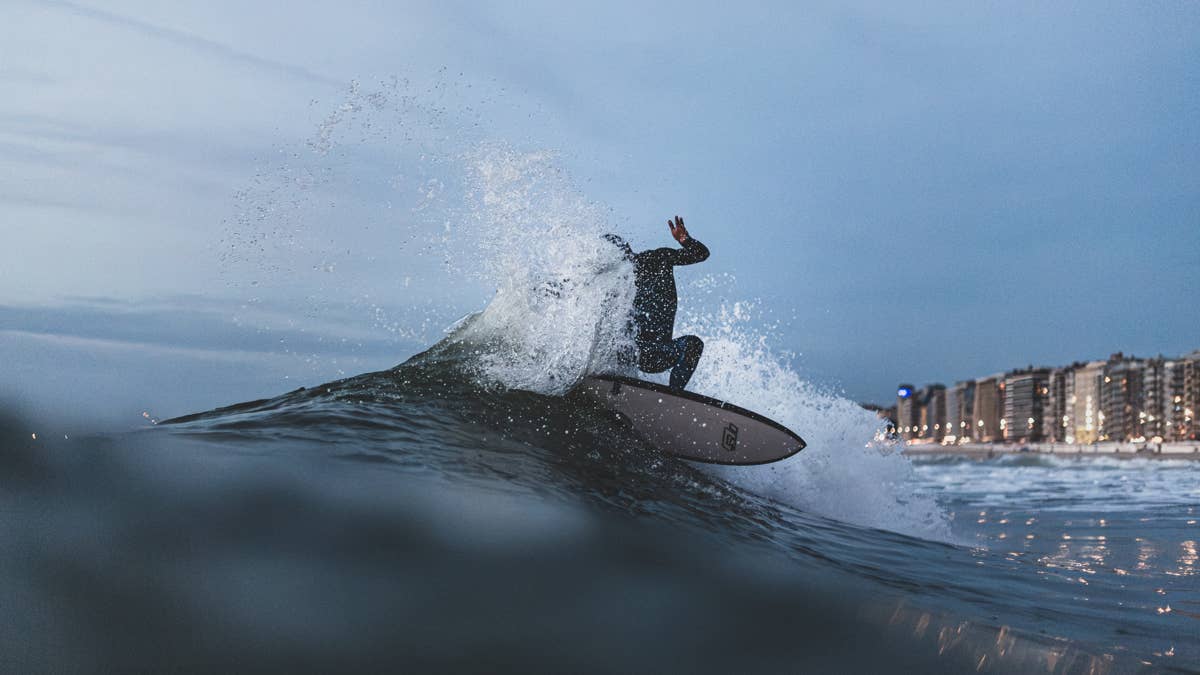
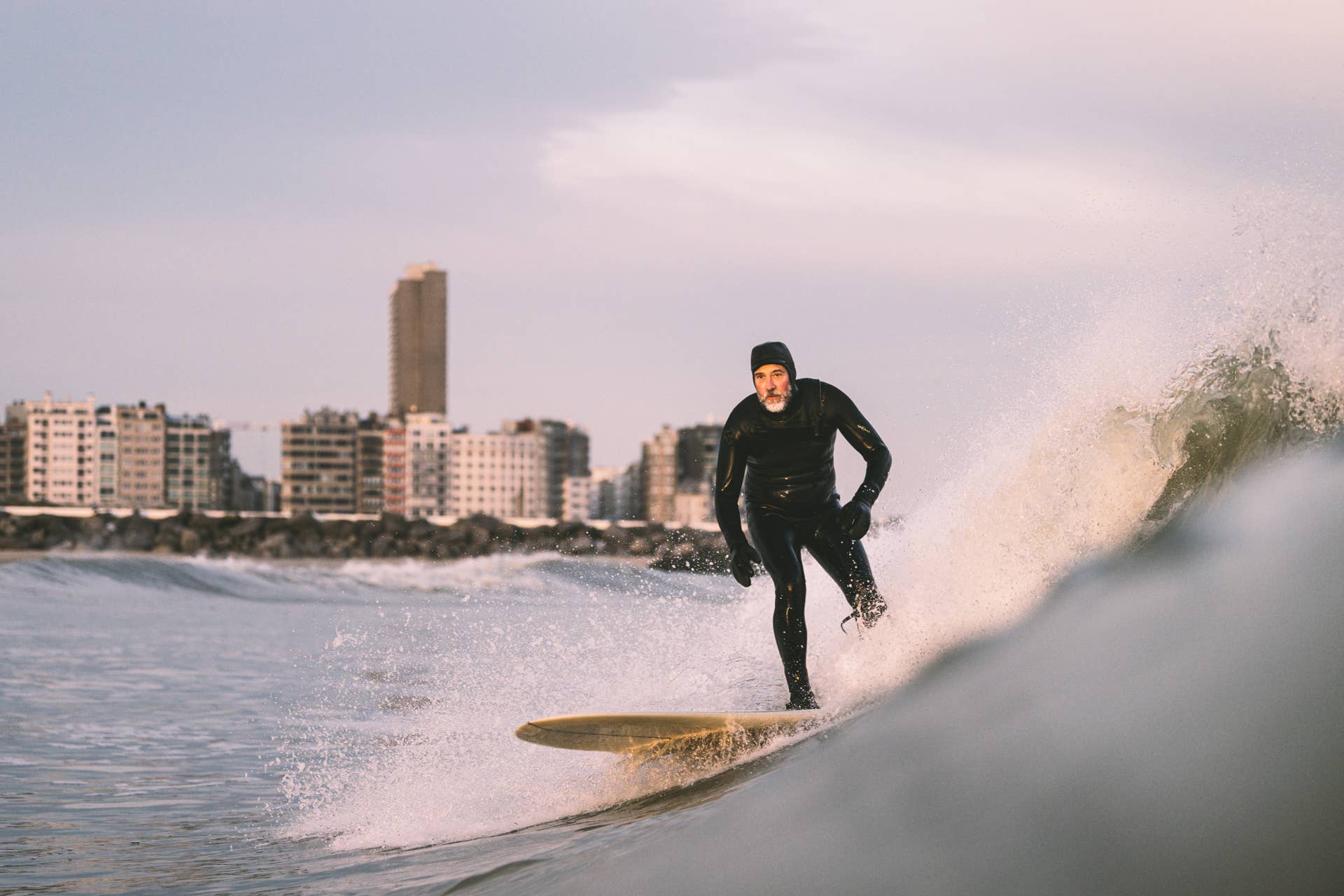
The North Sea holds many surf zones. You know of Norway, the North East of the UK and even the Netherlands has had some time in the spotlight over recent years. But trace your finger a bit further south and you’ll notice Belgium, which faces out into the southern part of the North Sea – and yes, it gets waves.
Cold? Of course, an average of 39-to-46 degrees F in the darkest of winter’s depths. But there’s also a surf scene there who are probably as hardcore as it gets. Some live in Antwerp and rather than drive, take a train to the beach – a two hour trip, to get changed on the shoreline, out there in what could be wind swell for an hour, change on the freezing beach and make the trip home.
“I always say to people here, if you’ve seen a glassy wave on the beach, you’re too late,” said Belgian surfer Keith Marcantuoni, who grew up surfing his home coastline.
What Keith’s explaining is that for the best surf in Belgium, you need strong wind and a crazy storm to get things moving. “You should go out in those conditions,” he said. “Because when the wind blows through, it’s then a glass off for a few hours – so if you miss it right as it’s doing that, you’ve pretty much missed the session.”
Ignore the Forecast
The forecast is marginal most day, the wind is blowing onshore, cross-shore, offshore, every way-shore and the air temperature can flirt with the wrong side of zero. But still, the surfers of Belgium do not care, this is home. “Belgian surfers deserve a lot of respect because, in my opinion, they’re some of the most hardcore surfers in the world,” said Keith, who grew up in Blankenberge, a coastal town on Belgium’s North Sea shoreline.
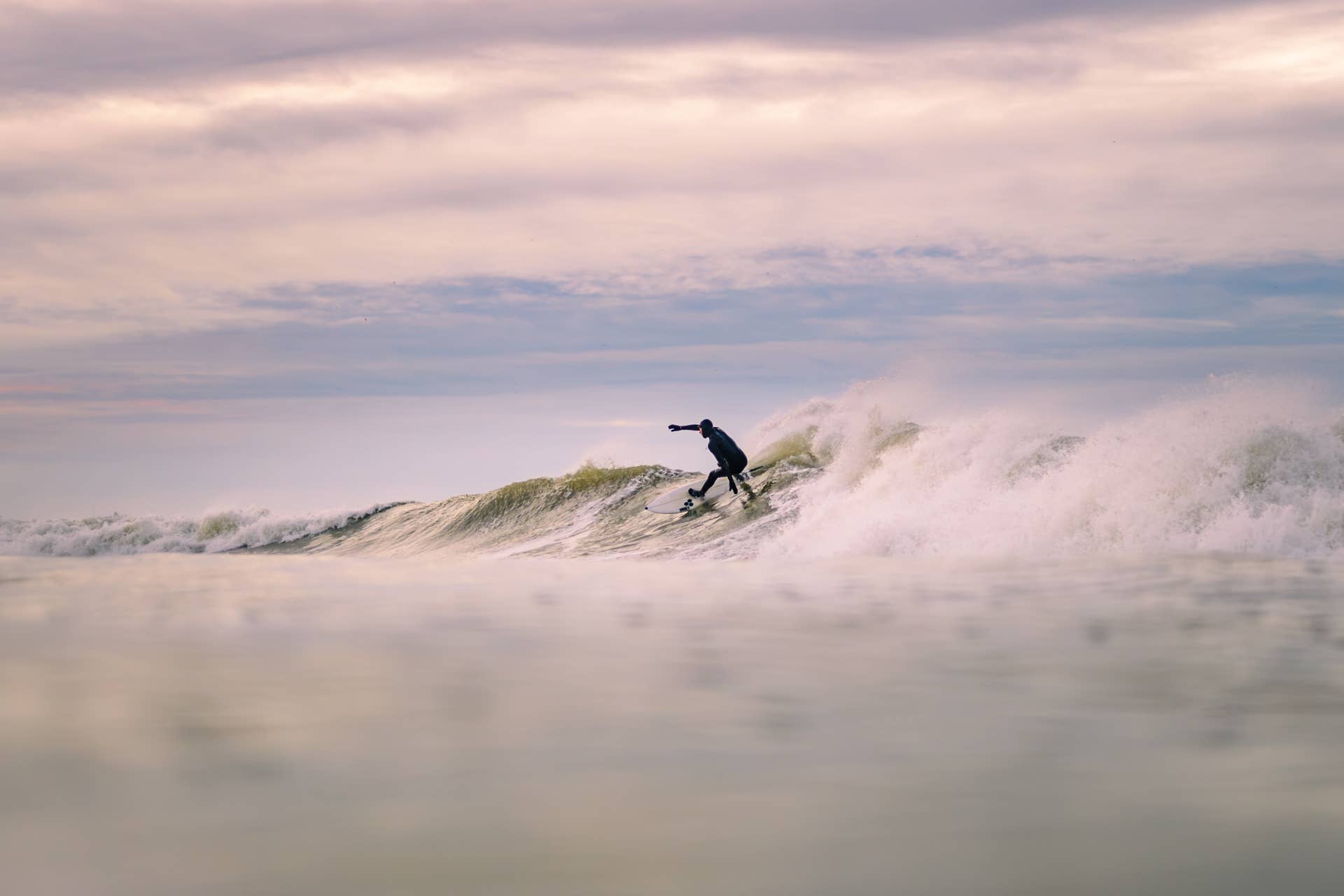
Matthias Vanoverbeke, right out front. Photo: Maarten Van De Velde.
Related: Unlikely October Surf Spots That You’ve (Probably) Never Seen Before
These days, he lives in Bali. But his surfing education began right at home. “I’ve been on the beach my whole life,” he said. “My family has owned a traditional beach cabin for generations, which sits on the front line, right beside the Belgian pier. And next door was the Offshore Surf Club, a gathering place for surfers.
“It was a super hardcore surf club, which was located inside of a World War II bunker,” Ketih said. “There was no electricity, water leaking through and mould everywhere.”
During big swells and spring tides, seawater would flood the bunker, forcing club members to evacuate. For a young kid spending his summers on the beach with his family, it was an introduction to a distinctly Belgian version of surf culture; one built around a genuine obsession with the ocean.
For some Belgian surfers and like the rest of the world, surfing came through skateboarding.
“I think I was eight years old, and then my parents gave me and my brother a board. I just went into the North Sea, and immediately got hooked,” said Keith.
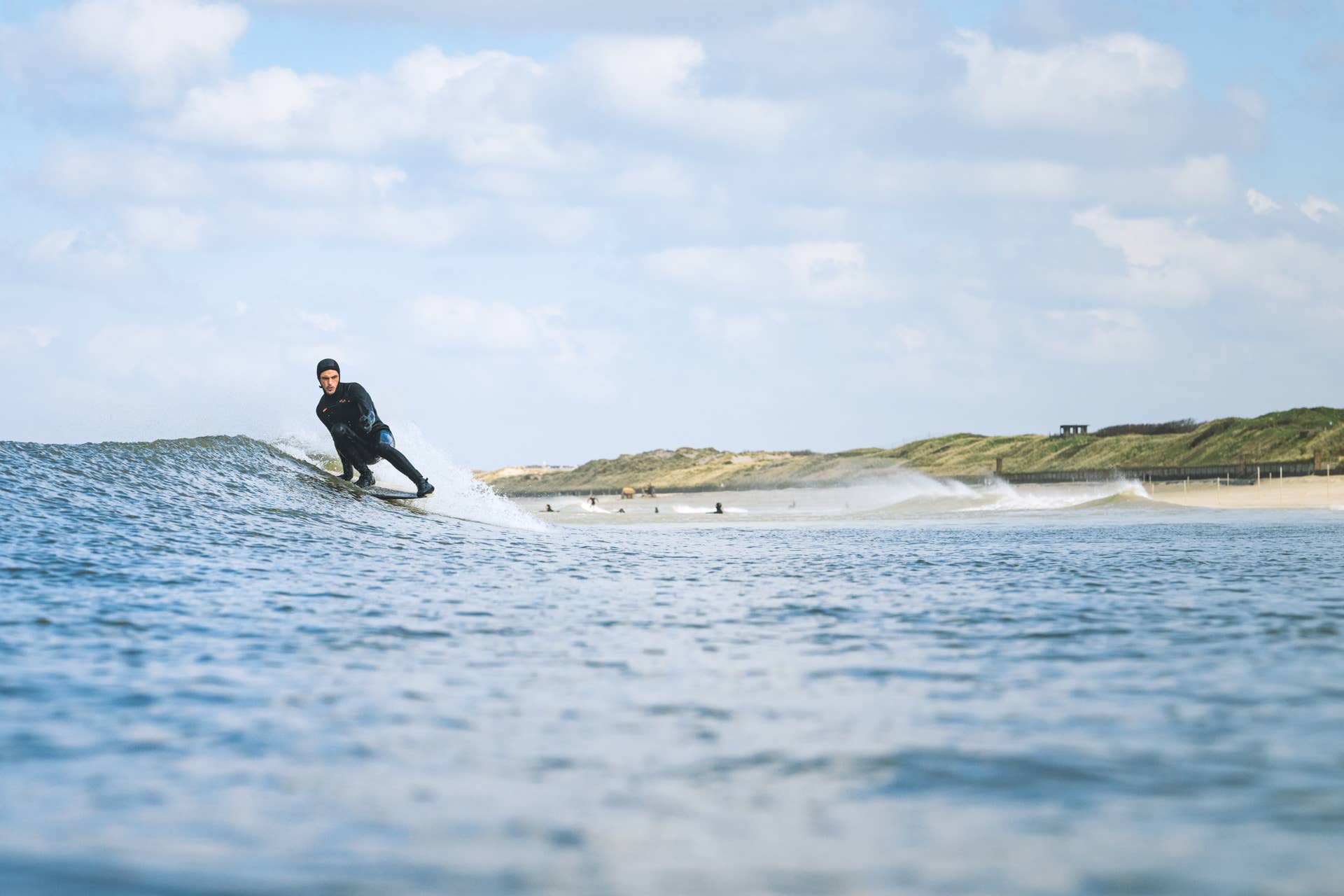
From there, it was surfing every day through the summer holidays, paddling around and learning as well do, through repetition. Within a year or two, O’Neill had taken an interest in him and offered sponsorship. His parents, meanwhile, ran Breeze Board Shop, which initially sold surf clothing rather than surfboards. Their sons’ new obsession soon changed that and the business grew into one of Belgium’s major surf shops.
One Of The Shortest Coastlines In Europe
Sponsorship opened doors. Keith travelled on surf coaching trips to South Africa, Mexico, France, Spain, Ireland and Iceland, surfing alongside international coaches and camera crews. He competed nationally and internationally, eventually becoming Benelux champion at 18. But while those trips broadened his horizons, Belgium remained the place that shaped his surfing instincts.
“I could literally hear the waves when I was in my parents’ garden,” he said. “We just grabbed the bike, put the surfboard underneath our arms and went to the beach.”
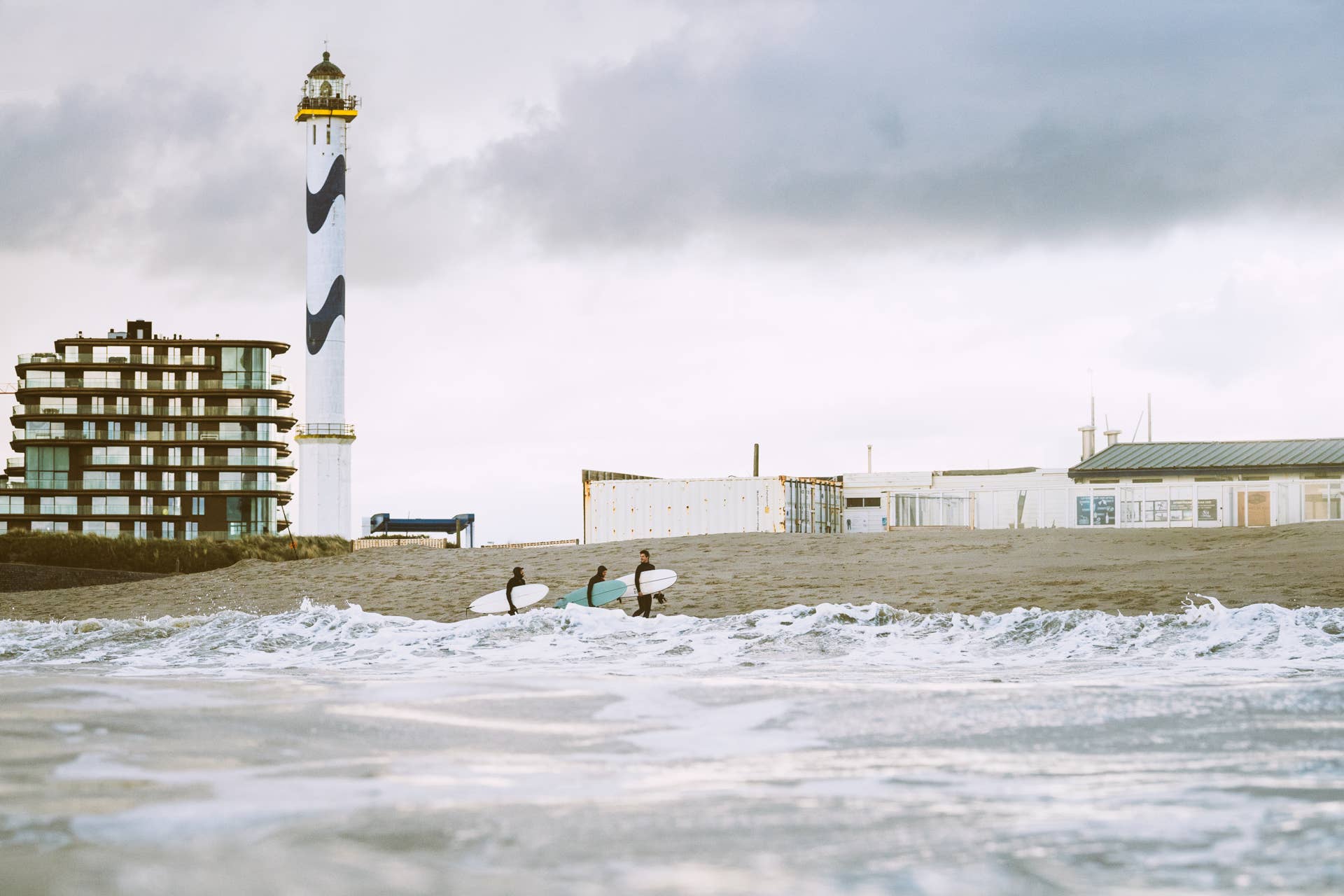
And, did you know, Belgium has just 65 kilometres of coastline, with its surf predominantly wind swell. Groundswells occasionally wrap around England but the everyday reality is a short coastline exposed to the North Sea, where conditions can change quickly and the window of opportunity is rarely guaranteed.
That’s the beauty of surfing in the North Sea. “It’s not to do with how good someone looks on a wave or whether they’re ‘performing’ to these super high standards. It’s more about the lengths people go here to just get in the water,” said Keith. “When there’s a crazy west or northwest wind, the craziest winds, like 100-kilometre-plus-an-hour winds, you just have to go. You just have to learn how to surf these mush burgers, and navigate white water.”
Now working as a surf coach, including with surfers from Belgium and the Netherlands, Keith believes growing up in inconsistent, low-energy surf can develop skills that translate anywhere in the world. “Every wave has a clean face,” he said. “You just have to find it. “If you grew up in a place like Belgium, you see the clean face in every wave.”
Belgium’s surf scene has changed over time. The monthly Swell magazine gave local surfers a platform, while brand-sponsored contests and travelling events brought the community together. One series of events, organised by O’Neill Belgium, saw around 50 campervans make the journey to Jersey for a week of surfing and parties. Other trips involved sailing boats heading to the Wadden Islands off the Netherlands.
No Bad Waves, Just Bad Attitudes
Those events created a tight-knit community, but as sponsorship money dried up, the bigger gatherings became less frequent. Today, Keith sees a scene that’s more dispersed, with coastal surfers gathering around local shops and inland surfers making the long drive whenever conditions align.
Surfing has always had an air of, ‘who is the best surfer in the water.’ But for Keith and the surfers of Belgium, it’s different. “I can literally see the same stoke and happiness in somebody that is just going down the line and making their first wave and somebody that’s doing a crazy air,” he said. There are no bad waves, he argues, only opportunities that different surfers are yet to learn how to use.
Belgium might never have the consistent perfection of Indonesia or the ease of surfing like other major surf nations, but it doesn’t really need to. Its surfers have learned to make something out of what they’ve got, and in doing so, have uncovered a side of surfing that’s more never-say-die than ‘let’s skip this one today as it’s not flawless,’ and there’s something very special about that.
Related: Inside Romania’s Unexpected Surf Revolution on the Black Sea